‘We’re Done’: Zelenskyy Ends Pause on Strikes Against Russian Energy Infrastructure
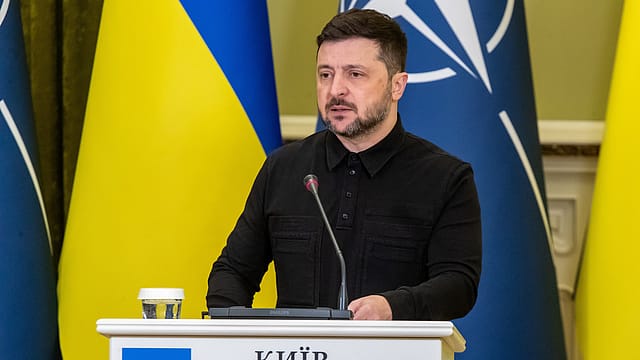
Ukrainian President Volodymyr Zelenskyy has announced that Kyiv will resume strikes on Russian oil refineries, declaring an end to its pause on attacks against energy infrastructure after accusing Moscow of violating a US-announced “energy ceasefire”.
“The block (on attacking refineries) is out. We’re done,” Zelenskyy told the Financial Times in an interview on Thursday.
Zelenskyy said Ukraine had halted attacks on Russian energy facilities for three days at Washington’s request, even as Russian forces continued striking Ukrainian infrastructure. He also accused the United States of disrupting intelligence-sharing and Starlink satellite connectivity, raising tensions over Washington’s role in Kyiv’s military decisions.
The latest development follows US President Donald Trump’s October 11 announcement of an immediate energy ceasefire between Russia and Ukraine, under which both sides were expected to stop targeting energy infrastructure.

Zeroing In on ECI
09 Oct 2026 - Vol 05 | Issue 41
Constitutional legitimacy versus political opportunism
“Effective immediately, there is an ENERGY CEASEFIRE in the War between Russia and Ukraine. Both parties have agreed. Do not break it!” Trump wrote on Truth Social.
However, the arrangement came under strain after Zelenskyy accused Russia of launching a large-scale overnight assault on Ukrainian energy and critical infrastructure, leaving at least 600,000 people without electricity.
In a post on X on Wednesday, Zelenskyy said Russian forces had used ballistic missiles and attack drones to target energy facilities in Kyiv, the Kyiv region and Kharkiv. The strikes, he said, caused extensive damage to equipment and infrastructure at 26 power system facilities and four oil and gas sector facilities.
Zelenskyy Accuses Washington of Restrictions
Zelenskyy also alleged that Washington had warned Ukrainian officials that intelligence-sharing could be suspended unless Kyiv stopped attacking Russian refineries. According to him, the subsequent disruption was presented as a technical problem.
“It was not a technical problem; it was the will,” he said in the Financial Times interview.
He also rejected suggestions that interruptions to Starlink satellite internet services were accidental, amid reports that restrictions on satellite communications had affected Ukrainian military operations.
Starlink, operated by Elon Musk’s SpaceX, has become important to Ukraine’s military communications, including reconnaissance, intelligence gathering, drone operations and logistical coordination. The controversy intensified after Ukrainian officials reported disruptions affecting Starlink and Starshield connectivity during continued Russian attacks.
Musk said in a post on X that decisions concerning restrictions on Starshield rested with the US military and the US president.
Zelenskyy has warned that disruptions to satellite connectivity could undermine Ukraine’s ability to defend itself, particularly as Russian forces continue attacking critical infrastructure.
Ukraine Reports More Than 850 Drones
The announcement on Russian energy targets came as Zelenskyy reported another major wave of Russian drone attacks across Ukraine.
In a post on X, he said Russia had launched more than 850 Shahed drones between midnight and 9 am on Thursday, with six people killed in the attacks.
“Emergency services are still providing assistance in dozens of our cities and communities. Repair crews and rescuers are working to deal with the aftermath of Russian attacks,” Zelenskyy said.
He added that the drones had arrived in successive waves throughout the night, leaving Ukrainian skies without a single hour of respite.
“We managed to shoot down some of the ‘shaheds’. But unfortunately, there were also dozens of hits,” he said.
Zelenskyy identified the Kirovohrad region as one of the areas subjected to the heaviest attacks. Strikes were also reported in Kyiv and its surrounding region, Dnipro, Odesa, Rivne, Kharkiv, Donetsk, Zaporizhzhia, Kherson, Mykolaiv, Vinnytsia, Zhytomyr, Khmelnytskyi, Poltava and Ivano-Frankivsk.
“Three people were killed in Kropyvnytskyi and three more in the Dnipro region. My condolences to their families and loved ones,” he said.
Accusing Moscow of deliberately escalating the conflict, Zelenskyy linked the attacks to sanctions relief for Russia and efforts to pressure Ukraine.
“It is obvious that Russia deliberately chose to escalate its attacks after receiving sanctions relief and seeing attempts to pressure Ukraine. Russia exploits every such opportunity and must be held accountable for what it does,” he said.
Russian Oil Refineries in Ukraine’s Crosshairs
Ukraine’s decision to resume strikes comes amid an intensifying campaign against Russian oil infrastructure, which Kyiv says helps finance Moscow’s war effort.
According to Ukraine’s Defence Ministry, Ukrainian forces struck 12 major Russian refineries in September alone. The International Energy Agency reported that by late August, only five of Russia’s 32 major refineries had escaped Ukrainian drone attacks, with some facilities struck as many as 15 times since Russia launched its full-scale invasion in 2022.
European Union foreign policy chief Kaja Kallas has defended Ukraine’s attacks on Russian refineries, describing them as legitimate under international law in the context of Ukraine’s defence against Russian aggression.
“If we look at international law, it is clear that [hitting refineries] is in defence of Ukraine because that is where the funding comes from for this war to kill Ukrainian people every day,” Kallas told Euronews.
She argued that oil revenues remained a major source of funding for Russia’s war and said Ukraine’s attacks on refineries should be viewed alongside Moscow’s strikes on Ukrainian energy infrastructure.
“If we look at the big picture, the majority of the financing for this war comes from oil. And that is why Ukraine is also targeting them [the refineries], while Russia is targeting the energy infrastructure inside Ukraine, to cause as much suffering for the Ukrainian people in the upcoming winter,” she said.
Kallas urged the United States to join European countries in increasing pressure on Moscow rather than Kyiv, reaffirming the European Union’s continued support for Ukraine.
With inputs from ANI and agencies