War on Iran: The End of Volatility…for Now
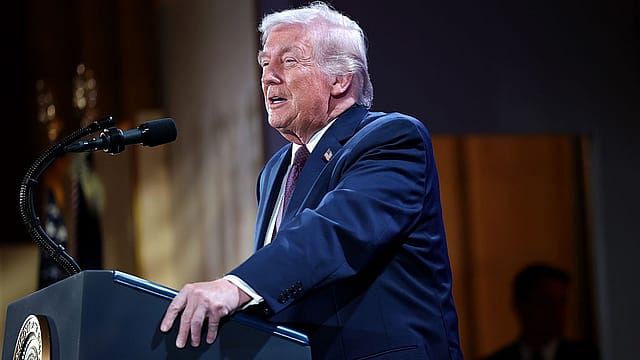
As soon as US President uttered the words, “I think the war is very complete, pretty much,” global markets began their march back to positive territory on Monday night and early Tuesday. The S&P index erased most of its losses it suffered over the past 11 days. Global crude oil prices, that had hovered to $114 per barrel for a brief period, began their retreat. At one point these prices had fallen as low as $84/barrel before rising once to $91/barrel.
The question in the mind of consumers and countries alike can be summed in a single line: “is oil price volatility over?”
One way to answer the question is to try and correlate these prices with global GDP growth. Given various factors at play, actual world output and its estimates have remained unchanged at 3.3% since 2024 (see International Monetary Fund, World Economic Outlook, 2026 January update.) If one were to sketch a linear correlation between global growth and demand for oil, prices should not display volatility.
But oil prices are seldom about demand for oil. That correlation, imperfect even during normal conditions, breaks down during war. In the present context, these prices went into a wild swing solely due to one reason: Iran’s “closure” of the Strait of Hormuz, a crucial narrow waterway through which 20% of global energy supplies—oil and LNG—pass. Then came the “downstream” effects: country after country invoked force majeure or inability to process and ship oil. Qatar, Iraq, Bahrain and Kuwait—the world’s energy central—shut shop.

Youth Issue 2026
24 Apr 2026 - Vol 04 | Issue 68
50 Portraits of Icons and Achievers
For the time being, with Trump signalling the end of war, one side of the equation that led to these price spikes, has eased. But the other side of the complex equation, Iran’s willingness to open the Strait, remains cloudy. Initial statements, attributed to Iranian spokesmen, hinted at the Strait being open for passage but with qualifications. Arab countries would be allowed to ship energy provided they expel US and Israeli ambassadors. Six Arab countries—Sudan, Egypt, Bahrain, United Arab Emirates (UAE), Jordan and Morocco—have diplomatic relations with Israel. Of these, Egypt and Sudan are distant from the zone of conflict. Only, UAE and Bahrain have significant presence in oil trade. This demand queers the pitch for these countries especially as the Iranian demand also includes expelling of US ambassadors from their territory. That increases the number of countries that will be affected by the Iranian demand.
The demand may be an Iranian bargaining chip, or it may not. But what it does is to increase uncertainty for some time.
Then, there is the issue of oil production facilities being re-started in many of these countries, the ones that had been shut down in the face of intense Iranian shelling. That will take time.
There is no shortage of oil. Plenty of it remains floating in supertankers across different oceans and seas of the world. Then there is Russia, a key supplier that is willing to sell. The volatility arises from the sudden disruption of a key route being closed and its downstream effects. That problem will cease, even if somewhat slowly, in the coming days.