Oil Shock, EV Surge: How China Is Quietly Winning the Iran-US War
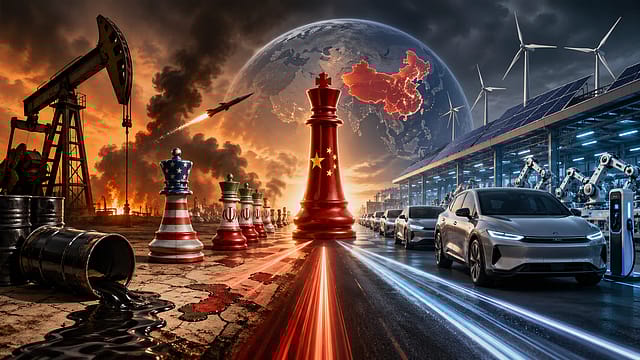
China's electric vehicle giants are capitalising on a geopolitical crisis they had no hand in creating.
While oil markets reel and Western economies scramble, Beijing's years of calculated investment in clean energy infrastructure is paying off in ways few anticipated - and the numbers tell a striking story.
What Does the Iran-US Conflict Have to Do With EVs?
When geopolitical tension disrupts oil supply, fuel prices spike globally.
That is precisely what the Iran-US conflict has triggered. As petrol costs climb, consumers across Europe, Southeast Asia, and India are accelerating their shift to cheaper alternatives - and no country is better positioned to supply them than China.
Why Are Chinese EV Exports at Record Highs?
According to the China Passenger Car Association, Chinese exports of electric vehicles and hybrids hit a record high in March 2026, reportedly rising 140 percent compared to the same period a year earlier.
Brands like BYD and Geely are gaining market share at a pace few analysts had projected, with the conflict effectively functioning as a live case study for why fossil fuel dependence is a liability.
Is China's Domestic EV Adoption Shielding Its Economy?
Electric vehicles now account for half of all new car sales within China.
This near-insulation from fuel price volatility means Chinese manufacturers face no domestic demand disruption - freeing them to channel resources entirely toward export growth while rivals in oil-dependent markets absorb rising costs.

Open Minds 2026
26 Jun 2026 - Vol 05 | Issue 26
The power of ideas and arguments in 50 portraits
What Are Energy Analysts Saying?
Lauri Myllyvirta, co-founder of the Centre for Research on Energy and Clean Air, reportedly told CNN that the conflict has strengthened the long-term case for alternatives.
According to Ember analysts, global EV adoption already cut oil consumption by roughly 1.7 million barrels last year.
How Durable Is This Export Boom?
Analysts urge caution.
According to CNN, Myllyvirta has noted that part of March's surge was driven by stockpiling ahead of China discontinuing a tax rebate in April, making that monthly scale unlikely to repeat.
What Does This Mean for the Global EV Industry?
The structural tailwind - costly oil accelerating EV adoption worldwide - remains firmly intact.
China's EV industry enters this period with the supply chain depth, price competitiveness, and export infrastructure that no rival currently matches.
(With inputs from yMedia)