US Midterms 2026: Blue Wave Batters Trump as Democrats Seize Senate, Breach Republican Strongholds
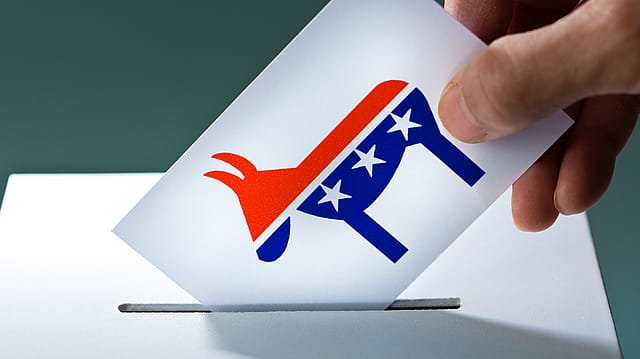
A Democratic blue wave swept through Republican strongholds in the US midterm elections, handing the party control of the Senate and delivering a sweeping setback to President Donald Trump as voters punished his party over living costs, the Iran war and the direction of the country.
The November 3 election overturned Republican Senate seats in Texas, Kansas, Iowa, Ohio, South Carolina and North Carolina. Democrats also defended Georgia and New Hampshire, preventing Republicans from offsetting the losses. Reuters reported that Democrats had won both chambers of Congress, although the AP updates retrieved for this report had not yet called the House.
The most striking results came from states where Republicans had expected their political foundations to hold. In Texas, Democrats defeated both Attorney General Ken Paxton in the Senate race and three-term Governor Greg Abbott. In Kansas, a Methodist pastor ended his party’s 94-year Senate losing streak. Ohio delivered Democratic victories for both Senate and governor.

The Era of Forever Wars
30 Oct 2026 - Vol 05 | Issue 44
Coping with an explosive Middle East
The breadth of those gains makes this a severe test of Trump’s political authority. Candidates he endorsed and campaigned for lost across several states, leaving Republicans to confront how much protection his support offers when his own name is absent from the ballot.
Texas delivers the biggest breach
Democrat James Talarico defeated Paxton in the Texas Senate contest, while Gina Hinojosa defeated Abbott for governor.
The paired victories struck at Republican dominance in one of the party’s most important states. They also gave Democrats two different routes into statewide power: representation in Washington and control of the governor’s office in Austin.
Kansas produced another result with unusual historical weight. Adam Hamilton defeated Republican Senator Roger Marshall, becoming the first Democrat elected to the Senate from the state since 1932. The distinction concerns Kansas’s Senate elections overall, rather than merely the history of one seat.
In Iowa, Democratic state representative Josh Turek won the open Senate seat against Republican Ashley Hinson. In Ohio, Sherrod Brown defeated Republican incumbent Jon Husted, securing a return to the chamber.
South Carolina elected Democrat Annie Andrews over Republican Senator Darline Graham. Graham, backed by Trump, had entered the Senate after the death of her brother, Lindsey Graham. The result ended a Democratic Senate-election drought in the state stretching back to 1998.
North Carolina supplied an earlier breakthrough when former governor Roy Cooper defeated Republican Michael Whatley for the seat being vacated by Thom Tillis. Together, the six pickups carried the Democratic challenge well beyond the usual battlegrounds.
Governors fall, and history is made
The setbacks extended to state executive offices.
In Ohio, Democrat Amy Acton defeated Indian-American Republican Vivek Ramaswamy for governor, becoming the first Democrat to win the office since 2006.
Georgia elected former Atlanta mayor Keisha Lance Bottoms, who became the first Black woman elected governor of a US state. Her victory also delivered the Democrats’ first gubernatorial election win in Georgia since 1998.
Georgia’s Democratic Senator Jon Ossoff defeated Republican challenger Mike Collins. Chris Pappas held New Hampshire’s Senate seat for Democrats.
Florida provided Republicans with important victories. Senator Ashley Moody retained her seat, while Byron Donalds won the governorship and will become the state’s first Black governor.
Those results also caution against treating a wave election as proof that every Republican stronghold has permanently changed allegiance.
Prices and the war weigh on Trump
The results arrived after a campaign dominated by household costs and anger over Washington.
Exit polling by SSRS, cited by Reuters, found that half of voters viewed the election as an opportunity to rebuke Trump. Seventy per cent wanted Congress to provide stronger checks on the president.
The Iran war and its effect on fuel costs formed part of that economic backdrop. Republican efforts to cast Democratic candidates as extreme struggled against voters’ concerns about everyday expenses.
Democrats will nevertheless face a demanding interpretation of their mandate. Winning support from voters dissatisfied with Trump creates an obligation to deliver visible improvements. It does not establish agreement on every Democratic policy.
Trump sought to distance himself from the defeats, writing on social media: “I wasn’t on the Ballot and if I was, we would have won IN A LANDSLIDE!”
During the campaign, he had urged supporters to behave as though he were on the ballot.
The Senate win changes the presidency
Control of the Senate gives Democrats a direct check on some of Trump’s most consequential decisions.
The chamber considers presidential nominations for federal judges, including Supreme Court justices, as well as ambassadors and senior administration officials. A Democratic majority can withhold approval or refuse to advance nominees. A Supreme Court appointment would arise only if a vacancy occurs.
Trump remains president and retains his veto. Passing legislation over his objection requires two-thirds of members voting in each chamber, with a quorum present. Winning ordinary congressional majorities does not automatically provide those numbers.
For Indian readers, Ramaswamy’s defeat is an immediate connection. The wider institutional consequence extends to US diplomacy: future ambassadorial appointments and senior foreign-policy nominations will face a Senate controlled by the opposition. The election itself announces no change in American visa or trade rules.
Counting and certification will determine the final margins. The next Congress’s terms begin on January 3, 2027.
The political task now shifts from winning Republican territory to exercising power in Washington. Democrats have secured the ability to obstruct and scrutinise Trump. Whether they can also force agreements on the economic concerns that helped elect them will shape the next phase of his presidency.