US Judge Strikes Down Trump Rule Restricting Stays For Foreign Students, Journalists
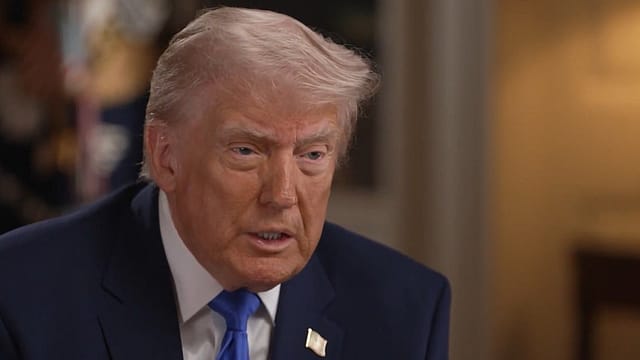
A US federal judge has struck down a Trump administration rule that sought to restrict the duration of stay for foreign students, exchange visitors and journalists, ruling that the policy was arbitrary and not in accordance with the law.
In an order issued on Monday, District Judge F Dennis Saylor granted the plaintiffs’ motion for summary judgment and rejected the US Department of Homeland Security’s (DHS) motion. The court also vacated the final rule under the Administrative Procedure Act (APA).
The judge described the policy as “arbitrary, capricious, an abuse of discretion, and otherwise not in accordance with law”.
The rule, titled Establishing a Fixed Time Period of Admission and an Extension of Stay Procedure for Nonimmigrant Academic Students, Exchange Visitors, and Representatives of Foreign Information Media, was published in the Federal Register on July 17, 2026.

The Wealth Issue 2026
06 Nov 2026 - Vol 05 | Issue 45
Portraits of Dreamers and Doers under 35
It covered international students on F visas, researchers, professors and instructors on J visas, and foreign media representatives holding I visas.
WHY THE COURT STRUCK DOWN THE RULE
The court found that DHS had not adequately assessed the costs and benefits of the proposed restrictions. It also said the department had failed to provide sufficient evidence to support its claims that the rule was necessary to prevent fraud and protect national security.
The judge noted that DHS had not adequately examined less restrictive alternatives or addressed concerns raised during the public consultation process.
The order also considered whether the department had made sufficient use of the existing Student and Exchange Visitor Information System (SEVIS), which monitors international students and exchange visitors.
The plaintiffs had argued that DHS could have relied more extensively on SEVIS, including the reporting and data-collection responsibilities of Designated School Officials and Responsible Officers at educational institutions.
The court noted that the department had previously strengthened SEVIS, including by implementing recommendations made by the Government Accountability Office in 2019. These measures included identifying fraud at institutions seeking certification, verifying the eligibility of officials responsible for reporting and developing a risk-assessment model.
DHS had also used school reporting data to identify suspected abuse and fraud, investigate potential visa violations and refer cases for further scrutiny. The department had run the names of more than one million students through the National Crime Information Centre to identify individuals whose behaviour could indicate fraudulent visa overstays.
DHS, however, maintained that SEVIS was a data-reporting system for schools and not an immigration-status adjudication system.
The court rejected the department’s justification, questioning how a discretionary renewal process introduced after a foreign student had already spent four years in the US would meaningfully improve its ability to identify fraud. It also said DHS had not demonstrated that the benefits of such a system would outweigh the costs of replacing the existing framework.
IMPLICATIONS FOR INTERNATIONAL STUDENTS
The court also examined the plaintiffs’ argument that the restrictions on academic mobility were inconsistent with the Immigration and Nationality Act.
The law allows the F-1 student visa programme to cover bona fide students who are qualified to pursue a full course of study and seek entry into the US temporarily for that purpose.
DHS had argued that the Secretary of Homeland Security had the discretion to define an appropriate course of study and restrict certain academic programmes.
The judge observed that the department’s interpretation could prevent foreign students from pursuing extended periods of education, including those required for PhD programmes. It could also affect students seeking joint degrees, changing their academic concentration or enrolling in programmes that were not at a higher academic level than a course they had already completed.
Referring to a 2022 ruling in Washington Alliance of Technology Workers v. United States Department of Homeland Security, the court said Congress had reserved the power to determine the terms of entry while delegating to the executive branch the authority to set the time and conditions of non-immigrants’ stay. Such conditions, the judge noted, must remain reasonably related to the nature and purpose of the relevant visa category.
The court held that DHS's stated objectives of preventing fraud and protecting national security were not reasonably connected to the purpose of the F-1 visa programme.
“Put bluntly, DHS is seeking to prevent or discourage the very activity—providing educational opportunities for foreign students in the United States—that Congress sought to permit and encourage,” the order said.
“The statute simply does not grant DHS such broad and open-ended authority to undermine the F-1 visa program,” it added.
THE LEGAL CHALLENGE
The case was brought by a coalition of higher education, labour and media organisations. The plaintiffs included the Presidents' Alliance on Higher Education and Immigration, NAFSA: Association of International Educators, the Association of Independent Colleges and Universities in Massachusetts, the American Federation of Teachers, The NewsGuild-CWA and the United Automobile Workers, among others.
The court had previously issued a preliminary injunction on September 14, 2026, indicating that the plaintiffs were likely to succeed in their challenge under the Administrative Procedure Act. At that stage, it had postponed the rule's implementation under Section 705 of the Act.
The US government appealed the preliminary injunction before the United States Court of Appeals for the First Circuit. That appeal was still pending when Judge Saylor issued the latest order.
With inputs from ANI