US-Iran Conflict Puts Oil Back in Focus While Gold Could Weaken on Rate Hike Fears
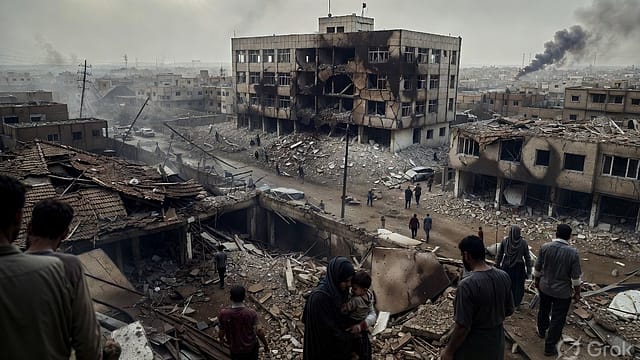
Fresh military exchanges between the United States and Iran have once again put global commodity markets on edge, with oil emerging as the biggest beneficiary while gold struggles against expectations of higher interest rates.
According to a research report by domestic brokerage firm Nirmal Bang, the renewed conflict has brought the strategically crucial Strait of Hormuz back into focus, reviving fears of disruptions to global energy supplies. While this geopolitical uncertainty is expected to support crude oil prices, the same tensions could weigh on gold by fuelling inflation and delaying interest-rate cuts.
Why are oil prices rising?
The report says crude oil is likely to remain supported as investors assess the implications of the latest military escalation between Washington and Tehran.
"On the New York Mercantile Exchange, Crude oil is trading higher. We expect crude oil to trade range-bound to higher for the day as oil jumped as the US and Iran exchanged fresh strikes, with the sides offering conflicting statements on whether the Strait of Hormuz remains open to shipping," Nirmal Bang said.

Freedom Issue 2026
14 Aug 2026 - Vol 05 | Issue 33
Shashi Tharoor on being radical liberal | Ram Madhav on how Gandhi used his Hinduism | TCA Raghavan on a diplomat's travels in history | Sumana Roy on the novel beyond the Booker | Carlo Pizzati on the dissolution of Borders
The latest flare-up follows fresh US missile strikes against Iran on Sunday, extending a pattern of military exchanges that has unsettled global energy markets.
By 1:47 pm IST on Monday, Brent crude was trading nearly 3 per cent higher at USD 78.09 per barrel, while West Texas Intermediate gained 2.8 per cent to USD 73.31 per barrel.
The brokerage noted that oil markets have once again started pricing in geopolitical risks.
"Brent traded above $79 a barrel after gaining 5.4 per cent last week, while West Texas Intermediate traded near $74," Nirmal Bang noted.
It added that uncertainty surrounding the conflict has reintroduced what traders commonly refer to as a "war premium" into crude prices after earlier gains had faded following an interim peace agreement.
Why is the Strait of Hormuz so important?
The Strait of Hormuz is one of the world's most strategically important maritime routes, carrying a significant share of globally traded crude oil and liquefied natural gas.
Any disruption to shipping through the narrow waterway can quickly tighten global energy supplies, pushing oil prices higher and increasing inflationary pressures worldwide.
Highlighting this concern, the report warned, "a return to all-out war could see further disruption to global energy supplies through the Strait of Hormuz, which would risk curbing economic growth and demand for industrial commodities such as copper."
Why is gold losing its safe-haven appeal?
Although geopolitical conflicts typically increase demand for safe-haven assets such as gold, the current situation presents a more complicated picture.
The report expects higher oil prices to fuel inflation, raising the possibility that the US Federal Reserve may keep interest rates elevated for longer. Since gold does not generate interest, higher borrowing costs generally reduce its attractiveness compared with interest-bearing assets.
"Gold and silver prices are trading slightly lower today on the international bourses. We expect precious metals prices on Indian bourses to trade range-bound to lower for the day," the brokerage said.
It further added, "Gold headed for a weekly loss on Friday as investors assessed renewed fighting in the Middle East and the prospects for interest-rate hikes to combat inflation."
The report explained that, for gold investors, renewed conflict increases the likelihood that the Federal Reserve could maintain higher interest rates for an extended period to contain inflation triggered by rising energy prices. Higher rates are a headwind for bullion because it does not pay interest.
What is happening in base metals?
The broader industrial metals market also reflected the impact of the evolving geopolitical situation.
"On the London Metal Exchange, Base Metals are trading Lower. We expect base metals to trade range-bound to Lower for the day as aluminium fell after Emirates Global Aluminium said it restarted a key alumina plant in Abu Dhabi that was attacked in the early stages of the Iran war."
Aluminium prices fell 1.9 per cent to settle at USD 3,139.50 per tonne on the London Metal Exchange.
Copper, however, stood out as an exception.
According to the report, copper registered "a second straight weekly advance as investors looked past potential demand headwinds presented by the resurgence in fighting in the Middle East."
What should investors watch next?
Beyond developments in the Middle East, investors are closely monitoring upcoming US economic data, which could shape expectations for the Federal Reserve's next monetary policy decisions.
The report said "traders will look to US data that could provide the next steer on the Federal Reserve's monetary policy outlook."
Until then, Nirmal Bang expects geopolitical tensions to continue supporting crude oil prices, while expectations of elevated interest rates are likely to keep gold under pressure.
(With inputs from ANI)