The Golden Triangle’s Original Sin: The legacy of Olive Yang as the Narco Queen of Myanmar is still alive
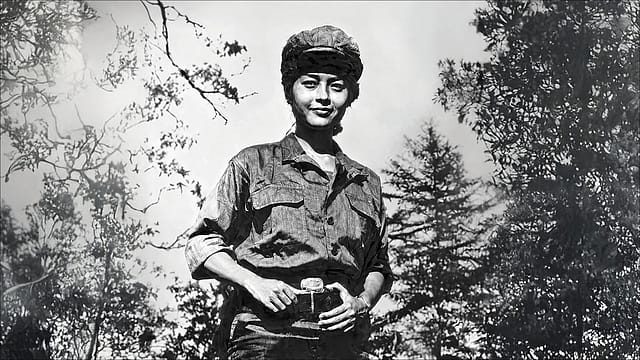
LONG BEFORE NITAZENES, fentanyl analogs or methamphetamine superlabs dominated headlines about Southeast Asia’s drug trade, the foundation of the region’s narcotics economy was laid the old fashioned way through poppy fields, colonial neglect and Cold War opportunism. The Golden Triangle, the mountainous frontier where Myanmar, Laos and Thailand meet, has spent the better part of a century as one of the world’s most resilient drug-trafficking hub and its origin story is inseparable from the rise of opium cultivation in Myanmar’s Shan State. It is also inseparable from one extraordinary person Olive Yang, arguably one of the earliest documented drug warlords of the modern era whose life reads like fiction.
In the rugged hills along the Myanmar-China border, there’s a story that sounds too cinematic to be real—of a princess who rejects her crown, builds an army, runs an empire of opium, falls in love with a movie star, survives prison and then spends her final decades brokering the peace her younger self once threatened to destroy. That story belongs to Olive Yang, and unlike most legends, almost every strange detail of it is documented fact.
Yang died in 2017 at the age of 90 in a militia guarded compound in the border town of Muse. By then she had outlived nearly everyone who shared her world, whether it were the colonial administrators, the rival warlords, the CIA handlers, and even most of her own siblings. What she left behind was a life so layered with contradiction that historians, journalists and queer scholars are still arguing over how exactly to categorise her. As a warlord, trafficker, rebel commander, gender pioneer, peace broker or a nun. She was, depending on whom you ask and which decade you’re looking at, all of them at once.
YANG WAS BORN Yang Jinxiu on June 24, 1927, in the northern Shan State of British Burma, present-day Myanmar. She was one of 11 children in the Yang clan, an ethnically Chinese family that had ruled as hereditary chiefs over what is now known as Kokang. Her older brother, Edward, inherited the formal title and the administrative authority that came with it along with command of a small army meant to protect the territory.
Olive was never destined for the throne but she was very much destined for trouble with it. As a daughter of the ruling family, she was expected to fulfil the traditional roles of princess, wife and mother and her worried parents pushed her into an arranged marriage with her own younger cousin, Twan Sao Wen, in 1948. She resisted in ways that would become legendary among her relatives and society at large. According to family accounts, she once threw a pot of urine at her husband during an attempt to consummate the marriage and reportedly declared outright, “I don’t like men”. As far as marital boundary setting goes, it lacked subtlety but left little room for misinterpretation. Nevertheless, the couple had one son together, Duan Jipu, who was named after the American Jeeps that Yang had admired in wartime China, making Jipu possibly the only heir to a Shan opium dynasty named after a piece of US Army surplus. The marriage, on the other hand, expectedly ended in divorce.
It’s worth noting that Yang lived in a time and place where Yang’s gender expression and romantic attractions were literal criminal offenses and not just metaphorically risky but prosecutable. That she lived as openly as she did in a conservative colonial-era society says something about how little patience she had for social norms, rules and laws.
YANG WAS EDUCATED at Lashio’s Guardian Angels Convent School, an unremarkable detail until you consider what came directly after it. At just 19, she organised ethnic Kokang forces into an army nicknamed “Olive’s Boys”, eventually commanding more than a thousand soldiers and consolidating control over opium trade routes running from the highlands down to the lowlands.

In his definitive account of the narcotics trade, journalist and Burma historian Bertil Lintner described her transformation in stark terms noting that locals knew her as ‘Miss Hairy Legs’, an unfeminine woman who while still in her early twenties, came to command her own army. Lintner credits her with a specific historical first backed by the Kuomintang (Chinese Nationalist Party, the party led by Chiang Kai-shek whose remnant forces fled into Burma’s Shan State after losing the Chinese Civil War to the Communists in 1949). Olive became the first warlord or warlady to move opium by truck convoy rather than mule train down to the Thai border.
The timing of Olive’s transformation mattered enormously. Her brother, Edward, abdicated his royal title in 1959, formally folding Kokang into the Union of Burma, alongside dozens of other Shan chiefdoms, and rather than letting the family’s military influence dissolve along with the monarchy, Olive simply absorbed it. She seized command of her brother’s former army, building a reputation as a defender of the Kokang people against Burmese political dominance while also amassing a personal fortune through opium and other enterprises.
BY THE 1950s, Yang’s operation had attracted attention well beyond regional politics. After Nationalist Chinese forces were expelled from mainland China and pushed into Southeast Asia, she partnered with Kuomintang remnants to formalise opium trade routes across what became known as the Golden Triangle, effectively industrialising a trade that had previously been local and fragmented into one of the most lucrative narcotics corridors on Earth.
This is where Yang’s story intersects with one of the stranger footnotes of American Cold War strategy. The CIA, eager to find local forces capable of pushing back against Communist influence spreading from China, partnered with Kuomintang forces. Yang was allied to in an operation known as Operation Paper, funnelling American weapons into the militias of the region. It was a classic Cold War trade. Washington got an anti-Communist proxy force in a strategically vital border region and Yang got the firepower to entrench her control, which conveniently also protected the opium routes funding her operation.
The Kuomintang’s (KMT) own justification for the trade was disarmingly explicit. As KMT General Tuan Shiwen put it in a line, Lintner records, as defining the era’s entire logic, “to fight, you must have an army and an army must have guns and to buy guns, you must have money.” In the Golden Triangle, that money came from one crop.
Inside her own ranks, Yang inspired something closer to devotion than fear. One former soldier who later became a member of parliament recalled simply, “We adored her. She was like a mother to me.” It’s a striking contrast to the formal coldness implied by titles like ‘warlord’. Among the people she actually commanded, Yang seems to have built something closer to genuine loyalty.
YANG’S ROMANTIC LIFE never stayed private, partly because she didn’t seem interested in keeping it that way. Her most famous relationship was with Wah Wah Win Shwe, a Burmese film star who had shot to fame as a teenager. Yang courted the actress in 1960 lavishing her with expensive gifts and even adding her name to the deed of a house on University Road in Yangon. The affair became, in the words of one obituary writer, “the stuff that entertained the reading public for years.”
The actress herself later denied the romance ever happened, though she continued living on that same property decades later with a husband and children of her own. Whatever the precise truth of the relationship, the public scandal it generated was real and it arrived at almost exactly the moment Yang’s political fortunes began to collapse.
IN 1962, BURMA’S military government newly empowered after General Ne Win’s coup, moved to eliminate the kind of regional power Yang represented. Following the coup, the military stripped both Yang and her brother Edward, the former chief of Kokang, of their remaining authority. She was arrested in 1962 alongside her brother Jimmy, then a sitting member of parliament, in a calculated move to bring Kokang under direct Burmese administration. She was imprisoned at Insein Prison and not released until 1968. Those six years, she was stripped of the army, the territory and the influence she’d spent her twenties and thirties building.
What followed was a deliberately quiet chapter. In the 1960s, she built a residence in downtown Yangon and kept a low profile there for decades. Some accounts suggest this period included an even more unexpected turn. Reports claim that after her release, she spent time living as a nun, a striking image for a woman once feared across an entire border region.
YANG’S FINAL GREAT act came when most people her age were settling into retirement. In 1989, in her early sixties, she was recruited by Khin Nyunt, the Burmese government’s chief of intelligence, to help negotiate ceasefires with ethnic rebel groups. It was a remarkable reversal, the very state that had imprisoned her for destabilising the region now needed her precisely because of the relationships and credibility she’d built doing exactly that.
The agreement she helped negotiate with her distant relative Peng Jiasheng and his Kokang rebel force, the Myanmar National Democratic Alliance Army (MNDAA), held for roughly two decades before fighting resumed in 2009. Two of the men she had personally mentored years earlier turned out to be among the era’s most consequential drug lords. Peng Jiasheng and Lo Hsing-han, both major opium figures, were counted among her students at a free school she had set up in Kokang between 1940 and 1950. Peng Jiasheng’s MNDAA was back in the news recently with the Three Brotherhood Alliance, backed by the Chinese that fought the military junta in 2024.
IN 2002, NOW well over 70 years of age, Yang fell chronically ill and the following year, she returned to Kokang after decades. By her final years, she was confined to a wheelchair living quietly in a compound in Muse under the care of her stepson and his militia men, unable to return permanently to the Kokang hills that had once been entirely hers to command.
She died on July 13, 2017, after slipping into a brief coma. The woman who had once led a thousand-soldier army, romanced a national film star, ran guns for the CIA and spent six years in a colonial-era prison spent her final days in relative silence, a fittingly understated close to a life that had never once been quiet by choice, only by circumstance.
Few historical figures manage to be a Cold War asset, a tabloid scandal, a queer icon and a peace negotiator within a single lifetime. Olive Yang did all four usually at the same time and never once seemed interested in apologising for any of it. But her story is not really about one woman’s contradictions—it is about a region. The Golden Triangle did not become a narcotics hub by accident and it has not remained one by accident either. It was built, deliberately at the intersection of colonial-era opium economies, ethnic insurgencies that needed funding and great powers. First, the CIA and later, others willing to trade weapons and legitimacy for strategic footholds, regardless of what those footholds were financed by. Decades on, the same triangle of factors—unresolved historical grievance, sustained conflict and the strategic interests of states and intelligence agencies who find armed proxies useful—continues to make this stretch of borderland one of the most durable narcotics trafficking corridors in the world. Synthetic drugs have replaced raw opium as the trade’s most lucrative product and new actors have replaced old warlords. But the underlying machinery Olive Yang helped build, using geography, ungoverned territory and great power convenience working in concert, has never really gone away.