Trump-Netanyahu Iran war clash: ‘Shouting match from hell’ reported as leaders disagree
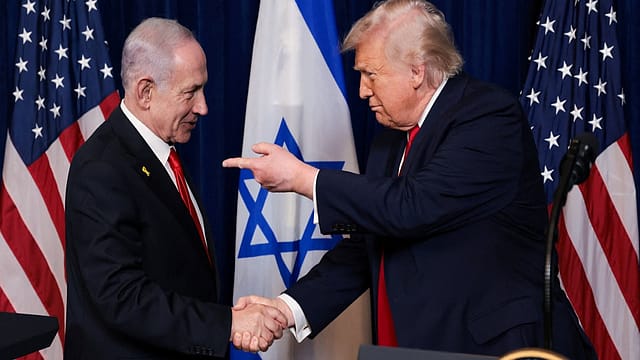
A phone call meant to discuss the next phase of the Iran conflict may have exposed a growing divide between Washington and Jerusalem. According to Israeli media outlets Ynet and Yedioth Ahronoth, Trump and Netanyahu spoke over the weekend, with their disagreement over renewed military action against Tehran reportedly turning into an unusually heated exchange.
Sources familiar with the conversation described it as a "shouting match from hell", Ynet reported. Netanyahu allegedly pressed Trump to resume attacks, arguing that Iran's leadership must be removed, while the US President favoured continuing negotiations and economic pressure.
The account, however, has been disputed. Netanyahu's office dismissed the reports as "fake news", while a senior Israeli official confirmed that the call took place but denied that it had become confrontational. The precise nature of the exchange has not been independently established.

The Wealth Issue 2026
06 Nov 2026 - Vol 05 | Issue 45
Portraits of Dreamers and Doers under 35
Netanyahu wants regime change in Iran, not another temporary ceasefire
Netanyahu has made little secret of his position. Addressing the opening of Israel's 26th Knesset on November 10, he warned that Iran was working to rebuild its nuclear programme and argued that removing its leadership was the only lasting solution. “Iran is working to renew the nuclear threat. The only way to permanently remove this existential threat is by toppling the ayatollah regime,” Netanyahu said.
His position goes beyond preventing an immediate escalation. He has repeatedly argued that military pressure must ultimately bring about a fundamental change in Iran's political leadership.
The Israeli Prime Minister's reported lobbying has also been highlighted by the Financial Times. In a November 9 report, the newspaper cited a person briefed on the discussions as saying Netanyahu calls Trump "every day" to urge him to resume the war. Another source familiar with the situation said Netanyahu wanted military action to restart, although there was no coordinated push at that particular moment.
Trump favours diplomacy and economic pressure over fresh strikes
Trump, meanwhile, has signalled that he is not in a hurry to launch another offensive. In an interview broadcast on CBS's 60 Minutes on November 9, he was asked whether the United States would escalate the conflict after the midterm elections. "I don't think there's any reason to," he said.
The President has maintained that economic pressure, including the naval blockade, could force Tehran to make concessions without another round of strikes. His administration has also continued to leave the possibility of military action open if negotiations fail.
The difference is significant: Netanyahu sees regime change as essential to eliminating Iran's nuclear threat, while Trump appears to believe Washington can secure its objectives through negotiations backed by pressure.
Iran war disagreement adds to uncertainty over Netanyahu's political future
The reported tension comes at a politically difficult moment for Netanyahu. Following October's general election, his political camp lost its parliamentary majority, leaving his position uncertain as opposition leader Gadi Eisenkot works to form a government.
The US-Israel relationship remains strategically important, but the latest reports suggest that the two leaders may not share the same timetable or preferred outcome for Iran.
For now, Trump is holding back from renewed strikes, while Netanyahu continues to argue that the threat from Tehran cannot be permanently removed without regime change. Whether Washington's diplomatic approach can produce an agreement—or whether Israel succeeds in pushing for another military campaign—remains the central question.
(With inputs from ANI)