Rubio-Wang call puts Trump-Xi-Putin summit in focus: Will China agree to nuclear talks?
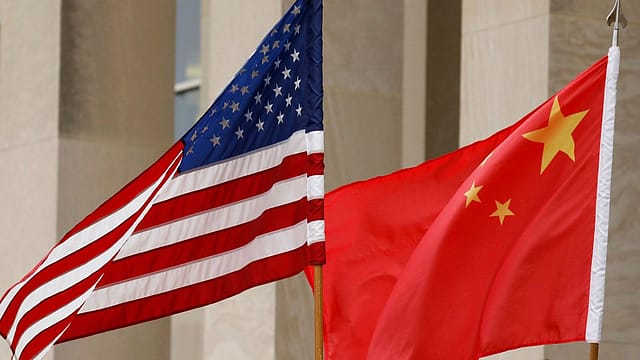
With two major international summits approaching, Washington and Beijing are working to keep their diplomatic channels open. Rubio, who also serves as US National Security Advisor, spoke with Wang on November 11 at China's request, discussing US President Donald Trump's upcoming visit to China and Chinese President Xi Jinping's planned trip to Florida.
According to the US State Department's readout, the conversation covered Trump's participation in the Asia-Pacific Economic Cooperation (APEC) summit in China and Xi's expected visit to the United States for the G20 summit.
"The Secretary and the Director recalled the bilateral leader-level commitment to a constructive relationship of strategic stability on the basis of respect, fairness, and reciprocity," the US statement said.

The Wealth Issue 2026
06 Nov 2026 - Vol 05 | Issue 45
Portraits of Dreamers and Doers under 35
The two sides also recognised the importance of direct conversations between their leaders to pursue shared objectives, including peace and denuclearisation, potentially through a trilateral meeting involving Russia.
Trump-Xi-Putin meeting: Is a historic trilateral summit taking shape?
The possibility of bringing Trump, Xi and Russian President Vladimir Putin into one room has gained momentum ahead of the APEC gathering. Trump said on November 8 that he expected to meet Xi and Putin in Shenzhen, China, where the APEC leaders' meeting is scheduled for November 18-19. He said the discussions could cover denuclearisation and efforts to end the war in Iran.
Rubio had also told reporters that preparations were under way for a possible three-way meeting on the sidelines of the summit.
Beijing had reportedly confirmed discussions with the relevant parties about a meeting involving the three leaders. However, no final arrangement or agenda had been announced. The possibility is significant because it would bring together the leaders of three major nuclear powers at a time of continuing international conflicts.
China’s readout differs from Washington’s account of nuclear talks
There is, however, an important difference between the two governments' accounts of the Rubio-Wang conversation. China's Foreign Ministry described the call as "positive and constructive". Wang said relations between the two countries had maintained a hard-won momentum and that cooperation was in their shared interests.
"China's policy toward the US will remain stable and consistent. China is willing to strengthen communication and cooperation with the US, properly handle differences and sensitive issues, support each other in successfully hosting the 2026 APEC Leaders' Informal Meeting and the G20 Leaders' Summit, and promote the implementation and effectiveness of the constructive strategic and stable China-US relationship," the Chinese readout stated.
But, as Reuters pointed out, Beijing's account did not mention denuclearisation or a possible trilateral meeting with Russia. China has previously argued that its nuclear arsenal is considerably smaller than those of the US and Russia, making three-way nuclear disarmament negotiations unfair at this stage.
Why a Trump-Xi-Putin meeting could prove complicated
The three leaders may have different priorities. Trump has expressed interest in nuclear arms control and ending the war in Iran, while Putin is keen to discuss the Russia-Ukraine conflict. Beijing, meanwhile, has been cautious about being drawn into negotiations on either issue.
The APEC summit in Shenzhen next week could therefore offer an opportunity for diplomatic engagement, but a meeting alone would not guarantee progress. US-China differences over trade, tariffs, technology and rare earth exports also remain unresolved.
Xi's expected visit to Florida for the G20 summit in December provides another opportunity to sustain dialogue. For now, the Rubio-Wang call signals that both capitals want to keep communication open. Whether that diplomatic momentum can produce a breakthrough involving Moscow remains uncertain.
(With inputs from ANI)