#ThisDayThatYear: August 14, 1945 — Japan Surrenders, Bringing World War II to an End
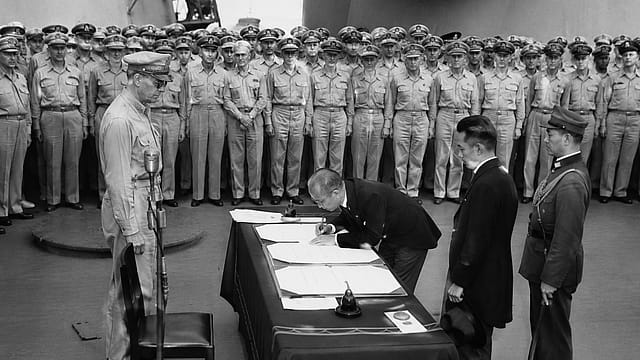
On August 14, 1945, one of the bloodiest chapters in modern history moved towards its final close as Japan formally accepted the Allied terms of surrender, effectively ending World War II. The decision came after years of fighting across the Pacific and only days after the United States dropped atomic bombs on Hiroshima and Nagasaki.
The road to surrender had begun weeks earlier. On July 26, 1945, the United States, Britain and China issued the Potsdam Declaration, demanding Japan's unconditional surrender and warning of severe consequences if it refused. Japan initially rejected the ultimatum.
The situation changed dramatically in August. The United States dropped an atomic bomb on Hiroshima on August 6 and another on Nagasaki on August 9. The Soviet Union also entered the war against Japan on August 8. Faced with military defeat on multiple fronts and mounting destruction, Japan's leadership moved towards surrender.

Zeroing In on ECI
09 Oct 2026 - Vol 05 | Issue 41
Constitutional legitimacy versus political opportunism
On August 14, Japan accepted the Potsdam Declaration. In the United States, President Harry S. Truman announced that Japan had accepted the Allied terms, triggering celebrations across Allied nations.
The Japanese public heard the decision directly from Emperor Hirohito the following day, August 15, when he made a historic radio broadcast announcing Japan's surrender. It was the first time the Japanese people had heard the Emperor's voice.
The event is commonly remembered as V-J Day, or Victory over Japan Day. However, the war was not formally concluded until September 2, when Japanese representatives signed the Instrument of Surrender aboard the USS Missouri in Tokyo Bay.
The surrender brought an end to a global conflict that had lasted six years, reshaping international politics and ushering in a new post-war world order. It also marked the beginning of Japan's occupation and reconstruction under Allied supervision.