The Ships of the Desert Are Sinking: How Rising Temperatures Are Killing the World's Most Heat-Resistant Animal
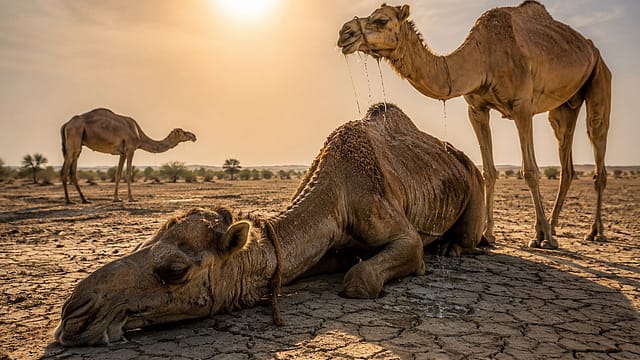
Camels have survived deserts for centuries, enduring conditions that would kill most animals within hours. But increasingly extreme temperatures across parts of North Africa and the Horn of Africa are now pushing even these biological marvels past their breaking point. From Ethiopia to Somalia to Algeria, herders are reporting mass deaths, falling milk yields, and collapsing communities. The climate crisis has found a new and unexpected victim.
Who Is Feeling the Impact on the Ground?
Ali Umer, a camel herder from Afar in north-eastern Ethiopia, told the BBC he lost eight camel calves in a single month due to extreme heat. He described blisters on their feet, watery eyes, and sand burning their skin, adding that even the wind, which once carried cool air, now brings heat.

Zeroing In on ECI
09 Oct 2026 - Vol 05 | Issue 41
Constitutional legitimacy versus political opportunism
How Severe Is Camel Mortality Getting Across the Region?
According to research published in June, nearly 46% of surveyed camel-owning households in Somalia reported drought-related camel deaths, rising to approximately 73% of surveyed households in the Sool region. In north-eastern Kenya, a veterinary officer told the BBC that camel deaths had risen by more than 15% over the last two years due to extreme heat.
Why Does a Heatwave Hit Camels So Hard?
Camels manage heat comfortably up to around 40C. According to Dr Mohammed Bengoumi of the UN's Food and Agriculture Organization, summer temperatures in the Sahara now frequently exceed 50C. Professor Abdelmadjid Chehma of the University of Ghardaia told the BBC that prolonged heat above 41 to 45C directly damages white blood cells and impairs the immune system.
What Does Heat Stress Do to a Camel's Body?
Metabolism slows, food intake drops, and fatigue sets in. There can be weight loss, kidney malfunction, inflammation, and reproductive disorders as direct consequences of heatwave exposure.
How Large Is the Population at Risk?
The Horn of Africa and North Africa together host approximately 80% of the world's dromedary camels. According to the WMO's State of the Climate in Africa 2025 report, North Africa is warming at 0.43C per decade, the fastest of any African subregion.
Are Herders Being Permanently Displaced?
Some herders in northern Ethiopia are permanently moving south rather than undertaking their usual seasonal migration, because extreme heat and drought have made camel herding unsustainable.
Is There Any Hope Left for These Communities?
The Horn of Africa is reportedly entering another drought cycle after its longest recorded one spanning 2020 to 2023, according to Oxfam. Water prices in parts of Somalia have already risen by more than 2,000%. The camel, historically the herder's last line of defence against the desert, is now becoming a climate victim itself.
(With inputs from yMedia)