Switching Brain Cells On and Off: How Algae and Light Won Three Scientists the Medicine Nobel
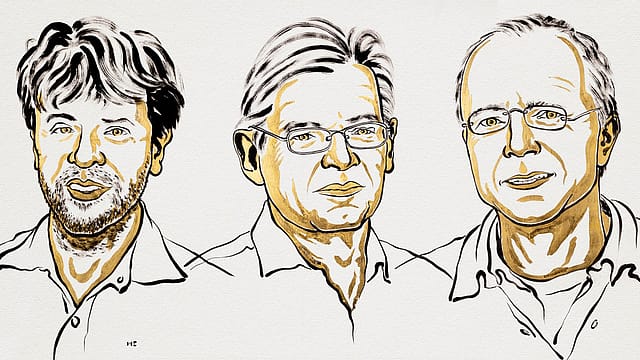
Pond algae helped win this year's Nobel Prize.
American Karl Deisseroth and Germans Peter Hegemann and Georg Nagel have been awarded the 2026 Nobel Prize in Physiology or Medicine for "discoveries concerning light-gated ion channels and optogenetics," the Nobel Assembly at Karolinska Institutet announced in Stockholm on Monday. They share a prize of 12 million Swedish kronor, about $1.2 million, according to Reuters.
WHAT IS OPTOGENETICS?
It is a method for controlling individual nerve cells with light. Scientists place a light-sensitive protein into chosen neurons. When light hits them, the cells fire or go quiet.
The Nobel Assembly says this lets researchers switch the activity of single nerve cells on or off in a living brain. The technique is now used in labs worldwide, it said, to reveal how the brain forms memories, feelings and behaviours.

Losing Memory
16 Oct 2026 - Vol 05 | Issue 42
The making of a medical and social emergency
"Optogenetics provides opportunities for mapping the brain in a way that we could once only dream of," said Per Svenningsson, chair of the Nobel Committee for Physiology or Medicine.
HOW IT WORKED, IN THREE STEPS
The alga: Hegemann began by studying how the single-celled alga Chlamydomonas swims towards light.
The protein: In the early 2000s, Hegemann and Nagel discovered channelrhodopsin on the alga's surface. In blue light, it opens a channel that lets charged ions flow into the cell and creates an electrical impulse. They found it could make other cells sensitive to light too. Reuters reported they published in 2003 that it worked in human and hamster cells.
The brain: Deisseroth, at Stanford, put the gene into rat nerve cells and triggered signals with blue light, publishing in 2005. Two years later he showed the switch worked in living mice. Reuters reported the method was named optogenetics in 2006, and that Deisseroth used it to control the movement of mouse whiskers by activating specific motor-cortex neurons.
WHO ARE THE WINNERS?
Karl Deisseroth, born 1971, of Stanford University and the Howard Hughes Medical Institute. Reuters gives his age as 54. Perlmann, the Nobel Assembly's secretary-general, said the committee woke him to give him the news, according to STAT.
Peter Hegemann, born 1954, of Humboldt University of Berlin.
Georg Nagel, born 1953, of the University of Würzburg.
The prize-winning discoveries were made at the Max Planck Institute for Biochemistry in Martinsried and the Max Planck Institute for Biophysics in Frankfurt, according to the Nobel Assembly's release.
WHY THEY WERE CHOSEN
The committee's case is that this was a tool that changed neuroscience. Before it, researchers could record brain activity or stimulate it crudely, but they struggled to control specific cell types in a living animal and watch what changed. Optogenetics let them test which circuits drive which memories, emotions and behaviours, and it has been applied to circuits relevant to neurological and psychiatric disorders.
The most advanced medical use is in vision. Researchers are using optogenetics to try to restore sight in people with visual impairment. Reuters reported it is being tested in clinical trials for retinitis pigmentosa, in which light-sensing cells die. The approach makes surviving healthy cells in the retina light-sensitive, so they can send signals to the optic nerve and create visual perception in the brain.
NOT THE FIRST HONOUR
The three are not newcomers to prizes. Hegemann and Deisseroth shared the 2021 Lasker Award with Dieter Oesterhelt, the Lasker Foundation said. The 2012 Zülch Prize named Hegemann, Nagel and Deisseroth alongside Ernst Bamberg of the Max Planck Institute of Biophysics.
Ed Boyden and Gero Miesenböck, who did early work on controlling neurons with light, shared other major prizes with Deisseroth and Hegemann, such as the 2019 Warren Alpert Foundation Prize. A Nobel prize can go to no more than three people, so the Assembly's choice left out several scientists who helped build the field.
The medicine prize traditionally opens the Nobel season, Reuters noted, with physics, chemistry, literature, peace and economics to follow over the coming days. The laureates receive their awards at ceremonies in Stockholm and Oslo on December 10, the anniversary of Alfred Nobel's death.
With inputs from ANI, Reuters, STAT and the Nobel Assembly at Karolinska Institutet