Strait of Hormuz Vessel Hit by Missile, Crew Evacuated as Fire Rages
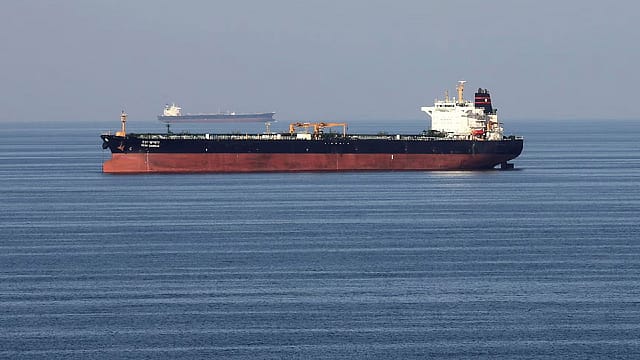
A vessel caught fire in the strategic Strait of Hormuz on Monday following a missile strike, prompting an immediate evacuation of the mariners on board.
The United Kingdom Maritime Trade Operations (UKMTO) confirmed the incident, stating that "the crew safely abandoned the vessel and have been recovered by a tug boat".
According to the maritime security watchdog, the assault took place approximately 15 km (8 nautical miles) northwest of Kumzar, Oman.

Freedom Issue 2026
14 Aug 2026 - Vol 05 | Issue 33
Shashi Tharoor on being radical liberal | Ram Madhav on how Gandhi used his Hinduism | TCA Raghavan on a diplomat's travels in history | Sumana Roy on the novel beyond the Booker | Carlo Pizzati on the dissolution of Borders
Assessing the status of the stricken ship, the agency noted that the crisis remains active as the vessel continues to float unmanned.
"The fire has not been extinguished and the vessel is currently adrift," it said in a statement. "Vessels are advised to transit with caution and report any suspicious activity to UKMTO while authorities investigate."
How Has the Strait of Hormuz Tanker War Intensified Amid US and Iran Retaliation?
The maritime strike directly underscores the severe geopolitical volatility in the region, where the US military has advised vessels to navigate a route close to Oman whilst traversing the Strait of Hormuz.
In retaliation, Iran has launched assaults against these ships, maintaining that it must retain authority over the critical sea lane through which twenty per cent of all globally traded oil and natural gas previously moved during peacetime.
This escalating tanker war is tied to a broader, explosive flashpoint between Washington and Tehran.
Following the announcement of another American trooper's death, the United States launched a fresh wave of bombardments early on Monday, marking the ninth consecutive night of operations. Meanwhile, Tehran launched missiles towards Jordan, threatening to expand the hostilities into adjacent Israel.
The multi-front escalation indicates that both nations have progressively moved towards full-scale warfare following the collapse of last month's temporary agreement that was intended to bring a lasting halt to the hostilities.
Consequently, maritime transport through the Strait of Hormuz has virtually ground to a halt, with both factions striking civilian infrastructure used by millions.
The immediate trigger for the sustained American retaliation is the mounting US casualty count. According to the US military, the latest American service member lost their life in Iraq on Saturday amidst the "controlled detonation" of a downed Iranian drone.
This casualty follows an intense weekend of US military operations. Previously, the armed forces stated that their bombardments focused on Iran's paramilitary Revolutionary Guard in retribution for the killing of personnel in Jordan on Friday.
A service member went missing after that particular assault, and the latest military briefing confirmed that "unidentified remains" were recovered on Sunday and are currently undergoing identification.
The total number of US service members killed since the outbreak of hostilities has now reached 17.
(With inputs from ANI)