Strait of Hormuz Crisis: Iran Turns Back Pakistan-Bound Ship Amid US Conflict
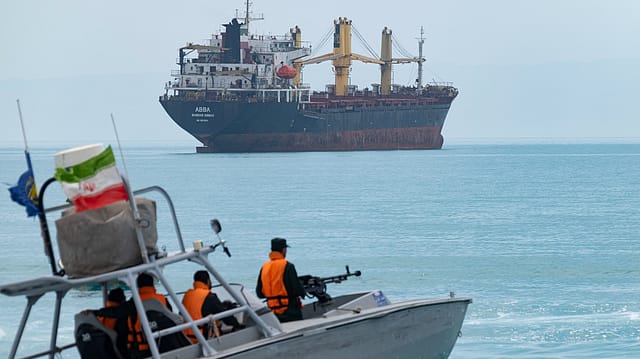
In a significant development, Iran has turned back a merchant vessel carrying food supplies to Pakistan from the strategically vital Strait of Hormuz. The vessel, identified as SELEN and bound for Karachi, was denied passage by Iran’s Islamic Revolutionary Guard Corps (IRGC) Navy. Iran’s Naval Commander Alireza Tangsiri said, “The container ship SELEN was turned back by the IRGC Navy due to failure to comply with legal protocols and lack of permission to pass through Strait of Hormuz. The passage of any vessel through this waterway requires full coordination with Iran's maritime authority, and this achievement would not have been possible without the backing of the noble people of Iran.”
The vessel, sailing under the flag of St Kitts & Nevis, was earlier tracked in the Persian Gulf before being redirected.
What are Iran’s new rules for maritime passage?
Iran has made it clear that access through the Strait will now depend on strict compliance and prior approval.
In a statement posted on X, Iran’s mission in New York said, “Non-hostile vessels, including those belonging to or associated with other States, may, provided that they neither participate in nor support acts of aggression against Iran and fully comply with the declared safety and security regulations, benefit from safe passage through the Strait of Hormuz in coordination with the competent Iranian authorities."

Open Minds 2026
26 Jun 2026 - Vol 05 | Issue 26
The power of ideas and arguments in 50 portraits
The Iranian Defence Council has reinforced that even “non-hostile vessels” must coordinate with authorities before transit.
This tightening of control comes amid what Tehran describes as ongoing military aggression by the United States and Israel.
Why is the Strait of Hormuz so critical?
The Strait of Hormuz is one of the world’s most crucial oil chokepoints, linking the Persian Gulf to the Arabian Sea.
Any disruption here can significantly impact global energy flows and regional trade, especially for countries like Pakistan that rely heavily on imports.
How are US-Iran tensions affecting Pakistan?
As tensions escalate between the United States and Iran, concerns are mounting in Pakistan over severe economic fallout.
Karachi-based journalist Shams Kerio warned that ongoing negotiations—primarily focused on Iran’s nuclear programme—have been undermined by recent developments.
“Issues can only be resolved through dialogue, not conflict,” he said, emphasizing the need for trust and credible assurances.
Could Pakistan face an economic crisis?
Kerio highlighted that Pakistan’s fragile economy is particularly vulnerable due to its dependence on oil imports and regional trade.
“If the war continues, Pakistan's economy could collapse due to lack of reserves and weak financial accountability,” he warned.
He pointed out that rising fuel prices would worsen inflation and disproportionately affect the poorest sections.
“Daily wage workers are already struggling. If petrol prices rise further, food insecurity and unemployment will worsen,” he said.
What are the broader global risks?
The situation could escalate beyond the region, with major powers potentially entering the conflict.
Kerio cautioned that prolonged tensions may draw in countries like Russia and China, raising the risk of a wider global confrontation.
However, he remained cautiously hopeful: “If negotiations succeed and the war ends, there is a chance for gradual recovery.”
He concluded with a call for diplomacy: “Peace is possible only with sincerity, trust and a commitment to dialogue.”
(With inputs from ANI)