Strait of Hormuz crisis: Iran grants safe passage to Indian vessels amid shipping crackdown
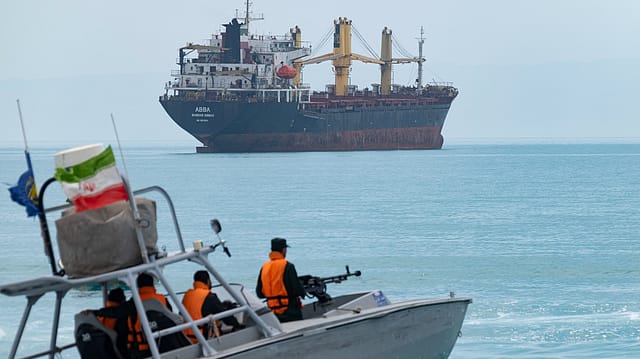
Amid escalating tensions in West Asia and mounting disruptions to global energy routes, Iran has reportedly allowed Indian-flagged vessels to transit the strategic Strait of Hormuz safely. The decision comes even as the Islamic Revolutionary Guards Corps (IRGC) tightens its grip on the waterway, enforcing a strict maritime blockade and warning that ships moving without permission risk being targeted.
Why has Iran allowed Indian-flagged vessels through the Strait of Hormuz?
Sources said Iranian authorities have decided to permit Indian-flagged ships to pass safely through the Strait of Hormuz, where maritime traffic has slowed dramatically since the United States and Israel launched strikes on Iran.
Iran had earlier warned that vessels must obtain permission before attempting to cross the narrow waterway, which is considered one of the most strategically sensitive shipping routes in the world.

Flood and Fury
04 Sep 2026 - Vol 05 | Issue 36
Devighat, Nepal, August 29, 2026
Rear Admiral Alireza Tangsiri, commander of the IRGC Naval Force, said ships ignoring Iran’s warnings could become targets.
“Were the ships assured of safe passage through the Strait of Hormuz? This should be asked of the crews of the vessels Express Rome and Mayuree Naree, who today, trusting in empty promises, ignored the warnings and intended to cross the Strait, but were caught. Any vessel intending to pass must obtain permission from Iran,” the Iranian general said in a post on X.
According to Iranian state media, Tehran has indicated that vessels not serving the interests of the United States and Israel can sail safely through the strait.
How strict is the IRGC’s maritime blockade?
The IRGC has intensified enforcement in the Persian Gulf, declaring what it describes as a “no-move” zone in parts of the Strait of Hormuz.
In footage shared by state broadcaster Press TV, vessels are shown sitting stationary in the waterway under the watch of IRGC patrols and drones. The documentary describes ships that “remain silent—yet are targeted by the IRGC if they shift even a few meters.”
The video shows speedboats operated by what the narrator calls “Basij guys from Bandar Abbas,” described as the “Defenders of the Persian Gulf.”
According to the narration, the “IRGC has claimed to hit 14 oil tankers, including two American tankers.”
The restrictions are severe. The IRGC has reportedly designated a maritime zone where even slight movement could trigger retaliation.
The documentary warns of “a space in the sea where IRGC will hit any ships that move a few meters,” adding that “moving a few dozen meters results in an attack from the IRGC,” particularly through drones.
At one point in the footage, the narrator alerts the cameraman to danger, saying a “drone is above them and they should leave.”
Why does the Strait of Hormuz matter to global energy markets?
The Strait of Hormuz is among the world’s most critical energy chokepoints.
More than 20 million barrels of crude oil pass through the narrow channel each day, representing roughly one-fifth of global oil consumption and nearly a quarter of all seaborne oil trade. Large volumes of liquefied natural gas shipments also transit the route.
Any disruption to this flow can ripple across global markets, affecting fuel prices, shipping costs, supply chains and household energy bills worldwide.
The blockade has already triggered international responses. The United States Department of Energy has announced plans to release 172 million barrels from the strategic petroleum reserve, beginning next week, with deliveries expected to take about 120 days.
The International Energy Agency has also announced the release of 400 million barrels from the emergency reserves of its 32 member countries to ease supply disruptions.
What steps has India taken to protect its ships and seafarers?
India is closely monitoring the evolving maritime situation in the Persian Gulf.
According to the Shipping Ministry, 28 Indian-flagged vessels are currently operating in the region. Of these, 24 vessels are located west of the Strait of Hormuz carrying 677 Indian seafarers, while four vessels are east of the strait with 101 Indian seafarers onboard.
Authorities said their safety and security are being actively monitored.
A 24-hour control room has been operational in the Ministry and the Directorate General of Shipping since February 28 to track developments and coordinate assistance.
Officials said authorities, ship managers and recruitment agencies are working closely with Indian embassies and local authorities to ensure the safety of Indian seafarers and provide assistance wherever required.
The government reiterated that it remains committed to safeguarding the welfare of Indian seafarers and protecting India’s maritime interests as the crisis continues to unfold.
(With inputs from ANI)