Sheikh Hasina Seeks New Passport, Identity Card Ahead of Planned Return to Bangladesh
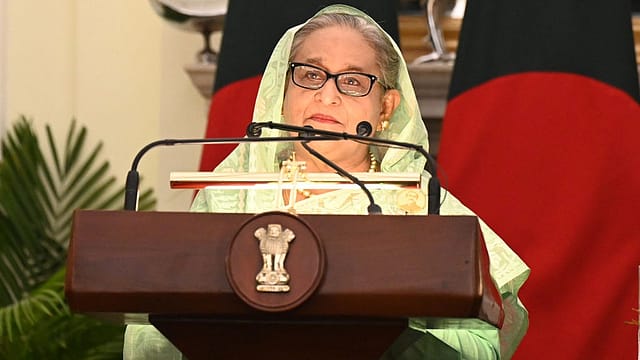
Former Bangladesh prime minister Sheikh Hasina has sought a new passport and national identity card (NID) from the Bangladesh Embassy in New Delhi, signalling a possible step towards her planned return to the country in December.
According to Reuters, Hasina’s lawyers at London-based Matrix Chambers submitted a letter on Monday to Preeti Rahman, the acting high commissioner at the Bangladesh Embassy, requesting that the documents be issued to facilitate her return.
The letter marks her first such communication with the embassy since she fled Bangladesh in August 2024, following a student-led uprising that ended her 15-year rule.
“In view of the reported revocation of her existing Bangladeshi passport and National Identity Card (NID) by the Interim Government and other authorities, I respectfully request that you take the necessary steps to issue a new Bangladeshi passport and National Identity Card for our client,” her lawyers wrote.

The Era of Forever Wars
30 Oct 2026 - Vol 05 | Issue 44
Coping with an explosive Middle East
They also urged the authorities to process the applications expeditiously, citing Hasina’s Bangladeshi nationality and the country’s obligations under international human rights instruments.
HASINA PLANS TO RETURN AND SURRENDER
According to Reuters, Hasina intends to return to Bangladesh and surrender before a court. Her aides said on Monday that the date of her return would be announced once the necessary formalities had been completed.
Her return could, however, reopen a period of political and legal uncertainty. In November 2025, Bangladesh’s war-crimes court sentenced her to death in absentia over her alleged role in ordering a deadly crackdown on the student-led uprising. Hasina has denied the allegations and remains in India.
THE 2024 UPRISING THAT ENDED HER RULE
Hasina’s departure followed weeks of protests that began in June 2024 over a controversial government job quota system. Demonstrations intensified after Bangladesh’s High Court reinstated a reservation system that allocated 30 per cent of government jobs to descendants of freedom fighters from the 1971 Liberation War.
Students demanding merit-based recruitment took to the streets. The movement soon expanded amid violent clashes, allegations of excessive force by security personnel, unemployment concerns and wider public anger over governance and corruption.
The government’s response, including a deadly crackdown on protesters, further fuelled the demonstrations. What began as a student movement turned into a nationwide campaign demanding Hasina’s resignation.
On August 5, 2024, as thousands of protesters marched towards Dhaka, Hasina resigned and fled to India aboard a military aircraft.
AWAMI LEAGUE BANNED, EXTRADITION REQUEST PENDING
Hasina’s Awami League, once Bangladesh’s largest political party, has since been banned. Several of its leaders and supporters have been arrested, while others have gone into exile in India and elsewhere.
Her continued presence in India has also become a contentious issue in relations between the two neighbours. Bangladesh’s interim administration formally requested her extradition in December 2024.
India has said the request is being examined under established legal procedures, with officials pointing to the legal and diplomatic considerations involved.
Hasina’s request for fresh travel and identity documents comes as she signals her intention to return to a country where she faces serious criminal proceedings. Whether the documents are issued, and when she eventually returns, remain to be seen.
With inputs from ANI