Rust and Resentment: Populism and Infrastructure after another Spanish Tragedy
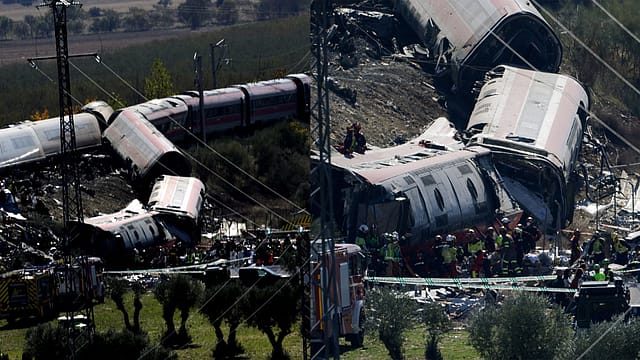
Spain spent three decades building the longest high-speed network in Europe. It has now buried the victims of two crashes on the same Madrid-Andalusia corridor within 10 months. In January, the Adamuz crash killed 45 people and was the first fatal accident on a Spanish high-speed line since the first opened in 1992. And now, the October 28 Urda disaster has killed at least 69 (according to the BBC). It is Spain’s worst train disaster since Santiago de Compostela in 2013, when 79 people died. It is also one of the worst in European railway history.
Unsurprisingly, the politics arrived before the cause was established. Leaked recordings suggest a controller cleared one train to proceed at normal speed while another sat stalled ahead. Óscar Puente, the transport minister, called the order “inexplicable”. Irene Montero, the far-left Podemos’ prime ministerial candidate, argued that blame must not fall on one worker, since drivers and experts have long warned against liberalisation. And Santiago Abascal of the far-right Vox refused to let mourning silence criticism even as his party lodged a Supreme Court complaint against Puente. The conservative People’s Party leader, Alberto Núñez Feijóo, said Spain “has the right to know what is happening with its infrastructure.”

Look Who's Talking Regime Change
23 Oct 2026 - Vol 05 | Issue 43
Each camp arrives with its explanation pre-assembled: markets for the left, incompetence for the right. And Spanish politicians aren’t the only ones splitting themselves along ideology on national tragedies.
There is no tailored dataset linking decaying infrastructure to populist votes, and it would be dishonest to pretend otherwise. But if the grievance is shared, so is the paradox. Money hasn’t been absent. The Adamuz stretch had been renewed under a €700 million programme, and a union source told the media that the drivers’ union Semaf had warned that high speeds were straining the lines. Spending may flatter showpieces but maintenance, signalling and procedure are where rules get quietly bent. Nobody cuts a ribbon for a replaced sleeper.
The biggest cautionary tale is, of course, Germany. Deutsche Bahn’s long-distance punctuality fell from 74.4 per cent in 2015 to 60.1 per cent in 2025, and reached just 54.2 per cent in September 2026, with infrastructure faults causing ever more delays. Humiliatingly for German engineering pride, Switzerland barred German trains from its network in 2024. In July 2025, three people died at Riedlingen when a regional train derailed, apparently after a rain-triggered landslide. Once again, this was a reminder that ageing track and a changing climate are poor partners.

And France, the high-speed pioneer, has little cause for smugness either. SNCF’s then chief and incumbent Labour Minister Jean-Pierre Farandou had warned that the average track age is 30 years, with sections already beyond 70 or even 100, and sought an extra annual €1 billion. The Cour des Comptes, France’s chief audit body, has long complained that the TGV was favoured while everyday lines were left to decay.
But look at the Global South to see the reversal of this logic. In India, the Balasore incident killed nearly 300 in 2023, yet the public demand is for more investment and more infrastructure, not less. Railway safety spending has risen from ₹39,200 crore in 2013-14 to ₹1,20,389 crore in 2026-27. Moreover, Kavach collision protection now covers 2,633 route kilometres. And a bullet train is promised for August 2027. Indonesia and Kenya, too, bought into the railways as evidence of arrival. Infrastructure, in most of the Global South, is an aspiration with a growth dividend. In Europe, it is an inheritance with a depreciation schedule. Voters tend to forgive a country still building. They are less kind to those that forgot how to maintain.