Riyadh Presses Washington to Reconsider Iran Port Blockade: Report
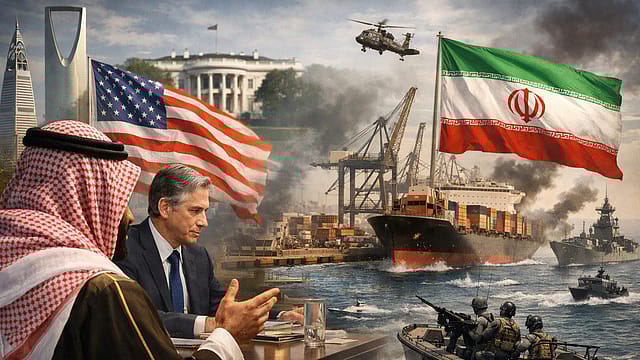
The ongoing war between the United States and Iran, coupled with the closure of the Strait of Hormuz, has shattered the decades-long status quo among Middle East oil and gas producers.
Saudi Arabia, a key American ally in the Gulf, is reportedly concerned that President Donald Trump's strategy to block Iranian ports may worsen an already volatile situation.
According to a report from the Wall Street Journal, Riyadh is pressing the Trump administration to drop its blockade of the Strait of Hormuz and return to the negotiating table.
Arab officials informed the publication that Saudi Arabia fears the move to close Iranian ports could provoke Tehran to escalate the conflict and disrupt other essential shipping routes.
While the US decision to blockade all Iranian shipments is intended to increase pressure on Iran's crippled economy, Saudi officials have warned that Tehran might retaliate by closing the Bab al-Mandeb.
How has the Strait of Hormuz crisis reshaped Gulf nations’ oil and gas strategy?
This Red Sea chokepoint is crucial for the kingdom's remaining oil exports.
Over six weeks of warfare, Tehran has demonstrated both the ability and willingness to seal off critical waterways and strike vital infrastructure.

Open Minds 2026
26 Jun 2026 - Vol 05 | Issue 26
The power of ideas and arguments in 50 portraits
These actions have fundamentally altered the risk calculus for neighboring countries and placed the long term oil and gas strategies of Gulf nations in jeopardy.
Following weeks of disruption, Saudi Arabia managed to restore its oil exports to prewar levels of approximately seven million barrels a day.
This was achieved by piping crude across the desert to the Red Sea while the blockade at Hormuz persisted.
However, the Wall Street Journal report indicates that Riyadh is worried these supplies would be at risk if the exit route through the Red Sea were also closed.
Amid these tensions, Iranian Foreign Minister Abbas Araghchi held a phone call on Tuesday with Oman's Foreign Minister Badr bin Hamad Albusaidi.
According to the Mehr news agency, the pair discussed developments regarding the ongoing "ceasefire and negotiations" between Iran and the US.
During the call, Araghchi underscored Tehran's position on regional stability.
The news agency reported that "Araghchi emphasised the Islamic Republic of Iran's commitment to preserving regional peace and stability with the cooperation and participation of all countries in the region and away from destructive US interventions."
Omani Foreign Minister Albusaidi expressed hope that peace and stability "would return to the region as soon as possible."
Oman previously acted as a mediator in talks occurring before February 28.
Omani officials stated that the conflict broke out even though a potential agreement had been "within reach." Despite previous rounds of negotiations, significant tensions remain following the outbreak of hostilities between the US and Iran.
(With inputs from ANI)