“Partners, Not Rivals”: Xi Jinping’s Big Message to Donald Trump in Beijing
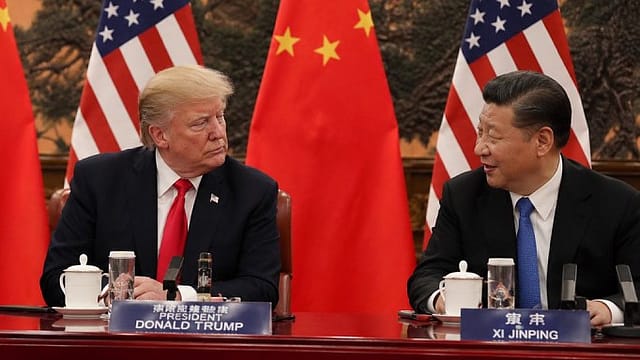
A high-stakes meeting between Xi Jinping and Donald Trump in Beijing has once again spotlighted the fragile yet crucial relationship between the world’s two largest economies.
With tensions simmering globally, Xi’s remarks framed the moment as a turning point—not just for bilateral ties, but for global stability.
The meeting comes at a time of deep global uncertainty, with shifting power dynamics, regional conflicts, and economic competition shaping international relations. Xi underlined the weight of the moment, suggesting that the trajectory of US-China ties could influence the global order.
"The whole world is watching our meeting. Currently, a transformation not seen in a century is accelerating across the globe, and the international situation is fluid and turbulent. The world has come to a new crossroads," he said.

Losing Memory
16 Oct 2026 - Vol 05 | Issue 42
The making of a medical and social emergency
He framed the relationship as pivotal not only for the two nations but for the wider world, where cooperation or conflict between them can have far-reaching consequences.
What is the ‘Thucydides trap’ and why did Xi mention it?
A key highlight of Xi’s remarks was his reference to the “Thucydides trap,” a concept often used to describe the risk of war when a rising power challenges an established one. By invoking it, Xi signalled concerns about escalating rivalry between China and the US.
"Can China and the United States overcome the Thucydides trap and create a new paradigm of major country relations? Can we meet global challenges together and provide more stability for the world? Can we, in the interests of the well-being of our two peoples and the future of humanity, build a brighter future together for our bilateral relations?" Xi said.
"These are the questions vital to history, to the world, and to the people. They are the questions of our times that you and I need to answer as leaders of major countries," he added.
The concept, popularised by scholar Graham T. Allison, reflects fears that structural tensions between a rising and dominant power could lead to conflict—something Xi appeared keen to avoid.
What message did Xi send on cooperation versus confrontation?
At the heart of Xi’s address was a clear push for cooperation over rivalry. He emphasised shared interests and mutual benefits, arguing that both nations stand to gain more by working together than by competing aggressively.
"I always believe that our two countries have more common interests than differences. Success in one is an opportunity for the other. And a stable bilateral relationship is good for the world. China and the United States both stand to gain from cooperation and lose from confrontation," he stated.
"We should be partners, not rivals. We should help each other succeed and prosper together and find the right way for major countries to get along well with each other in the new era," Xi added.
He also struck a diplomatic tone by welcoming Trump and signalling optimism for the future of ties.
"I am very pleased to meet you in Beijing. Welcome back to China after nine years... This year is the 250th anniversary of American Independence. Congratulations to you and to the American people," he said.
Looking ahead, Xi expressed hope for a reset in relations:
"Mr President, I look forward to our discussions on major issues important to our two countries and the world. And working together with you to set the course for and steer the giant ship of China-US relations so as to make 2026 a historic landmark year that opens up a new chapter in China-US relations," he said.
(With inputs from ANI)