Why Donald Trump Wants Venezuela as America’s ‘51st State’
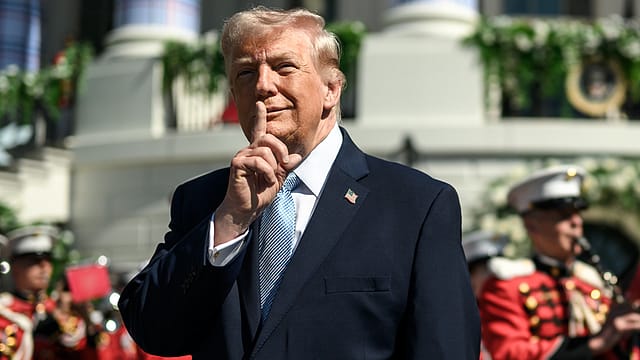
US President Donald Trump has once again ignited controversy with remarks suggesting that Venezuela could become the “51st state” of the United States. The comments mark the latest chapter in Trump’s repeated references to territorial expansion, following earlier remarks about Canada and Greenland.
The latest controversy intensified after Trump shared a map of Venezuela on Truth Social featuring an inset American flag while travelling to a summit with Chinese President Xi Jinping. The post came shortly after Trump told Fox News he was seriously “considering making Venezuela a new state of the US.”
The remarks have gained added significance because they come amid dramatic political upheaval in Venezuela following the capture of longtime leader Nicolás Maduro during a US military operation earlier this year.
What happened to Nicolas Maduro?
According to multiple reports, Maduro was captured after a large-scale US military strike targeting key Venezuelan installations in January 2026. Trump announced at the time that the United States had “successfully carried out a large scale strike against Venezuela” and that Maduro and his wife had been “captured and flown out of the country.”
The operation represented one of the most dramatic US interventions in Latin America in decades and immediately triggered international debate over sovereignty, legality and regime change. Trump later declared that the US would temporarily “run” Venezuela during a political transition.
However, the operation also drew criticism internationally, with questions raised over whether the military action violated international law and revived memories of earlier US interventions in the region.

Exclusive: To the Heavens and Back
19 Jun 2026 - Vol 04 | Issue 76
Shubhanshu Shukla relives the space odyssey that put India into orbit
Who is leading Venezuela now?
Following Maduro’s removal, interim leader Delcy Rodríguez emerged as the central political authority in Caracas. Rodriguez has overseen what reports describe as a “thaw in ties with Washington” while reopening Venezuela’s mining and oil sectors to foreign companies.
Despite the warming diplomatic engagement, Rodriguez has firmly rejected any suggestion that Venezuela could become part of the United States.
She said Venezuela had “never” considered joining the union as its “51st state.” She also stressed the country’s commitment to sovereignty and independence.
Trump, meanwhile, warned Rodriguez that if “she doesn't do what's right, she is going to pay a very big price, probably bigger than Maduro.”
Why is Venezuela strategically important to the United States?
Venezuela’s enormous oil wealth is central to the discussion. Trump has repeatedly highlighted the country’s vast energy reserves, claiming Venezuela possesses trillions of dollars in oil resources.
The country also occupies a strategically important position in Latin America and has historically been viewed by Washington as geopolitically significant because of its energy exports, Caribbean access and regional influence.
Critics argue Trump’s remarks reflect a broader resource-driven foreign policy approach, while supporters claim closer US involvement could stabilise Venezuela after years of economic collapse and political turmoil.
Has Trump made similar comments before?
Yes. Venezuela is not the first territory Trump has publicly linked to the idea of becoming part of the United States.
He previously floated the idea of a merger between the US and Canada, a suggestion reportedly dismissed by Canadian Prime Minister Mark Carney. Trump’s earlier interest in Greenland also caused friction with European allies and triggered warnings of a possible trade confrontation with the European Union.
Those episodes established a pattern in which Trump uses provocative territorial rhetoric that blurs the line between political messaging, strategic signalling and expansionist ambition.
What happens next in Venezuela?
The political future of Venezuela remains uncertain. Opposition groups have demanded fresh elections, but Rodriguez has said she “didn't know” the exact timeline, adding only that elections would be held “sometime” soon.
At the same time, diplomatic negotiations, economic reforms and questions about US influence over Venezuela’s future continue to dominate international attention.
(With inputs from ANI)