UK Sends Warships, Jets and Drones to the World's Most Contested Oil Chokepoint. Will It Work?
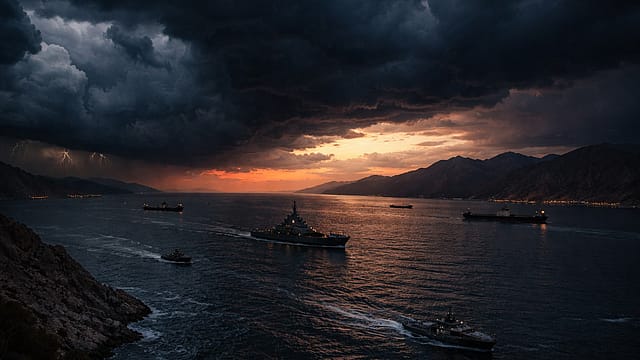
The United Kingdom has formally committed Typhoon fighter jets, autonomous mine-hunting drones, and the warship HMS Dragon to a multinational defence mission protecting the Strait of Hormuz.
The announcement, backed by £115 million in new Ministry of Defence funding, places Britain at the centre of one of the most consequential maritime security operations in recent memory.
Why Has the Strait of Hormuz Become the World's Most Dangerous Shipping Lane?
Approximately 20% of the world's oil and liquefied natural gas passes through the strait.
Iran has been controlling access to the waterway in retaliation for US and Israeli attacks, driving global energy prices sharply higher.

Losing Memory
16 Oct 2026 - Vol 05 | Issue 42
The making of a medical and social emergency
A ceasefire has been in place since April, but reportedly, US President Donald Trump described it as on "massive life support," with both sides accusing each other of continued attacks, as per the BBC.
What Has the UK Pledged to This Defence Mission?
UK Defence Minister John Healey announced the package at a virtual summit of defence ministers.
It includes autonomous mine-clearing systems, drone boats, and Typhoon jets for air patrols. According to the Ministry of Defence, HMS Dragon will be "ready for any mission" to secure the strait, while a second vessel, RFA Lyme Bay, is being upgraded with new equipment if required, based on BBC reporting.
Is £115 Million Enough to Deter a Naval Threat of This Scale?
The funding targets mine-hunting drones and counter-drone systems specifically, a frank acknowledgment of where the real threat lies.
The UK already has over 1,000 personnel deployed in the region, including counter-drone teams and fast jet squadrons.
With 40 Nations Involved, Who Is Actually in Charge?
The mission, jointly announced by Britain and France, spans more than 40 countries.
Coordinating that many national contingents in a live-threat environment, however, is a command challenge as significant as any military one.
If This Mission Is Purely Defensive, Why Does It Feel Like an Escalation?
The UK has distanced itself from the US blockade of Iranian ports. But deploying a destroyer, jets, and mine-clearing drones into a contested waterway shifts the operational landscape regardless of stated intent.
Can a Fragile Ceasefire Hold Long Enough for the Mission to Matter?
The mission's goal is restoring commercial shipping confidence along the Strait of Hormuz.
But its success depends on a ceasefire Trump himself has described as barely alive. If it collapses, Britain's defensive mandate faces an immediate credibility test.
Britain's Hormuz commitment is calibrated to matter without entangling. With £115 million invested and 40-plus nations aligned, success depends less on military readiness than on the diplomatic fragility it cannot control.
(With inputs from yMedia)