On. Off. On. Off: Is the Strait of Hormuz Open or Locked Down?
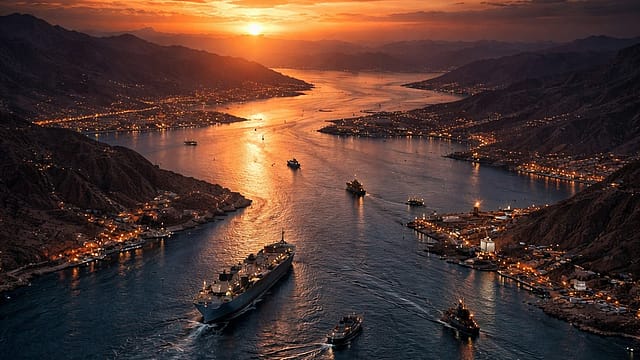
Open. Shut. Open. Shut…Hormuz Can’t Decide and the World Can’t Ignore.
One day, the Strait of Hormuz breathes. The next, it tightens. Open lanes. Closed grip. Controlled flow. Then—snap—back to military command. Flip. Flop. Repeat.
On Saturday, Iran hit reset. Again.
After briefly allowing “managed” passage—oil tankers nudging through, commercial ships inching forward—Tehran has now dragged the strait back under what it calls “strict management and control” of its armed forces. In simple terms: the door is technically open, but someone is standing in the frame.
And they’re not smiling.
The trigger? Familiar. Accusations flying fast and sharp. Iran claims the United States didn’t just bend the rules—it broke them. “Piracy.” “Banditry.” Strong words, fired straight through state media via Islamic Republic of Iran Broadcasting.
The allegation: Washington kept enforcing a naval chokehold on Iranian ports even after Tehran signaled a partial reopening. A deal, in Iran’s telling, that was never really honoured.
So, the response is blunt. Control everything. Trust nothing. “For this reason, control… has returned to its previous state,” the statement said. Translation: back to hard power. Back to full oversight. Every vessel watched. Every movement filtered.
But here’s where it gets messier. Because even as Iran tightens, the US isn’t easing off. Donald Trump has made it clear—the blockade stays. Not softened. Not scaled back. It holds until a “100% complete” deal with Tehran lands. His words, sharp and transactional: the process “should go very quickly.”

The BJP Nation
08 May 2026 - Vol 04 | Issue 70
Now all of India is in his thrall
Quick, though, is not the word Hormuz understands.
This is a waterway that carries a fifth of the world’s oil. It doesn’t do quick. It does pressure. It does leverage. It does brinkmanship dressed up as policy.
And right now, it’s doing all of it at once. Iran says: we opened in good faith. The US says: we’re not done yet. Ships say: tell us which version is real. For global trade, ambiguity is the real blockade. Will tankers pass freely? Or inch forward under watch? Will routes stay open tomorrow? Or snap shut overnight?
There are no clear answers yet. All we have are signals. And they are mixed, overlapping, and deliberately hard to read.
Even inside Iran, the tone is tightening. Parliament Speaker Mohammad Bagher Ghalibaf has underlined the line: passage will happen—but only on Tehran’s terms, through designated routes, under explicit approval.
This brings the strait to its current state: Not closed, not open and not stable. It’s just controlled. And that’s the real story. Because in Hormuz, control is currency. And right now, both sides are spending it aggressively. So, the switch keeps flipping. On. Off. On. Off.
And somewhere in between, the world’s most important oil artery waits—tense, watched, and one decision away from swinging either way.
(With inputs from ANI)