"No Need To Strike Iran Before Election": Israel’s Army Chief
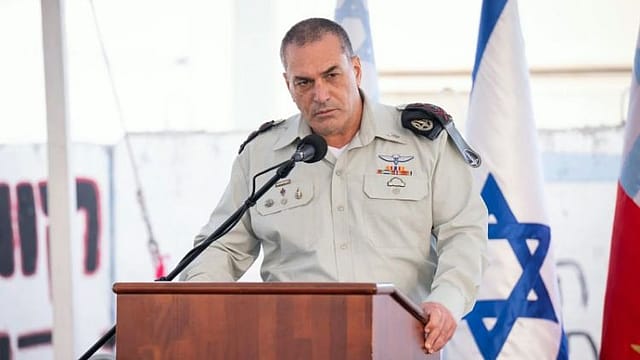
Israel Defence Forces Chief of Staff Lt Gen Eyal Zamir has said he sees no operational need to strike Iran before the Knesset election on October 27, the Times of Israel reported, citing Channel 13. He made the remark during a recent private meeting.
“We do not see any indications of a need to strike Iran before the election,” Zamir was quoted as saying. “If we determine that a strike on Iran is necessary, we will carry it out.”
NETANYAHU: ‘TOPPLE THE REGIME’
Two days earlier, Prime Minister Benjamin Netanyahu told an IDF cadets’ graduation ceremony at the Bahad 1 training facility in southern Israel that Tehran is advancing nuclear weapons. “The Iranian regime still has not learned its lesson,” he said. “Mojtaba Khamenei decided to follow in his father’s footsteps. He has taken off the safety, and Iran is once again trying to develop its weapons of death.”

Losing Memory
16 Oct 2026 - Vol 05 | Issue 42
The making of a medical and social emergency
The only way to remove the threat “once and for all,” he said, is “to topple the regime in Iran,” and he called that his directive to the IDF, the Mossad and the security agencies.
TRUMP: ‘WE MAY GO A LITTLE FURTHER’
US President Donald Trump said Iran cannot be allowed to have a nuclear weapon. “I’m doing what should have been done by other presidents,” he said, acknowledging that some may not like his approach but adding that “many great patriots” support it. “We’ve knocked the hell out of them, and we may go a little further,” he said.
In a Truth Social post, Trump accused Iran of trying to push up oil prices before the US midterms, even “making up fake hits, mines, and everything else.” More oil is moving through the Strait of Hormuz now, he claimed, than before the conflict began.
WHY THE TIMING MATTERS
The election is the first since the October 7, 2023 Hamas attack, and many observers see it as a referendum on Netanyahu’s handling of that day and the wars that followed. About 7.3 million Israelis are eligible to vote for the 26th Knesset, which was dissolved on July 17.
Polls show Likud and former chief of staff Gadi Eisenkot’s new Yashar party roughly tied as the largest party, with neither camp near the 61 seats needed for a majority in most surveys. Naftali Bennett is running on a joint list with Yair Lapid. Critics have accused Netanyahu of pushing for a renewed war on Iran to influence or delay the vote, a charge he denies.
That is why Zamir’s comment matters. Eisenkot, Netanyahu’s main rival, offered a similar message on Channel 13 the same day. “There is no direct, immediate threat from Iran that necessitates a war prior to the election,” he said.
THE POSTPONEMENT QUESTION
A separate report said Zamir had warned American generals that an attack in the coming weeks could force the election to be postponed, because Iran would likely respond with massive missile fire. Israel has reportedly told Washington it would prefer military action to begin after the vote. Sources say Netanyahu considers postponement on security grounds impractical, since extending the Knesset’s term needs the support of 80 MKs.
WHERE THE PLANNING STANDS
The New York Times has reported that the US and Israel have drawn up plans for a short but intensive operation against Iran’s energy infrastructure, nuclear facilities and missile and drone arsenal, to follow the American midterm elections. The US is assembling a large force, including three aircraft carriers, due to be fully in place by early November. On October 9, Trump said Washington would not strike Iran before the US vote.
The earlier round of US-Israeli strikes, between February and April, pushed up energy prices and inflation worldwide and strained Pentagon stocks of missile interceptors. A memorandum of understanding between Iran and the US was signed in mid-June, but Tehran says the current situation is good for no one.
With inputs from ANI