News from the Middle East: Iran's Trump Card is Working
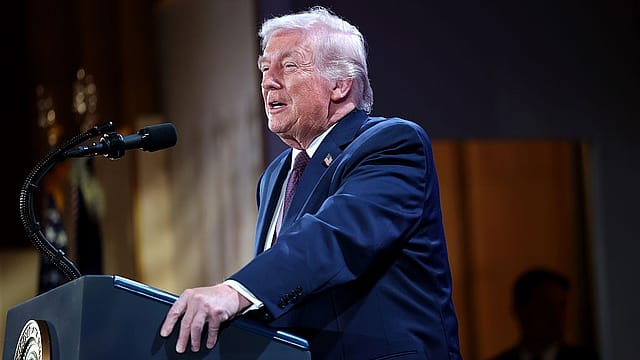
It is 36 days and counting since the United States and Israel launched Operation Epic Fury against Iran and scored an early success in the elimination of Ayatollah Khamenei and other leaders. Since then, pinpoint intelligence has led to more targeted killing but strangely enough, the current discussion is not as much about how long Iran’s clergy and the Islamic Revolutionary Guards Corps can hold out but about when President Donald Trump might declare “victory” and end the war. This was not how the script was expected to play out as the US and Israelis relentlessly pounded military targets in Iran.
It can certainly be argued that democracies necessarily face greater scrutiny and accountability than totalitarian regimes and despite the Trump administration’s unilateral methods, the President and senior cabinet members are required to speak to the media and do so as do top Pentagon figures. In contrast, the ayatollahs in Tehran are accountable to no one, certainly not their population. They are mostly hardened individuals driven by the zeal of religious radicalism and animated by a deep distrust and hatred of Israel and the US. They have been committed to sustaining and spreading the Islamic revolution in the face of crippling Iran’s sanctions and being tagged as the leading sponsor of terrorism.

Open Minds 2026
26 Jun 2026 - Vol 05 | Issue 26
The power of ideas and arguments in 50 portraits
Iran’s disproportionate leverage
Yet, ideological convictions are in themselves not enough. Iran success lies in exerting disproportionate pressure on the attackers not by reinventing war fare but using age old tactics such as the blockade of the Strait of Hormuz. Admiral Horatio Nelson would immediately recognise Iran’s strategy even though modern missiles and drones had not been invented when he famously held up the French and Spanish fleets. The stratagem of building underground bunkers and “cities” to store launchers and ammunition is not a recent innovation either. The Nazis built massive underground bunkers and factories to keep their rocket development out of the reach of Allied bombers.
Trump’s bluster, contradictory statements and shifting deadlines are all signs of an administration under pressure. And while all nations including India are preparing for a long haul, the war may well end sooner than expected, perhaps even in two-three weeks. This assessment is, of course, subject to review as acts of desperation can worsen a conflict and such developments are not predictable. But as things stand, the possibility of US “boots on the ground” and attempts to seize control of Iran’s Kharg Island seem increasingly remote. The odds against such military adventurism are increasing by the day.
Trump under pressure
Available reports including open source intelligence do point a substantial degradation of Iran’s abilities to launch missile and drone strikes. But this does not amount to its stock having touched reserve. Moreover, the task of imposing a block on the Hormuz does not require massive military deployment and can be achieved by simpler means. This “Trump card” – pun intended – gives Iran a major advantage in its fierce war for regime survival where the stakes for the IRGC and the clergy could not be higher.
There are frequent references to a divergence between Israel and US objectives with Prime Minister Benjamin Netanyahu seen as committed to uprooting the Ayatollah-IRGC power structure. At times Israeli diplomats have spoken about not wanting to destroy Iran’s infrastructure like power plants or water supplies so that a successor regime can use these facilities for the benefit of Iranian citizens. None of this sounds very convincing. Rather, Israel is moving fast to secure greater protection on the Lebanon frontier by creating a 30 km buffer zone and declaring that residents who have vacated the area up to the Litani river may not be able to return. It plainly wants to maximise its gains before the war is halted or paused.
The assessment in New Delhi is that it is best to prepare for a drawn out crisis and one that will continue to pose challenges even after it ends. There are no guarantees from either the US or Israel that they indeed have any kind of an exit plan, leave alone a post-conflict one. There is every possibility that Operation Epic Fury will end indecisively and the current regime in Tehran will survive even though it would have suffered serious military degradation. Yet, it might become an even bigger flag bearer of Islamic fundamentalism. In other words, the Islamic revolution may find a new wind in its sails.