US ‘Not at War’ With Iran, Says Trump Administration Amid 60-Day Deadline Pressure
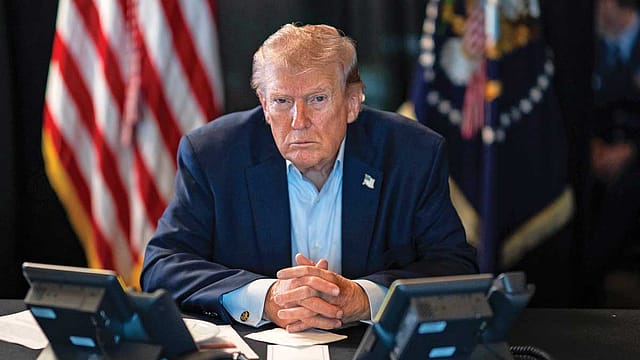
A war in all but name, the US insists it is not fighting Iran.
The administration of Donald Trump has asserted that the United States is “not at war” with Iran, even as the ongoing deadlock in the Middle East continues to rattle global markets and push oil prices to historic highs.
The remarks from Team Trump come at a critical juncture, with a legal deadline approaching that requires congressional approval for military action. The administration maintains that a ceasefire with Iran effectively “pauses” the legal timeline under the War Powers framework.
US House Speaker Mike Johnson reinforced this position when questioned about the 60-day deadline. “We are not at war,” Johnson said.
“I don't think we have an active, kinetic military bombing, firing or anything like that. Right now, we are trying to broker a peace,” he told NBC News.
The conflict traces back to February 28, when joint air strikes by Israel and the United States targeted Iran, eliminating a wave of top leadership figures in Tehran, including Ayatollah Ali Khamenei.

Open Minds 2026
26 Jun 2026 - Vol 05 | Issue 26
The power of ideas and arguments in 50 portraits
Peace negotiations have since stalled, with Trump warning Iran to “get smart soon”, even as the United States continues to spend billions of dollars per day on the war effort.
Why is the War Powers Resolution central to the US stance on the Iran conflict?
The administration is also under pressure to meet the requirements of the War Powers Resolution, which mandates that the president must obtain congressional authorisation for sustained military engagement or bring the conflict to an end.
US Secretary of War Pete Hegseth told lawmakers that the administration does not currently require congressional approval to continue military actions tied to Iran, arguing that the ceasefire halts the legal countdown under war powers provisions.
Congress enacted the War Powers Resolution in 1973, overriding a veto by then President Richard Nixon in the aftermath of the Vietnam War. The legislation was designed to limit the president’s ability to deploy US forces abroad without explicit congressional consent.
The Act reinforces Article I, Section 8 of the US Constitution, which grants Congress the authority to declare war. It requires the president to secure a declaration of war or specific authorisation before sending troops overseas, unless the United States or its armed forces are attacked.
In cases where the president initiates military action, the law permits operations for only 60 days without approval. If Congress does not act within that period, it can compel the president to terminate the conflict.
The Resolution also allows any member of the House or Senate to invoke Section 5(c) to demand a vote on the matter. Under these provisions, such a vote must be held within 15 days in the House and 10 days in the Senate, ensuring congressional oversight of the president’s use of military force overseas.
(With inputs from ANI)