Donald Trump’s China Visit Back on Track? What Wang Yi Told Marco Rubio
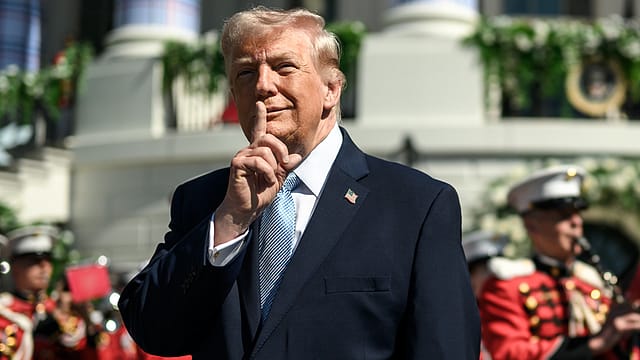
Wang Yi held a phone conversation with Marco Rubio on Thursday, focusing on stabilising ties between China and the United States ahead of Donald Trump’s upcoming visit to Beijing.
The call comes at a sensitive moment in bilateral relations, with both countries attempting to maintain a fragile equilibrium while preparing for high-level diplomatic engagement.
Why is Trump’s visit to China significant?
Trump is scheduled to visit China on May 14–15 for talks with Xi Jinping. The meeting had earlier been postponed due to US military operations in Iran, but is now back on track.
In a post on Truth Social last month, Trump said, "My meeting with the Highly Respected President of China, President Xi Jinping, which was originally postponed due to our Military operation in Iran, has been rescheduled, and will take place in Beijing on May 14th and 15th."

Zeroing In on ECI
09 Oct 2026 - Vol 05 | Issue 41
Constitutional legitimacy versus political opportunism
He also added that he plans to host Xi later this year in Washington for a reciprocal visit.
What did China emphasise during the call?
According to a statement shared by Chinese Foreign Ministry spokesperson Mao Ning, Wang Yi stressed the importance of continuity in top-level diplomacy.
He noted that under the leadership of Xi Jinping and Donald Trump, bilateral ties have remained broadly stable and beneficial to both sides.
Wang said: “The two sides should maintain the hard-earned stability; make good preparations for the important agenda for high-level interactions, expand cooperation and manage differences; and explore the building of a strategic, constructive, and stable China-U.S. relationship so as to achieve mutual respect, peaceful coexistence, and win-win cooperation."
How are both sides approaching differences?
The Chinese side signalled a dual-track approach: expanding cooperation while carefully managing disagreements. This reflects a broader diplomatic strategy where both countries aim to avoid escalation even amid persistent tensions on trade, security, and geopolitics.
Why is the Taiwan issue central to the discussion?
Wang Yi flagged the Taiwan issue as the most sensitive flashpoint in China-US relations.
He said: "Wang Yi underscored that the Taiwan question bears on China's core interests and is the biggest risk in China-U.S. Relations."
China considers Taiwan a core sovereignty issue, while the US maintains a policy of strategic ambiguity—making this a recurring source of friction.
What does this mean for global stability?
Both countries framed their engagement as crucial not just for bilateral ties but for global peace. Wang suggested that stable China-US relations would contribute to broader international stability.
The emphasis on “mutual respect, peaceful coexistence, and win-win cooperation” signals an attempt to project diplomatic reassurance amid ongoing geopolitical uncertainty.
(With inputs from ANI)