Netanyahu Rejects Gaza Peace Plan, Says No Palestinian State on His Watch
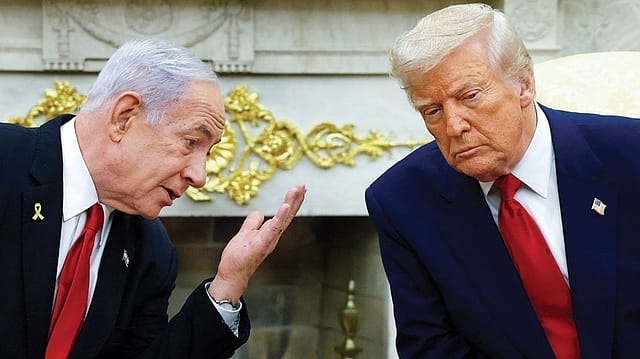
Benjamin Netanyahu has drawn a hard red line through Donald Trump's Gaza peace plan.
Israel, the prime minister said on Sunday, will not accept the proposed framework as it stands, and Israeli troops will not withdraw from Gaza until Hamas is "genuinely" disarmed.
Netanyahu also rejected the prospect of Palestinian statehood under his leadership, delivering a blunt message as pressure mounts on his government to accept a pathway out of the war.
"Israel rejects the 15-point document," Netanyahu said at a cabinet meeting, referring to the framework endorsed by Hamas in late July.
The Trump plan envisages a phased end to the Gaza conflict, beginning with the disarmament of armed groups and moving towards an Israeli military withdrawal, reconstruction and a new Palestinian-led administrative structure.

Zeroing In on ECI
09 Oct 2026 - Vol 05 | Issue 41
Constitutional legitimacy versus political opportunism
Under the proposal, Gaza would eventually be governed by a National Committee for the Administration of Gaza, a Palestinian technocratic body. Heavy weapons, arms depots, military infrastructure and tunnels would come under its control, while an international stabilisation force would help separate Israeli and Palestinian forces.
But Netanyahu's position strikes at the heart of the plan.
For Israel, Hamas must be disarmed first.
"Israel will not carry out any withdrawal until Hamas is genuinely disarmed," Netanyahu said, adding that Israeli forces would continue acting against threats to Israeli soldiers and civilians.
That puts the two sides at odds over the sequencing of any settlement.
Trump's framework envisages a process that ultimately leads towards Palestinian self-determination. Netanyahu, meanwhile, has made clear that a Palestinian state is not an outcome he is prepared to accept while he remains prime minister.
The political pressure is mounting at home too. Far-right members of Netanyahu's coalition have been pushing for a fresh cabinet vote to abandon the peace proposal, while Netanyahu faces a competitive political environment.
Yet he stopped short of shutting the door completely on Washington.
The prime minister said Israel remains in discussions with the US and that some of Trump's ideas are acceptable, while others are not.
"We know how to stand our ground on these matters," he said.
The disagreement is already drawing a broader regional response.
The UAE, Qatar, Jordan, Indonesia, Pakistan, Turkiye, Saudi Arabia and Egypt issued a joint declaration condemning continued Israeli military operations in Gaza. The eight countries warned that further fighting could derail diplomatic efforts, deepen the humanitarian crisis and trigger another round of regional escalation.
The central question now is no longer whether there is a peace framework on the table.
It is whether Netanyahu and Trump can agree on what happens first: Hamas disarmament, Israeli withdrawal or a political future for Gaza. For now, Netanyahu has made his answer clear.
(With inputs from ANI)