The Globetrotter: The General outside His Labyrinth
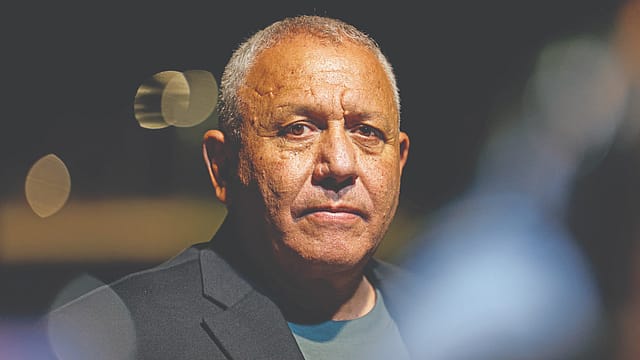
He doesn’t have Benjamin Netanyahu’s charisma; nor does he speak a fluent, US-accented English. But Gadi Eisenkot, retired general and former army chief, rivals Bibi in the polls with his plain delivery and a barely year-old party, Yashar. What Eisenkot has is loss and the dignity with which he bears it. On October 7, 2023, he sent his youngest son to reserve duty; two months later Gal, 25, died in Gaza. A nephew fell the next day, another the following year. Eisenkot, then in the war cabinet, quit in June 2024, exasperated by stalled hostage deals. Grieving quietly till recently, his restraint proved eloquent. Vulnerable Israelis see a man who bore the war’s cost while Netanyahu’s circle, including his Florida-based son, seemed to dodge it. A Mizrahi boy from Eilat, Eisenkot speaks to the periphery beyond the Ashkenazi elite. But his vision is much thinner than his résumé. What’s popular is his promise of an inquiry into the October 7 failures, enforcing military service for all, and prime ministerial term limits. On Gaza, he supports Trump’s peace plan, conditioned on Hamas’ disarmament. He won’t annex the West Bank but will keep the settlements while Palestinians get a qualified statehood. Israeli generals usually make for bad politicians. Eisenkot could break that rule, provided the coalition equation on October 27 is quickly solved.
Beyond Royalties

Sally Rooney’s novels will no longer be supplied in Britain by Faber, her publisher. The decision, taken with the bestselling author's agreement, follows a legal bind: Rooney has said she intends to direct her earnings towards Palestine Action, which the government proscribed as a terrorist organisation in July 2025, and Faber concluded it could not lawfully pay her UK royalties. Copies already in shops will stay on sale. The episode pits a state’s counterterrorism powers against an author’s freedom to use her income as she chooses. Perhaps. Or perhaps not. The Supreme Court hears the appeal next month.
The Fraying of France
Seven months before his exit, Emmanuel Macron is president of a country that has run out of road. Schoolchildren march against crumbling classrooms. Prime ministers come and go. Bond markets, once indifferent, now flinch. How did things come to such a pass? Let’s begin with the man. In 2017 Macron was the right choice for a tired republic: young, fluent, unburdened by party, promising to unlock a sclerotic economy with a banker’s logic. France got the jolt it craved. Then things got worse. Macron cut taxes for the wealthy and spared the state its reckoning. The pension reform, the one measure the arithmetic demanded, was forced through, then rolled back. A suicidal snap parliamentary election in 2024 destroyed his residual authority. But the bills kept coming, with debt set to breach 120 per cent of GDP. The energy shocks cost more. Macron’s vision of European defensive self-reliance now looks prescient but counts for little at home. In his second term, his elitism betrayed the president, exposing how out of touch he was. The centre that never became a movement couldn’t hold and Marine Le Pen, thrice defeated, now has a credible road to the Élysée. The man who promised to save France from the extremes may have handed it to them.