Natanz Nuclear Facility Targeted? Iran Raises Explosive Claim Against US and Israel
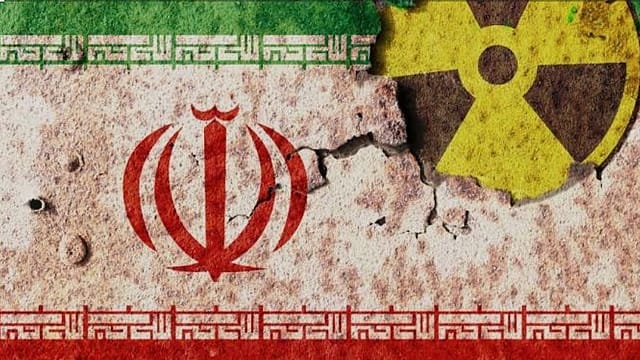
A fresh flashpoint has erupted in West Asia after Iran alleged that joint US-Israeli strikes targeted its key nuclear complex at Natanz, raising global alarm over the safety of atomic facilities in an increasingly volatile region.
What Did Iran Allege at the IAEA?
In a dramatic intervention at the International Atomic Energy Agency’s (IAEA) Board of Governors meeting in Vienna, Iran claimed that its flagship nuclear site at Natanz was struck during joint military operations by the United States and Israel.
According to a Reuters report cited during the session, the allegation was formally raised before the 35-nation board of the International Atomic Energy Agency.
Reza Najafi, Iran’s envoy to the UN nuclear watchdog, confirmed the strike while speaking to journalists. “Again they attacked Iran's peaceful, safeguarded nuclear facilities yesterday.”
When asked specifically which site had been targeted, he replied with a single word: “Natanz.”
The claim follows escalating hostilities after Operation Epic Fury by the United States and Operation Roaring Lion by Israel, operations that reportedly resulted in the killing of Iran’s Supreme Leader Ayatollah Ali Khamenei. In retaliation, Iran launched a series of strikes targeting US-Israeli infrastructure across multiple countries in West Asia.

Exclusive: To the Heavens and Back
19 Jun 2026 - Vol 04 | Issue 76
Shubhanshu Shukla relives the space odyssey that put India into orbit
How Serious Are the Nuclear Safety Concerns?
Amid the rising tensions, IAEA Director General Rafael Mariano Grossi sounded a stark warning about the deteriorating security situation.
Addressing the Board of Governors, Grossi said, “The IAEA has extensive knowledge of the nature and location of nuclear and radiological material in the region, and we have clear guidance for actions necessary in case of an attack or an accident causing a radiological release as well as the ability for hands on help if it is required.”
He cautioned further: “Let me underline that the situation today is very concerning. We cannot rule out a possible radiological release with serious consequences, including the necessity to evacuate areas as large or larger than major cities.”
Grossi noted that the risks extend beyond Iran. “Iran and many other countries in the region that have been subject to military attacks have operational nuclear power plants and nuclear research reactors, as well as associated fuel storage sites, increasing the threat to nuclear safety. The United Arab Emirates has four operating nuclear reactors. Jordan and Syria have operational nuclear research reactors. Bahrain, Iraq, Kuwait, Oman, Qatar, and Saudi Arabia have also been attacked. These countries all use nuclear applications of some sort or another. We therefore urge utmost restraint in all military operations,” Grossi said.
He also emphasised that the regional safety monitoring network remains on high alert and in constant liaison with the IAEA.
Has Any Nuclear Facility Actually Been Damaged?
Despite Iran’s allegation, the IAEA said it has so far detected no confirmed damage to nuclear infrastructure.
“Regarding the status of the nuclear installations in Iran up to now, we have no indication that any of the nuclear installations, including the Bushehr nuclear power plant, the Tehran research reactor, or other nuclear fuel cycle facilities have been damaged or hit,” Grossi stated.
While radiation levels in neighbouring countries remain unchanged, Grossi revealed ongoing communication challenges. “Efforts to contact the Iranian nuclear regulatory authorities through the IEC continue with no response so far,” he said, urging that communication channels be restored immediately.
At a time of mounting military confrontation, Grossi underscored the importance of dialogue. “Diplomacy is hard, but it is never impossible. Nuclear diplomacy is even more difficult, but it's never impossible.”
As the region stands on edge, the world now watches closely, not just for military escalation, but for any sign that nuclear safety could be compromised.
(With inputs from ANI)