NASA Spent $23 Million on a Space Toilet: Artemis II Astronauts Are Glad They Did
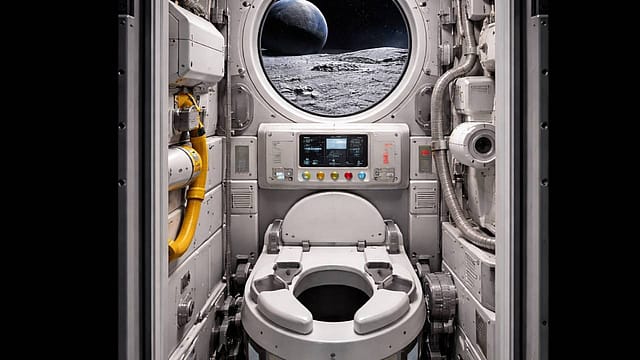
When four astronauts aboard NASA's Orion capsule circle the moon on the Artemis II mission, one unglamorous reality kicks in fast: someone needs to use the bathroom. That's where the Universal Waste Management System, or UWMS, comes in -- a compact, vacuum-powered marvel that NASA spent $23 million developing.
Why did NASA need a new toilet for the Artemis mission?
Apollo astronauts had no real toilet. They urinated into roll-on cuffs and defecated into plastic bags - openly, in front of crewmates. The Artemis mission demanded something far better for longer-duration, mixed-gender crews.
What is the UWMS?
The Universal Waste Management System is a vacuum-driven toilet installed inside Orion's dedicated hygiene bay. Reportedly costing $23 million, it is 40% lighter and 65% smaller than toilets currently used on the International Space Station.

Losing Memory
16 Oct 2026 - Vol 05 | Issue 42
The making of a medical and social emergency
How does urination work without gravity?
Each Artemis II crew member has a personal funnel attached to a long, flexible hose. Airflow, not gravity, moves urine through the system. It is then chemically treated to prevent clogging and microbial growth, and vented into space several times daily.
How is solid waste managed in Orion?
According to Space.com, feces are sucked into a disposable bag seated inside a base canister. Once full, the bag is sealed and compressed into a holding container, which returns to Earth at mission's end.
Is there actual privacy in Orion's tiny bathroom?
The hygiene bay features a door and optional privacy curtains. According to Canadian astronaut Jeremy Hansen, it is "the one place... we can actually feel like we're alone for a moment."
Was the UWMS redesigned for female astronauts?
Yes. With direct input from female crew members, NASA redesigned the UWMS with longer hoses and improved positioning, enabling simultaneous use of both functions - a critical upgrade from systems built exclusively around male anatomy.
What if the toilet breaks mid-mission?
NASA has a contingency plan. According to NASA Deputy Orion Program Manager Debbie Korth, Apollo-era urine bags are onboard as backup, and urine can still be vented overboard even if the UWMS partially fails.
Shortly after entering orbit, Mission Specialist Christina Koch reported a “blinking fault light” indicating a potential fan jam. Ground teams troubleshot the issue, and by this morning the system was cleared for use.
What does this mean for the future of space exploration?
The UWMS signals a broader shift. Its compact, efficient, and inclusive design shows that NASA's Artemis mission is engineering for a more diverse and long-duration future in human spaceflight.
(With inputs from yMedia)