Meet ‘Freedom Ship’: The £12 Billion Floating City That Could Make Every Cruise Ship on Earth Look Tiny
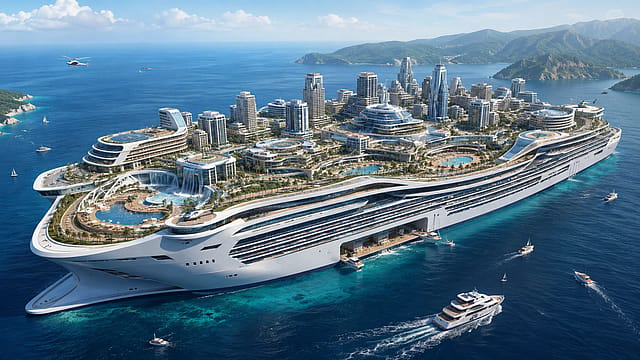
A Florida-based company is developing plans for the most ambitious vessel ever conceived.
The Freedom Ship would not merely be a large cruise ship but a fully functioning floating city, complete with schools, hospitals, parks, and a sports stadium, circling the globe indefinitely.
At an estimated cost of £12 billion, it represents either the future of ocean living or the most expensive proposal in maritime history.
What Is the Freedom Ship and Where Did the Idea Come From?
The Freedom Ship is a massive, proposed floating city project designed by Freedom Cruise Line International that was originally conceived in the late 1990s by engineer Norman Nixon.

The Modi Years
02 Oct 2026 - Vol 05 | Issue 40
A Nation Rebuilt
While two never-ending cruises currently exist, namely The World and Villa Vie Odyssey, both carry only a few hundred passengers. The Freedom Ship would operate on an entirely different scale.
How Big Would This Floating City Be?
The vessel would stretch a mile in length, stand 30 decks high, weigh 2.3 million tonnes, and carry 50,000 permanent residents, 10,000 temporary visitors, and 20,000 crew.
That makes it more than eight times the capacity of Royal Caribbean's Icon of the Seas, currently the world's largest passenger ship.
What Facilities Would Life Onboard Include?
The ship would feature a 15,000-seat sports stadium, two museums, a symphony hall, a water park, an onboard aquarium, two high-rise hotels, and eight helipads.
A tram system, 15 miles of walkways, and three acres of parks would manage daily movement across the vessel.
How Would It Navigate Without Ever Docking?
Due to its size, the Freedom Ship would remain in international waters, with visitors reaching it via ferries from nearby ports.
It is expected to circumnavigate the globe every two years at roughly seven knots, powered by nuclear fuel, with all maintenance conducted at sea.
Who Is Building It and How Far Along Are Plans?
Design firm Schopfer Associates is leading the vessel's creation alongside naval and maritime experts.
Roger Gooch, chief executive of Freedom Cruise Line International, told The Telegraph, "We could almost justify building three ships." Construction is planned in Indonesia once funding is secured.
Could a Project This Ambitious Ever Happen?
No confirmed launch date or secured financing exists yet. However, the concept continues to attract serious design investment. The Freedom Ship may be less outlandish than it appears in an era where ocean living is increasingly discussed as a genuine alternative to urban life.
(With inputs from yMedia)