‘Kim’ Roosevelt, architect of 1953 Iran coup, had warned US about regime-range interventions
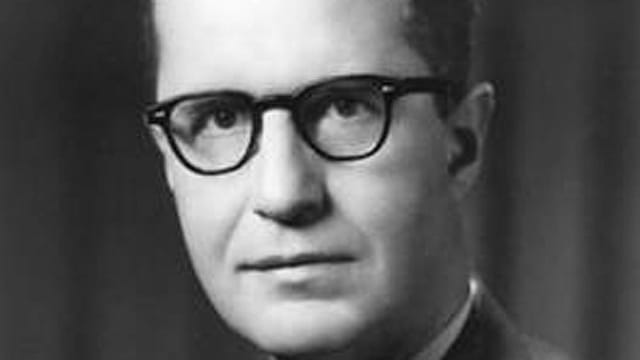
As war rages in the Middle East, with the US–Israeli conflict with Iran entering its 15th day, the year 1953 keeps surfacing in analytical pieces about how British and American spy agencies plotted the downfall of the democratically elected Iranian Prime Minister Mohammad Mosaddegh. In 1953, they orchestrated a coup by bribing the media, the army and political leaders, and by employing covert operations, with the sole intention of protecting British oil business interests.
While the likes of Dr Kian Tajbakhsh of New York University, a former prisoner in Iran, dismiss the overthrow as “ancient history” that “everyone should stop talking about”, the impact of the coup, known as Operation Ajax planned by the CIA and MI6, continues to be felt in Iranian hostility towards Western designs.
The Modi Years
02 Oct 2026 - Vol 05 | Issue 40
A Nation Rebuilt
It also contributed to the creation of the multi-layered political system meant to protect the country from such coups following the 1979 Islamic Revolution. None other than then Secretary of State Madeleine Albright admitted in 2000 that “the coup was clearly a setback for Iran’s political development. And it is easy to see why many Iranians continue to resent the intervention by America in their internal affairs.”
A must-read for those who see the 1953 coup as ancient history is the 1979 book Countercoup: The Struggle for the Control of Iran, written by CIA agent and principal architect of the coup, Kermit 'Kim' Roosevelt Jr, the grandson of former US President Theodore Roosevelt. In the book, he left warnings and advice for American intelligence operatives and policymakers before attempting any such covert operation again.
The suggestion that we must forget a crucial piece of history and stop talking about it may suit certain political interests, but not historiography. The making of tomorrow is embedded in the past, making a comprehensive understanding of history imperative if we are to understand ourselves and where we are headed.
An alumnus of Harvard University, Kermit “Kim” Roosevelt was recruited to the Office of Policy Coordination (OPC), the espionage and counter-intelligence branch of the Central Intelligence Agency, by Frank Wisner, at a time when the US was angered by Mosaddegh’s nationalisation of Iran’s oil industry. Although the Americans were initially reluctant to engineer a coup in Iran, in April 1953 Wisner persuaded CIA chief Allen W. Dulles to approve $1 million to oust Mosaddegh, who had come to power as Prime Minister in April 1951, following a vote by the Iranian parliament.
The first attempt to stage a coup to reinstall the Shah, Mohammad Reza Pahlavi, in power and restore the monarchy that suited Western business interests failed and the Shah fled the country. In 2010, Harvard Magazine wrote about its alumnus and what he did despite the CIA asking him to flee the country:
“(Kim) Roosevelt then improvised a new coup, bribing army officers with hundreds of thousands of dollars, as he gleefully recounted in his memoir, Countercoup. He helped circulate a story that the Shah had fled because Mossadegh tried to seize his throne. When Roosevelt’s Iranian agents called a second coup attempt too dangerous, he used bribery and death threats to gain their obedience. CIA money may have attracted even the religious leader Ayatollah Kashani, a former Mossadegh ally and speaker of the assembly. After two days of street battles, tank units defeated the troops protecting Mossadegh. Several hundred people died in the turmoil.”

Using money, threats of death and coercion, Roosevelt and his team, in association with MI6 and Iranian monarchists, forced out Mosaddegh, who had to flee his official residence in his pyjamas before surrendering a day later on August 19, 1953. President Dwight Eisenhower was immensely pleased and wanted a thorough personal briefing on Operation Ajax, which brought a swift end to democracy in Iran and restored the monarchy.
Documents declassified by the CIA in 2013 prove the use of media to drum up anti-Mosaddegh sentiment through lies and innuendo, as CIA and MI6 agents visited influential media figures with suitcases loaded with cash. The CIA disclosed that while Roosevelt, chief of the CIA’s Near East operations division, was the “on-the-ground manager of the US-UK coup plan”, Donald N. Wilber, an “archaeologist and authority on ancient Persia, served as lead US planner of TPAJAX, along with British SIS officer Norman Darbyshire”.
They also pushed editors to run stories warning of an imminent threat from the Soviet Union and claiming that Iran could fall to the communists. In reality, Iran’s faction-ridden Communist party was incapable of mobilising public opinion in its favour at the time.
Shortly after the Shah’s regime fell in 1979 and Ayatollah Khomeini came to power, Roosevelt wrote his book, stating that the Shah’s rule was restored by the coup “by Persian standards… was brief”, since it lasted only a few decades, while the Persian monarchy itself was over 2,500 years old.
In the book, Roosevelt described the report he presented following Operation Ajax to CIA and US authorities, “…the substance of my report had nothing new; it was simply a combination of what I had told our British allies and the story I had given to the dozing Winston Churchill (who was part of the coup plan). It was, I thought, very well received. In fact, one of my audience seemed almost alarmingly enthusiastic. John Foster Dulles (then US Secretary State) was leaning back in his chair. Despite his posture, he was anything but sleepy. His eyes were gleaming; he seemed to be purring like a giant cat. Clearly he was not only enjoying what he was hearing, but my instincts told me that he was planning as well. What was in his mind I could not guess. Would it be a future employment of the same counterrevolutionary—or revolutionary—approach?”
It remains a mystery why American authorities, especially the CIA, ignored his warning about making the 1953 Iran coup a template for future interventions elsewhere. Roosevelt writes: “Foster Dulles did not want to hear what I was saying. He was still leaning back in his chair with a catlike grin on his face. Within weeks I was offered command of a Guatemalan undertaking already in preparation. A quick check suggested that my requirements were not likely to be met. I declined the offer. Later, I resigned from the CIA—before the Bay of Pigs disaster underlined the validity of my warning.” The Bay of Pigs disaster refers to the failed CIA-sponsored coup against Fidel Castro’s Cuba in 1961.
Whatever the case, the coup Roosevelt helped achieve in Iran contributed to the rise of anti-Americanism in the region. Many historians argue that it laid the groundwork for the rise of Khomeini and for the cycles of conflict that have since engulfed the Gulf region. Despite alliances of convenience between the US, Iran and Israel in later decades, the episode contributed to the long-term destabilisation of the Middle East, alongside Israel’s strategic ambitions and sustained American support for it.
Declassified CIA documents show that virulent anti-Americanism in Iran did not emerge without reason. To stop talking about 1953 is to erase the truth behind an ongoing geopolitical tension. It also amounts, tragically, to an endorsement of an American foreign policy that has repeatedly pursued regime change in countries it has found unfavourable or inconvenient.