Italy Wants India’s Help to Loosen China’s Grip on Critical Raw Materials
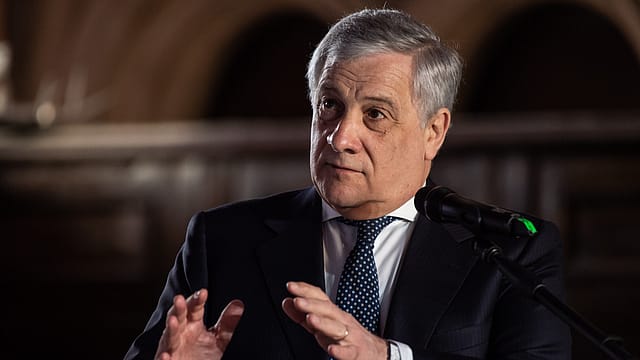
Italy’s Deputy Prime Minister Antonio Tajani had a word for what worried him about China’s hold on critical raw materials: “king”. Too much of the global market, he told business leaders in Rome on Wednesday, November 18, was in the hands of one country. Italian industry needed other sources of supply, and his government was ready to negotiate bilateral agreements with India to develop them.
Tajani described China’s position as an effective monopoly. “We need to change this and develop an alternative market,” he said at the India-Italy Business and Innovation Forum. He did not name a strategic mineral or announce a supply contract. His offer to India was to help build a market in which industrial buyers would have a choice of suppliers.

The Wealth Issue 2026
06 Nov 2026 - Vol 05 | Issue 45
Portraits of Dreamers and Doers under 35
GOYAL TAKES THE PHARMA PITCH BACK TO THE LAB
India’s Commerce and Industry Minister Piyush Goyal opened his pitch to Italian drugmakers with a description familiar to his audience: India as the “pharmacy of the world”. He wanted companies to consider what Indian laboratories could do well before a medicine was ready for manufacture.
Goyal singled out Italy’s expertise in biopharmaceuticals and biosimilars. Bringing Italian companies and Indian researchers together at the discovery stage, he argued, could reduce the cost of developing new medicines. He extended the invitation to companies working on speciality chemicals and advanced materials, two other fields in which he saw scope for joint research.
“Indian genius and Italian enterprise can truly complement each other,” Goyal said. He also pointed out that Indian companies were already investing in Italy. For businesses looking beyond pharmaceuticals, he identified opportunities in medical devices, agricultural technology, textiles, automobiles, auto components and artificial intelligence.
NUCLEAR ENERGY DRAWS INTEREST FROM BOTH SIDES
Nuclear technology was one area in which both ministers set out what their governments wanted. Goyal said India was exploring cooperation with Italy. Tajani pointed to India’s progress in nuclear energy and said the Italian government had decided to invest in the sector to give the country greater flexibility in generating clean power. Neither minister announced a joint project.
The most concrete proposals in Rome concerned decisions businesses make long before a product reaches the market. Tajani raised the question of where an Italian manufacturer could turn for critical inputs if it wanted an alternative to China. Goyal asked Italian drugmakers to consider an Indian partner at the point when a promising idea still has years of laboratory work ahead of it.
With inputs from ANI