Israel Votes: Netanyahu Warns Against Rivals as Allies Explore Unity Govt With Eisenkot
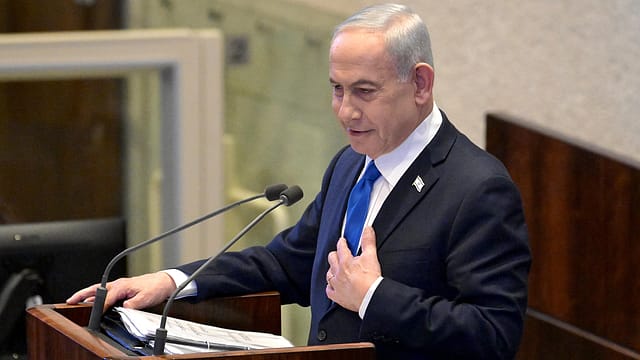
Israel votes on Tuesday in its first parliamentary election since the Hamas-led attacks of October 7, 2023, with Prime Minister Benjamin Netanyahu seeking another term against a challenge led by former military chief Gadi Eisenkot.
Around 7.3 million eligible voters will choose among 34 parties contesting seats in the 120-member Knesset. The campaign has exposed divisions over national security, responsibility for the failures surrounding October 7, military conscription and the independence of democratic institutions.
Opinion surveys cited in the reports placed Eisenkot’s Yashar party ahead of Netanyahu’s Likud, while suggesting that neither rival bloc would secure the 61 seats needed for a majority.
Even as Netanyahu attacked Eisenkot in his final campaign appeal, his allies were reportedly exploring a possible unity government with him.

Look Who's Talking Regime Change
23 Oct 2026 - Vol 05 | Issue 43
A UNITY GOVERNMENT UNDER DISCUSSION
According to a Washington Post report, Netanyahu’s allies have promoted a potential partnership with Eisenkot after the election. US President Donald Trump, who has repeatedly backed Netanyahu, was reported to be receptive to the idea.
Citing people familiar with the discussions, the report said Netanyahu had privately told American and European officials that such an arrangement could allow him to form a more moderate coalition without far-right partners, including Jewish Power leader Itamar Ben-Gvir.
The discussions concern a possible post-election arrangement. No agreement between the rivals has been announced.
Senior journalist Yaron Decel told ANI that a unity government, a minority administration or another election were all possible outcomes if neither bloc secured a majority.
NETANYAHU’S FINAL APPEAL
In a message posted late on Monday, Netanyahu urged voters to back Likud and portrayed his opponents as a left-wing grouping that could depend on Arab parties to govern.
“Israel’s enemies only want us to lose,” he wrote, warning that an administration involving Eisenkot, Avigdor Liberman and Yair Golan would endanger the country.
“The way to stop them is to go out and vote only Likud,” he added.
Netanyahu, Israel’s longest-serving prime minister, has spent about 19 years in office across separate terms. His campaign has presented his leadership as essential to national security, while his opponents have challenged that claim and demanded accountability for October 7.
EISENKOT SEEKS CHANGE AND AN INQUIRY
Eisenkot’s campaign has called for an independent commission to investigate the failures surrounding the attacks.
In his final appeal before polling, he said Netanyahu’s tenure would end after the election and the formation of a new government. He promised leadership guided by Israel’s security rather than political considerations.
Other opposition leaders have pressed related demands while setting out their own priorities.
Liberman called for military or civilian service obligations to be shared more widely, equality before the law, civil marriage and core educational curricula for all children.
Golan argued that replacing Netanyahu must also bring a change in the government’s direction. He criticised its resistance to an independent inquiry into October 7.
Decel said the opposition parties’ shared objective of removing Netanyahu was a central force holding their bloc together.
THE RESULT MAY NOT SETTLE WHO GOVERNS
The election outcome will begin a process of coalition negotiations rather than automatically determine the next prime minister.
President Isaac Herzog will consult elected party leaders before assigning a lawmaker the task of forming a government. The first candidate will have 28 days, with a possible 14-day extension.
If that attempt fails, another lawmaker may receive a mandate. Further parliamentary procedures can follow before a fresh election becomes necessary.
A minority government is also possible if it wins the Knesset’s confidence with more votes in favour than against, even without 61 affirmative votes.
If coalition-building efforts fail, Netanyahu could remain caretaker prime minister while Israel heads towards another election.
With inputs from ANI.