Iran Used Chinese Satellite to Track US Military Bases During Conflict: Report
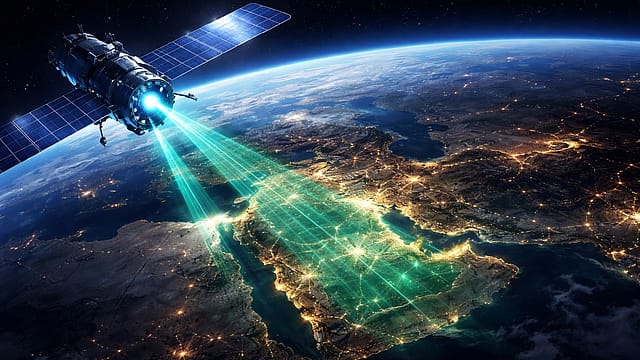
Iran covertly relied on a Chinese-built satellite to monitor American military positions across the Middle East during a recent period of conflict, according to a report by the Financial Times.
The satellite, known as TEE-01B, was developed and launched by Chinese firm Earth Eye Company before being transferred to Iran's Islamic Revolutionary Guard Corps Aerospace Force.
Earth Eye Company operates under a relatively obscure export model known as "in-orbit delivery," whereby spacecraft launched in China are handed over to overseas buyers only after they have successfully reached orbit.
Iranian commanders are said to have tasked the satellite with keeping watch on key American military installations across the region.
As part of the arrangement, the IRGC was also granted access to a network of commercial ground stations run by Emposat, a Beijing-based satellite services provider with operations spanning Asia, Latin America and beyond.
How Did TEE-01B Satellite Track Activity at Prince Sultan Air Base?
The satellite captured imagery of Saudi Arabia's Prince Sultan Air Base on March 13, 14 and 15.
A day later, on March 16, US President Donald Trump acknowledged that American aircraft stationed there had been damaged.
The Grand Design
17 Jul 2026 - Vol 05 | Issue 29
How the Modi government is planning to get its biggest political agenda passed in Parliament
TEE-01B also tracked activity around Jordan's Muwaffaq Salti Air Base, sites near the US Fifth Fleet headquarters in Manama, Bahrain, and Erbil Airport in Iraq, all around the same period that the IRGC claimed strikes in those areas.
The revelations come as Washington moves to tighten its economic grip on Tehran.
United States Secretary of the Treasury Scott Bessent warned on Wednesday (US time) that the US is prepared to impose secondary sanctions on Chinese financial institutions found to be facilitating Iranian financial flows.
Why Did Scott Bessent Say China Was Buying Over 90% of Iran’s Oil?
"Iran used to be the largest state sponsor of terrorism. China was purchasing more than 90 per cent of their oil, which is about 8 per cent of China's energy needs," Bessent said during a press briefing.
He added that recent geopolitical developments could disrupt this flow.
"We believe that due to the blockade in the Straits, there will be a pause in Chinese buying," he said, referring to tensions affecting key maritime routes.
Bessent also revealed that the US Treasury has already reached out directly to Chinese financial institutions over concerns of potential sanctions violations.
The developments point to a deepening entanglement between Chinese commercial entities and Iran's military apparatus, and place fresh pressure on Beijing at a moment when Washington is pursuing a broad campaign to curtail Iranian oil revenues and sever the financial networks alleged to support its regional proxy groups.
(With inputs from ANI)