Iran-US Talks in Islamabad: Key Stakes, Conditions, and Global Reactions
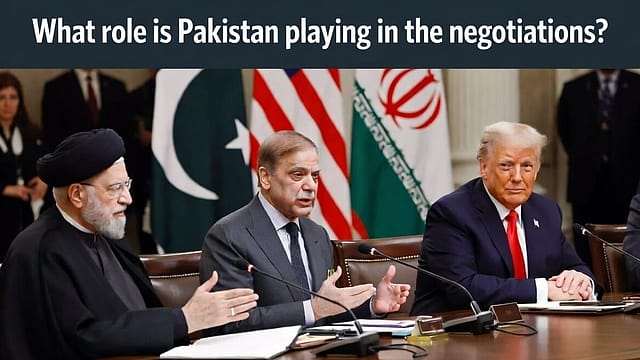
High-stakes diplomacy is unfolding in Islamabad as Iran and the United States prepare for crucial talks aimed at ending weeks of conflict in West Asia. But beneath the optics of engagement lies deep mistrust, hard preconditions and rising geopolitical tensions involving multiple regional players.
The talks come on the back of a fragile two-week ceasefire between Iran and the United States, aimed at halting a conflict that has stretched over a month in West Asia.
The first round of negotiations is scheduled for Saturday morning, with US Vice President JD Vance leading the American delegation. He is joined by Special Envoy Steve Witkoff and Jared Kushner.
Speaking ahead of departure, Vance struck a cautiously optimistic tone: "We're looking forward to the negotiation. I think it's going to be positive. As the president of the United States said, if the Iranians are willing to negotiate in good faith, we're certainly willing to extend the open hand."
However, he also issued a warning: "If they're going to try to play us, then they're going to find that the negotiating team is not that receptive."
Meanwhile, US President Donald Trump underscored Washington’s urgency and strategic goals, particularly around reopening the Strait of Hormuz: "Well, I wish them luck. He's got a big thing. I'll find out what's going on. They're militarily defeated, and now we're going to open up the gulf (Strait of Hormuz) with or without a deal."

Open Minds 2026
26 Jun 2026 - Vol 05 | Issue 26
The power of ideas and arguments in 50 portraits
He added: "I think it's going to go pretty quickly, and if it doesn't, we'll be able to finish it off one way or the other. It's going well. The Navy's gone, the Air Force is gone, all anti-aircraft is gone, the leaders are gone, and the whole place is gone. So we'll see how it turns out."
What are Iran’s conditions—and why does mistrust still dominate?
The Iranian delegation, led by Parliament Speaker Mohammad Baqer Qalibaf, arrived in Islamabad with a broad team spanning political, military, economic, and legal domains. Key figures include Foreign Minister Seyed Abbas Araghchi and senior officials like Ali Akbar Ahmadian and Abdolnaser Hemmati.
Despite participating, Tehran has made it clear that talks hinge on preconditions. Qalibaf stated:
"Two of the measures mutually agreed upon between the parties have yet to be implemented: a ceasefire in Lebanon and the release of Iran's blocked assets prior to the commencement of negotiations. These two matters must be fulfilled before negotiations begin."
More fundamentally, Iran has signalled deep distrust rooted in past experience. Upon arrival, Qalibaf said: "Our experience of negotiations with the Americans has always been met with failure and breach of promise. They attacked us twice in the middle of the negotiations. We have goodwill but no trust."
In a symbolic move, he also carried images of victims from the Minab incident, writing: "My companions on this flight."
The disagreement over whether the ceasefire includes halting Israeli operations in Lebanon further complicates matters. Tehran insists it does, while Washington and Israel maintain that Hezbollah targets remain excluded.
How is Pakistan’s role shaping global reactions?
While Pakistan is hosting the talks, its role as a mediator has come under scrutiny—especially from Israel.
Former Israeli spokesperson Eylon Levy sharply criticised Pakistan’s credibility, saying:
"The Pakistani Defence Minister's statement is outrageous and completely unacceptable. Israel is interpreting it, rightly, as a call for the annihilation of our country by a nuclear-armed state."
He went further, questioning Islamabad’s neutrality: "It is not a good-faith mediator in these negotiations with Iran."
Levy also warned of broader implications: "It is an ally of Iran that is trying to build a radical Islamic axis that will threaten Israel and India alike."
The controversy stems from remarks by Pakistan’s Defence Minister Khawaja Asif, who had described Israel in extreme terms in a now-deleted post, triggering diplomatic backlash.
Israel’s Foreign Minister Gideon Sa’ar also condemned the rhetoric: "Israel views very gravely these blatant antisemitic blood libels from a government claiming to 'mediate peace'. Calling the Jewish state 'cancerous' is effectively calling for its annihilation. Israel will defend itself against terrorists who vow its destruction."
These tensions risk undermining the already fragile ceasefire even before negotiations fully begin.
(With inputs from ANI)