Iran Demands End to US Blockade Before Hormuz Deal: ‘Ball in America’s Court’
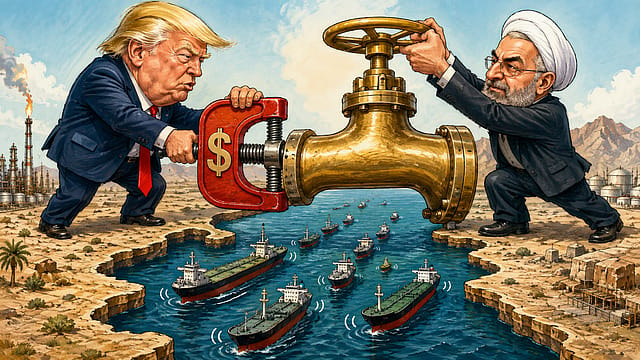
Iran has demanded an end to the US naval blockade before any agreement to reopen or secure the Strait of Hormuz, saying Washington must now decide whether diplomatic efforts can advance.
“The ball is in America’s court; because our demands have been stated very clearly and transparently, and Iran’s demands are reasonable and logical,” Iranian Foreign Ministry spokesperson Esmail Baghaei said at a press briefing on Monday.
Baghaei said ending the blockade and meeting Tehran’s conditions were prerequisites for a final agreement on the strategic waterway. Iran, he added, had conveyed its demands through Qatari mediators.
Iran says proposal can be implemented in two days
Baghaei said Tehran’s seven-step framework remained the basis for indirect negotiations with Washington. The proposal had been discussed during an Iranian delegation’s visit to New York, with messages subsequently exchanged through intermediaries.

The Era of Forever Wars
30 Oct 2026 - Vol 05 | Issue 44
Coping with an explosive Middle East
He said the framework had since been condensed to allow implementation within two days if the United States fulfilled its obligations.
“We have announced that if Iran’s demands are met, it is possible that both security will return to the Strait of Hormuz and the negotiation process will begin within a short period of time,” he said.
Baghaei said a deputy foreign minister’s visit to Doha was intended to facilitate exchanges between the two countries. Qatar has proposed shortening the implementation period for the plan, according to his remarks.
Tehran weighs response to Vance letter
The spokesperson also addressed a letter sent by US Vice President JD Vance to Mohsen Rezaei, secretary of Iran’s Supreme National Security Council.
The Wall Street Journal reported that Vance sent the letter on President Donald Trump’s instructions to help restart negotiations and avert further American military strikes.
Baghaei said Tehran would judge Washington by its actions rather than the tone of its correspondence.
“The style of writing letters and expressing oneself may differ from one person to another; but for us, the performance of the US government is important,” he said.
A decision on the reply would rest with Rezaei, the letter’s recipient, Baghaei added.
‘A unilateral deal will not be sustainable’
Baghaei accused Washington of disrupting previous diplomatic initiatives and abandoning agreements. Referring to the Islamabad negotiating process, he said Iran would approach any renewed engagement cautiously.
He argued that the United States could not demand security in the Strait of Hormuz while continuing to blockade Iran economically.
“You cannot talk about the Strait of Hormuz and worry about insecurity... but continue to economically blockade Iran and abandon everything you have agreed to,” he said. “This will be a unilateral deal that will simply not be sustainable.”
Despite keeping its proposal available, Tehran said it was preparing for the possibility of renewed fighting. Baghaei said Iran had upgraded its weapons, addressed vulnerabilities and maintained its forces at a high level of readiness.
Trump has meanwhile said Washington is in no hurry to end the conflict, maintaining that time favours the American side.
With inputs from ANI