Iran Calls US ‘Greatest Threat’ to Nuclear Non-Proliferation Over Strike Warnings
Iran on Monday accused the United States of undermining global nuclear non-proliferation through threats against its remaining nuclear facilities, while maintaining that Tehran’s membership of the Nuclear Non-Proliferation Treaty (NPT) remained unchanged.
“The United States is actually the greatest threat to the nuclear non-proliferation regime,” Iranian Foreign Ministry spokesperson Esmail Baghaei said at a press briefing.
He argued that threats against Iran were encouraging violations of the treaty and criticised the United Nations, the UN Security Council and the International Atomic Energy Agency (IAEA) for their response to Washington’s rhetoric.

The Era of Forever Wars
30 Oct 2026 - Vol 05 | Issue 44
Coping with an explosive Middle East
The threats, he said, would make Iran “more determined to strengthen our capabilities in our own defence”.
Iran says nuclear treaty obligations remain
Asked whether military pressure could prompt a change in Iran’s nuclear doctrine, Baghaei said debate within the country reflected years of American pressure and the assassination of figures associated with its nuclear programme.
He maintained that the programme was peaceful and rejected allegations that Tehran was pursuing nuclear weapons.
“Iran’s nuclear program has been and remains absolutely peaceful, and this has been proven many times,” he said.
Baghaei nevertheless distinguished domestic debate from the government’s formal position, saying Iran continued to consider itself bound by its treaty commitments.
“At the decision-making level, we are still a member of the Nuclear Non-Proliferation Treaty,” he said. “As long as Iran is a member of this treaty, it considers itself bound and obliged to comply with the obligations contained in that document.”
Tehran pushes back on IAEA inspections
Baghaei also rejected calls by IAEA Director General Rafael Grossi for an immediate resumption of inspections at Iranian nuclear sites.
“We have not reached that stage at all yet,” he said.
Accusing the watchdog of bias, Baghaei said it had failed to condemn American and Israeli attacks on Iran’s nuclear facilities. He argued that this had damaged the agency’s credibility and needed to be addressed before discussions about future cooperation.
Any negotiations over Iran’s next nuclear steps, he added, would depend on Washington meeting Tehran’s initial demands through mediated talks.
Trump defends strikes and oil price costs
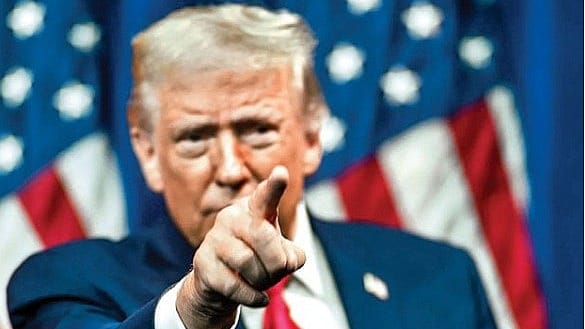
Baghaei’s remarks followed Trump’s defence of US military action against Iran at a campaign rally in Iowa ahead of the November 3 midterm elections.
“I stopped Iran from having a nuclear weapon,” Trump told supporters on Sunday.
The US president said preventing Tehran from acquiring nuclear weapons had driven his decision to intervene militarily.
“I said, ‘let’s make that journey into the Middle East because we cannot let Iran have a nuclear weapon,’” he said.
Trump also defended the economic consequences of the conflict, describing higher oil prices as “a very small price to pay for the security of this country and for the world”.
He claimed Iran had started the war and that American operations had substantially weakened its military capabilities. The exchanges come amid renewed US-Israeli discussions over the possibility of resuming military operations against Iran after the midterms.
With inputs from ANI