Iran blames "foreign aggression" for Qeshm oil spill — trackers say it was self-inflicted
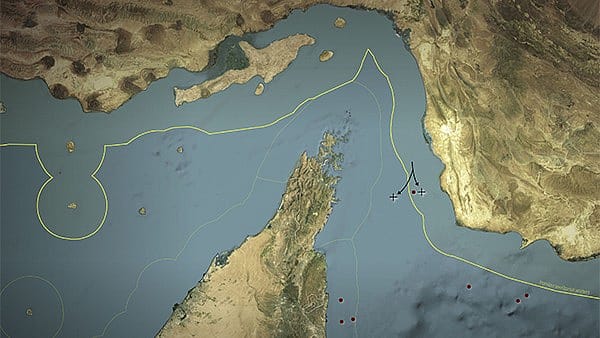
Iran on Friday blamed "foreign military aggression" for oil pollution washing up along the shores of Qeshm Island, with senior officials framing the contamination as part of the broader fallout from military activity in the strategically sensitive Strait of Hormuz.
In a post on X, Iranian Deputy Foreign Minister Kazem Gharibabadi pointed, without naming names, to military strikes carried out by the US and its regional allies as the cause of the spill, arguing that the damage strengthens Tehran's case for a coastal management framework over the waterway. "The oil pollution of the shores of Qeshm Island stems from the repercussions of foreign military aggression in the region," Gharibabadi said. "Such damages inflicted upon the environment of the Iranian coastal areas of the Persian Gulf further underscore the pressing necessity for Iran, as the coastal state, to define and implement a management mechanism for the Strait of Hormuz."
Foreign Ministry spokesperson Esmaeil Baqaei followed up, referencing videos that had surfaced showing oil contamination along Qeshm's coastline. "Why must addressing the environmental condition of the Strait of Hormuz and its surrounding waters form an integral part of any future administration of the Strait?" Baqaei said in a separate post on X.

Zeroing In on ECI
09 Oct 2026 - Vol 05 | Issue 41
Constitutional legitimacy versus political opportunism
Baqaei said the pollution had drifted toward the Iranian coast from within the Persian Gulf, adding that preliminary evidence pointed to a foreign bulk carrier as the source. "Contamination has been documented at three coastal sites and across portions of the sea surface," he said, describing the spill as just one visible instance of pollution he said was affecting the Persian Gulf, the Sea of Oman and the region's wider marine ecosystem.
He went on to attribute decades of environmental degradation in the region to a mix of commercial shipping, energy exports and military activity, and raised the question of who ought to bear the cost — naming countries that consume energy exported from the region, shipping insurers, and what he called "the aggressors and their partners." Parties that benefit commercially from shipping through the Strait of Hormuz, he argued, carry a legal and moral responsibility to address the resulting environmental damage.
The account offered by Tehran, however, runs up against a competing version from TankerTrackers, a US-hosted shipping-monitoring platform. "The oil spill appears to derive from the Iranian attack on bulk carrier MINOAN PIONEER (9471630) on 2026-08-03 (26.45938, 56.53871) when she was in the Musandam Governorate of Oman. The spillage then drifted across the strait over to Iran. A self-inflicted wound by Iran," the platform said in a post on X.
The dispute over the spill's origin comes against the backdrop of heightened tensions around the Strait of Hormuz — one of the world's most strategically vital maritime corridors and a critical artery for global energy shipments.
(With inputs from ANI)