Rebuked by India, Vance Concedes His ‘Indentured Servants’ Rhetoric Was ‘Imperfect’
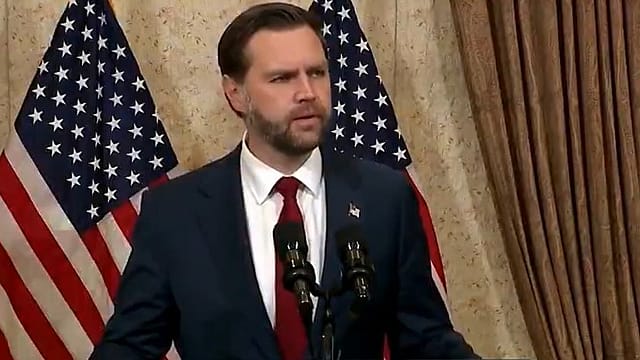
US Vice President JD Vance has acknowledged that his description of H-1B workers as “indentured servants” was imperfect, after India condemned the phrase as deeply offensive. He said he meant to aim at US companies and the visa system, not at H-1B holders themselves.
Speaking at a CBS Town Hall, Vance said: “To the extent my rhetoric has been imperfect, that’s on me.” He said his remarks applied to certain H-1B holders and not the entire category.
Vance explained that an H-1B worker comes in on a company’s certification that it cannot find a suitable American for the job. “Importantly, their visa is their only lifeline to the United States of America,” he said.
When he says “indentured servitude,” he argued, it is not a criticism of visa holders but of the companies, which sometimes lay off an American worker and then know that an H-1B employee who complains or disagrees with the boss could lose the job.

Zeroing In on ECI
09 Oct 2026 - Vol 05 | Issue 41
Constitutional legitimacy versus political opportunism
Such workers can be “shipped back,” he said, which gives employers “way too much power.” In his words, it is a criticism of a visa system that allowed people to be treated as indentured servants because they can be sent back to their countries of origin.
WHAT HE SAID EARLIER
Earlier this month, at a news conference on visa fraud, Vance had used the term for H-1B workers and accused foreign outsourcing firms of undercutting American wages. He said an H-1B worker earns about $20,000 less than an American hired for the same position, and that someone brought in by a foreign outsourcing firm earns about $48,000 less.
“You bring in indentured servants from outside the country, you lay off American workers and, if you’re a corporation, you make a ton of money by undercutting the wages of American workers,” he said, adding that those replacing them “frankly shouldn’t be in the United States of America to begin with.”
INDIA’S RESPONSE
The Ministry of External Affairs (MEA) said such descriptions were unwarranted and ignored the fact that Indian professionals in the US are highly educated, skilled contributors to its economy and innovation ecosystem.
It said the history of the United States has itself been shaped by generations of immigrants whose labour, enterprise and innovation helped its growth and prosperity, and that terminology carrying “painful historical and colonial legacy connotations is deeply offensive.” The ministry also said talent mobility benefits both countries.
With inputs from ANI