Inside the Oval Office: The Intel Briefing that Shattered Trump’s Iran Ceasefire
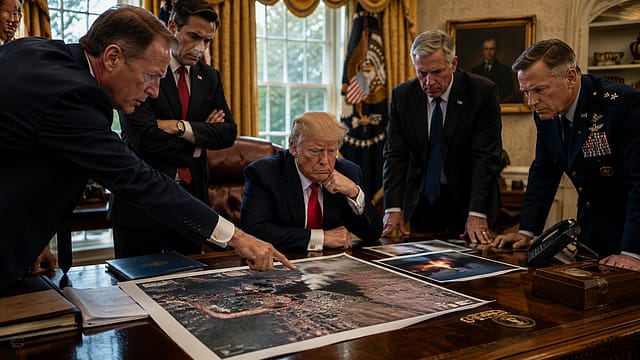
Merely a fortnight after celebrating a peace deal with Iran as a significant diplomatic breakthrough, US President Donald Trump abruptly decided to walk away from the framework, triggering a massive military escalation in the region.
Hours before departing for the NATO summit in Turkey, the American leader was anticipated to focus heavily on diplomacy. Instead, an urgent high-level meeting inside the Oval Office entirely altered the trajectory of the ongoing Iran conflict.
According to The Wall Street Journal, fresh intelligence exposing Iranian assaults against commercial vessels in the strategic Strait of Hormuz convinced President Trump that Tehran was no longer committed to the fragile ceasefire.

The Vanguard
21 Aug 2026 - Vol 05 | Issue 34
BJP Rearmed for 2029
By the time Air Force One touched down in Ankara, the White House had already initiated the process of dismantling major components of the agreement.
The WSJ reported that US Secretary of State Marco Rubio and Secretary of War Pete Hegseth walked into the Oval Office on Monday evening, shortly before President Trump's departure for Turkey.
How did Iran’s missile and drone strikes impact the US-Iran peace framework?
The senior officials informed the President that Iran had deployed anti-ship cruise missiles and one-way attack drones against commercial vessels attempting to navigate the Strait of Hormuz via the southern shipping route.
Three maritime vessels were reportedly struck within a span of a few hours, including a liquefied natural gas tanker.
The intelligence briefing reportedly left President Trump furious, leading him to repeatedly question whether Iran possessed any genuine interest in negotiating a permanent settlement.
Following intense consultations with his senior national security apparatus, the President concluded that Tehran was no longer acting in good faith.
The decision has marked a drastic turning point in Washington's strategic approach. Within hours, the Trump administration began systematically rolling back multiple concessions previously extended under the interim peace framework signed at France's Palace of Versailles.
The White House promptly revoked Iran's licence to sell oil, authorised successive rounds of military strikes on Iranian assets around the Strait of Hormuz, and issued stern warnings that even civilian infrastructure could face targeting if hostilities persist.
Among the sites President Trump explicitly cited were desalination plants and electricity facilities, though he noted he hoped such actions would not be required.
Speaking at the NATO summit in Ankara, President Trump made it unequivocally clear that he no longer believed the diplomatic accord could survive.
(With inputs from ANI)