‘I Don’t Want Canadian Anything’: Trump Tells Companies to Cross the Border as Trade War Erupts
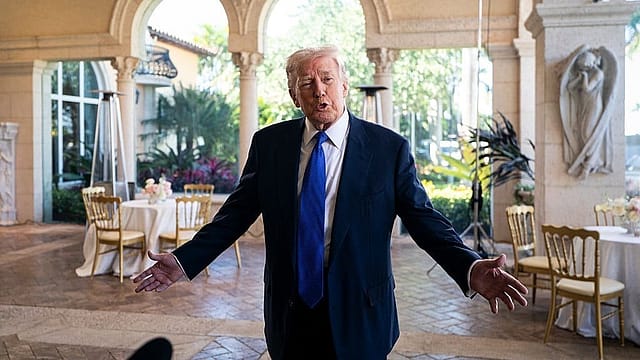
US President Donald Trump wants Canadian cars, components and companies to make the same journey: cross the border, become American and leave the tariffs behind.
Escalating an already bruising trade war between the two neighbours, Trump attacked Canada as one of America’s “worst abusers” and invited businesses operating north of the border to shift production to the United States.
“I don’t want Canadian cars, I don’t want Canadian parts, I don’t want Canadian anything,” Trump wrote on Truth Social. He accused Canada of ripping off the US for decades and declared that the arrangement was going to stop.
Trump then converted the outburst into an industrial relocation offer.

Zeroing In on ECI
09 Oct 2026 - Vol 05 | Issue 41
Constitutional legitimacy versus political opportunism
The message behind the capital letters was unmistakable. Trump is no longer deploying tariffs merely to extract concessions at the negotiating table. He is using them to alter where North American companies manufacture, invest and employ workers.
Trump Turns Tariffs Into a Moving Notice
The latest attack followed the collapse of US-Canada trade negotiations and the imposition of 50% American tariffs on approximately $20 billion worth of Canadian products. Both governments blamed the other for wrecking the negotiations after several days of talks failed to produce an agreement, Reuters reported.
Trump portrayed the dispute as another victory for his protectionist economic strategy. He claimed tariffs had revived the American automobile industry and cited Ford’s Detroit operations as evidence.
According to Trump, Ford had been preparing to close a large Detroit factory when he entered the 2024 presidential race. The company, he claimed, kept the plant open after watching his growing electoral prospects. He said the factory was now operating around the clock and had become one of the world’s most profitable car plants.
Trump offered no supporting figures for those claims. But he used Ford, General Motors and other automakers to reinforce his central argument: penalising imports can force companies to produce more in the United States.
“I’ve revived, and indeed saved, the Automobile Business in our America,” he said.
The US president also claimed Canada expected privileges resembling those enjoyed by an American state without accepting the responsibilities that would accompany such a relationship.
“They want to be treated like a State, but they aren’t one,” he said, describing Canada as the “worst” country to deal with and declaring that its sense of entitlement would no longer be tolerated.
One Industry, Two Countries, Thousands of Border Crossings
Trump’s separation rhetoric runs into an awkward manufacturing reality. The American and Canadian automobile industries are not cleanly divided by the border.
Factories in both countries form part of a deeply integrated supply chain in which engines, transmissions, components and unfinished vehicles can cross the border several times before a car reaches a showroom. Tariffs imposed at one stage can therefore travel through the production chain, raising costs for Canadian plants as well as American manufacturers and consumers.
That vulnerability explains why automobiles have become one of the hardest points in the negotiations.
Trump has threatened to increase tariffs on imported cars and trucks to 50% in January 2027. Canada, meanwhile, is trying to prevent manufacturers from shifting investment and production southward merely to retain access to their biggest market.
The struggle is already playing out on factory floors. General Motors workers in Canada have approved an agreement that includes fresh investment and the production of another heavy-duty GMC Sierra model at the company’s Oshawa plant in Ontario. GM has committed more than C$1 billion to its Canadian operations even as American tariffs cast doubt over their future, according to Reuters.
That commitment is precisely what Trump’s relocation pitch seeks to disrupt.
Canada Prepares to Hit Back
Ottawa has refused to absorb the tariffs quietly.
Canada has announced retaliatory duties matching the incoming American measures dollar for dollar. The Canadian government says tariffs of between 15% and 50% will apply to C$27.6 billion worth of US products from September 8, covering goods targeted by Washington’s trade action.
The Canadian government has also rolled out support for affected exporters, workers and employers as businesses prepare for shrinking orders, higher costs and possible job losses.
Canadian Prime Minister Mark Carney has adopted an increasingly combative position. Asked whether the two countries were engaged in a trade war, he replied: “You’re at war when you get attacked. We got attacked.”
Trump’s “Canadian anything” declaration therefore lands in a relationship that has moved beyond a dispute over individual products. The two governments are fighting over investment, employment, supply chains and the terms on which one of the world’s closest economic partnerships will continue.
For Trump, the answer is brutally simple: if Canadian businesses want tariff-free access to American customers, they should become American businesses.
For Canada, accepting that proposition would mean watching tariffs accomplish what ordinary competition could not: pulling factories, capital and jobs across the border.
With inputs from ANI