I do not expect mass uprisings in Iran in the near future: Iran-born New York University scholar
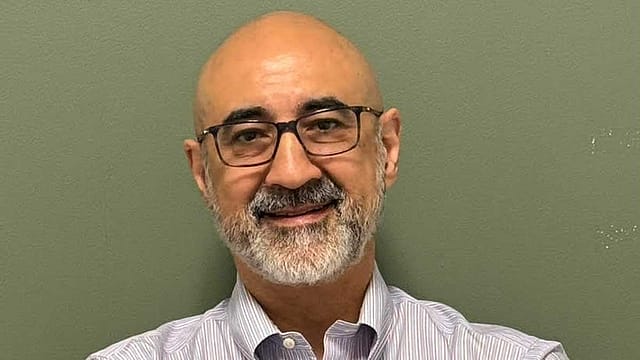
Dr Kian Tajbakhsh, the Iran-born, US-based academic who has faced multiple jail terms in his home country, including in Evin Prison, speaks to Open about the ongoing war on Iran. An alumnus of Imperial College London, University College London and Columbia University, where he earned his PhD, Tajbakhsh was released after years of detention in Iran and relocated to the United States in 2016 as part of the Iran nuclear deal under the Obama administration.
Now at New York University, Tajbakhsh says the balance of forces inside Iran, currently under attack from the United States and Israel, is stacked against those seeking a transition to democracy. The 63-year-old scholar, whose most recent book Creating Local Democracy in Iran: State-Building and the Politics of Decentralization has received critical acclaim, also reflects in this interview on the Palestine question, the prospects for regime change in Iran and American goals in the Middle East.

Zeroing In on ECI
09 Oct 2026 - Vol 05 | Issue 41
Constitutional legitimacy versus political opportunism
At a time when American-Israeli attacks on Iran have drawn widespread condemnation, particularly as Washington was engaged in talks with Tehran when it launched its attacks, Tajbakhsh nevertheless defends Donald Trump’s approach. According to him, Trump “treated Iran’s nuclear programme, ballistic missiles and regional proxy networks as interconnected elements of the same problem”.
While many military analysts trace US-Iran tensions in the post-war era to the 1953 Western-backed coup that overthrew Iran’s democratically elected leader Mohammad Mosaddegh, Tajbakhsh offers a different view -- evidence that Iranians themselves are a divided community whose understanding of history is largely a matter of opinion. “The Trump administration and Israel did not ‘start’ a war with Iran,” he says. “Rather, they see themselves as finishing a war started by Iran in 1979 against the United States and Israel.”
Edited Excerpts:
The Islamic Revolution is over 47 years old. Do you think that another revolution is in the offing in Iran?
I do not think another revolution is likely at the moment because the balance of forces inside Iran is stacked against those who wish to transition to a more democratic regime. I estimate that roughly 10–15 percent of the population forms the ideological core of the regime. This group includes both zealous true believers and opportunity-seekers whose livelihoods depend on the system and therefore remain loyal to it.
Perhaps 30 percent of the population is politically apathetic or politically disengaged and unlikely to participate in protests. That leaves roughly 50 percent of society that would like to see some form of transition to a different political order.
However, especially since 2009, the regime has crushed virtually all organisational and institutional bases for alternative politics. There are no political parties, no independent newspapers, no access to broadcast media, no freedom of assembly, and most opposition leaders are either imprisoned, dead, or in exile.
The regime’s core supporters are highly motivated ideologically—often to the point of fanaticism—and they are reinforced by economic elites whose corrupt financial interests tie them to the survival of the system, as well as by genuine religious fervour among some segments.
Given this balance of forces, even those 20–30 percent of the population whose anger and grievances might otherwise lead them toward revolutionary action are restrained by fear. The fear factor outweighs the anger factor—especially when people know the regime is willing to massacre thousands of its own citizens to maintain power.
There is endless chaos now in Iran, which is under attack from the US and Israel and the war now involves at least half a dozen other countries in the region, but the succession following the demise of Khamenei seems to have been smooth. Again, the idea of martyrdom is significant in Shiite Islam. In this context, do you expect a popular uprising in Iran?
There is no chaos inside Iran right now. People are largely hunkering down in their homes. The succession appears to be smooth, which reflects how consolidated the authoritarian system has become after four decades of entrenchment throughout society.
For these reasons—and for the structural reasons mentioned earlier—I do not expect a mass uprising in the near future.
The only scenario in which that might change is if American and Israeli military strikes were so severe that they significantly degraded the regime’s repressive capacity. If the security apparatus became unable to suppress protests, then conditions might emerge for large-scale mobilisation. Even then, it would likely require sustained military pressure over weeks or months before people would feel safe enough to risk coming out into the streets.
When we talk of regime change, similar exercises in the whole of the Arab world and beyond involving the US have not gone off well. Do you expect Iran to go the way of Iraq and Syria?
To understand the current conflict, I would frame it within three broader contexts. First, the long-term context. From this perspective, the Trump administration and Israel did not “start” a war with Iran. Rather, they see themselves as finishing a war started by Iran in 1979 against the United States and Israel. In this view, the confrontation has been building for decades, and Washington and Jerusalem have been extraordinarily patient in dealing with Iran’s regional strategy.
Second, the strategic context of U.S. policy. The Trump administration rejected the earlier Obama-era approach that focused primarily on the nuclear issue. Instead, it treated Iran’s nuclear program, ballistic missiles, and regional proxy networks as interconnected elements of the same problem. From that standpoint, these were not simply negotiating points but preconditions for talks. When negotiations failed, the administration chose a more coercive strategy.
Third, the broader geopolitical context. Trump has repeatedly stated that he is not primarily interested in regime change in Iran, but rather in changing regime behaviour and reshaping the geopolitical balance. In practice, recent developments have weakened two important strategic partners of U.S. rivals: Iran has been a major oil supplier to China and a significant drone supplier to Russia in the war in Ukraine. Whether this outcome was fully intentional or simply a by-product of the conflict is difficult to determine, but it clearly has geopolitical implications.
Do you believe that Trump was ever interested in securing a nuke pact with Iran? After all, he is the one who scrapped Obama's nuclear deal with Iran. Again, Israel has always been interested in a regime change in Iran. The Israeli attack on Iran amidst Oman-brokered US-Iran talks that forced the US to join Tel Aviv is proof that the goal was always regime change. What are your thoughts?
I disagree with the assumption that the United States and Israel are primarily concerned with the internal political structure of Iran. Their focus has largely been on regime behaviour, especially Iran’s regional military posture, missile programme, and support for armed groups.
That said, many Iranians themselves have long hoped for regime change. For many people inside and outside the country, the desire for a different political system has existed for decades. The difficulty has never been the absence of that aspiration, but rather the absence of a viable pathway to achieve it.
Do you believe the fall of Iran will mean the end of the road of Palestinians who will have to be absorbed by Arab nations with no country championing their cause?
The Iranian regime’s role as the principal champion of the most extreme rejectionist version of the Palestinian cause has had profound consequences for the region. If the regime loses the ability to sustain that role, it could change the political landscape of the Middle East.
In theory, a weakening of that support might make it easier for Palestinian leaders to move toward more pragmatic political outcomes. Whether other regional actors will continue to back maximalist positions remains uncertain. Much will depend on how the broader regional balance evolves.