Houthis Hit Saudi Arabia as Hormuz Talks Stall, Oil Escape Route Under Pressure
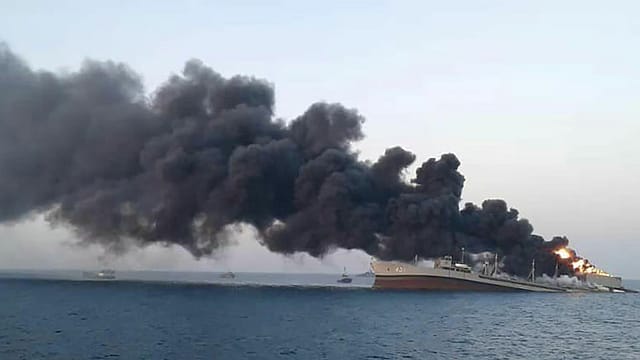
Saudi Arabia’s route around the Hormuz crisis is facing a crisis of its own.
Fresh Houthi attacks and stalled diplomacy have intensified pressure on the kingdom. The Houthis reportedly said they targeted an airbase at Khamis Mushait on Monday with missiles and drones; the Saudi-led coalition reported 13 civilians wounded. Oman also postponed Gulf-Iran talks intended to advance the reopening of the Strait of Hormuz. Iran attributed the postponement to Saudi Arabia.
The wider danger lies in the intersection of damaged infrastructure and increasingly vulnerable shipping routes.
Saudi Pipeline Repairs Could Take Weeks
Saudi Arabia’s East-West pipeline remains disrupted following an attack the kingdom blamed on Iran-backed militias in Iraq.
Officials briefed on the damage told The Associated Press that repairs could take three to five weeks. One said partial operations might be possible during that period, without specifying volumes. The estimate is therefore a reported assessment, rather than an announced reopening schedule.

Zeroing In on ECI
09 Oct 2026 - Vol 05 | Issue 41
Constitutional legitimacy versus political opportunism
Separately, government and Houthi officials told AP that the rebels had captured Greater and Lesser Hanish, extending their reach along Yemen’s Red Sea approaches.
Why the Red Sea Route Matters for Oil Exports
The pipeline carries crude across Saudi Arabia to Yanbu. Tankers can then sail north towards Europe through the Suez Canal or south through Bab el-Mandeb towards Asia.
Rystad Energy estimated that the route had handled 2.6 million to 4 million barrels daily since late August. At the upper end, that represents roughly 4% of global supply.
The geography explains the squeeze: moving oil away from Hormuz still requires a functioning pipeline and access to onward sea routes. Houthi advances add another obstacle to that calculation.
Saudi Arabia Seeks US Support as Fighting Escalates
Crown Prince Mohammed bin Salman met US Central Command chief Admiral Brad Cooper in Jeddah on Monday, Saudi state media said.
Reuters, citing three sources, reported that the crown prince had sought American military assistance against the Houthis. President Donald Trump had not agreed to US strikes, while Washington offered intelligence-sharing and targeting support.
That leaves Riyadh confronting an expanding threat with American assistance that, according to the report, remains short of direct combat intervention.
Brent futures rose 1.18% to $106.93 a barrel at 5.56 am IST on September 15, while US West Texas Intermediate gained 1.24% to $102.65, Reuters reported.
Commodity-vessel movements through Hormuz had fallen below 10 daily over the weekend, against a preceding 10-day average of 14.
The central market question is how long the pipeline disruption lasts. Each additional day increases uncertainty over available barrels and the prospects for restoring dependable export flows.
With inputs from agencies