Hormuz Standoff: Iran Rejects Trump’s ‘Total US Control’ Claim, Keeps Key Oil Chokepoint Blocked
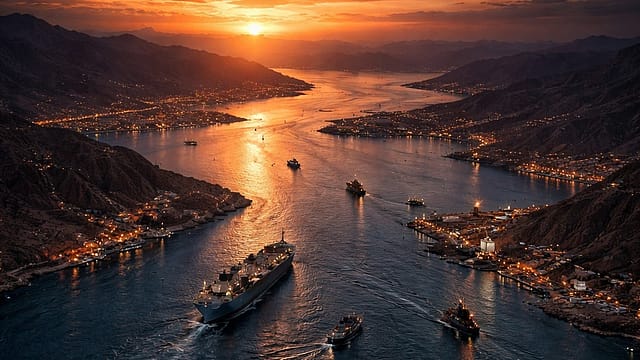
Donald Trump says the United States has “total control” of the Strait of Hormuz. Iran has a two-word response: Not so.
Tehran rejected the US President’s assertion that Washington had wrested control of the strategic waterway, insisting that the Strait remains blocked and will stay that way until its conditions are met. “Claims and repeated posts by U.S. officials that the Strait of Hormuz is no longer blocked do not change the reality,” the Persian Gulf Strait Authority said on X. “The Strait of Hormuz remains blocked and will not be reopened until Iran’s conditions are accepted.”
The statement sets up a stark battle of claims over one of the world’s most consequential maritime chokepoints, through which nearly 20% of global petroleum trade passes.
Hours earlier, Trump had declared victory. “The U.S.A. has total control over the Strait of Hormuz. I THINK WE WILL KEEP IT!” he wrote on Truth Social. Trump described the US naval deployment in the region as a “WALL OF STEEL”, adding that “there is nothing Iran can do about it”. He also claimed that Tehran’s military capabilities had been badly degraded and mocked the country over inflation before signing off unusually with: “Praise be to Allah!”
What Rahul Gandhi Wants
28 Aug 2026 - Vol 05 | Issue 35
He is desperately courting the angry youth. That won't be enough to credibly challenge Modi
Iran, however, insists control of the Strait remains firmly contested.
Iran Puts Its Price on Reopening Hormuz
Tehran has also spelled out what Washington must do if it wants the waterway fully reopened. Mohsen Rezaei, the newly appointed head of Iran’s Supreme National Security Council, said the US must meet all of Tehran’s conditions. Those include ending the war and blockade, releasing frozen Iranian assets and agreeing to a region-wide ceasefire extending to Lebanon and Gaza. “Iran’s message is clear,” Rezaei wrote on X. “Until all conditions are met, the Strait will remain closed.”
The hardening rhetoric comes after weeks of military exchanges involving Iran, Israel and the United States, raising fears that the confrontation could spill into a much wider regional conflict. Washington has significantly increased its naval presence in the Gulf and maintains that ensuring freedom of navigation through Hormuz is a key security objective. Commercial shipping continues through the corridor under tight security oversight, but the situation remains volatile, with carriers adjusting routes and naval patrols expanding.
Behind the public war of words, however, diplomacy has not completely stopped. Washington and Tehran have reportedly been engaged in indirect discussions aimed at finding terms that could ease the Hormuz crisis and restore normal maritime traffic. That leaves two very different versions of reality competing over the same narrow stretch of water. Trump says America has total control and intends to keep it. Iran says the Strait remains blocked and America will have to pay Tehran’s price to reopen it. For global energy markets, which side can enforce its version may matter far more than who wins the war of words.
(With inputs from ANI)