Gloria Steinem (1934-2026): A Life of Feminism, Fighting for Equality and Bringing Hidden Stories to Light
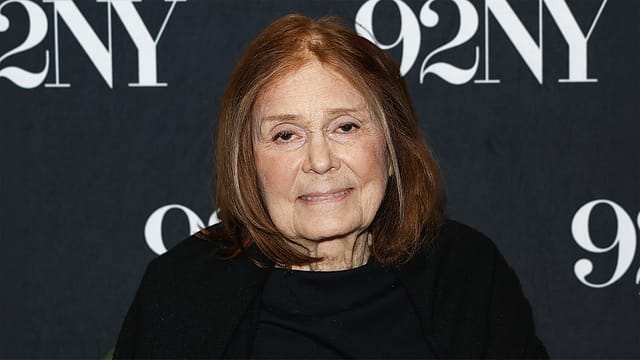
When she was 22, Gloria Steinem spent two years in India as a Chester Bowles Asian Fellow. When the celebrated journalist and feminist icon died on September 2, 2026 at the age of 92, photographs of a young Steinem dressed in a sari began to circulate online, along with hundreds of tribute posts and obituaries. Her experiences during these couple of years, from interviewing luminaries such as Kamaladevi Chattopadhyaya and joining grassroots movements with Gandhian activists to travelling in the third-class compartments in trains and meeting women from different strata of society, introduced her to the power of community engagement, inclusive mass movement abd fighting tirelessly for her convictions. It is where her ideas about patriarchy and racism began t concretise into an ideology. It shaped the trailblazing career she pursued on her return to the US—one that shaped feminist discourse and influenced women’s aspirations around the world.
Among the many women who build the feminist movement through its multiple waves in the 20th century, Steinem is among the most famous and revered. She co-founded New York magazine and Ms. Magazine (with journalists Patricia Carbine and Letty Cottin Pogrebin), establishing the latter as a platform for feminist ideas and discourse, including domestic abuse, sexual harassment and abortion among other issues. She was the first woman to speak at the National Press Club and in 1972, she was one of the co-founders of the National Women’s Political Caucus. In fact, Steinem was one of the foundational figures behind numerous organisations and political networks through several years. She helped establish the Women's Action Alliance, the Ms. Foundation for Women and Voters for Choice. She later co-founded the Women’s Media Center with Jane Fonda and Robin Morgan, and also facilitated the establishment of international organisations such as Equality Now and Donor Direct Action. She also helped launch Take Our Daughters to Work Day, an initiative intended to expose girls to professional possibilities beyond the traditional expectations placed upon them. At the heart of Steinem’s activism lay the idea that it wasn’t merely enough to champion a cause—it was equally, rather more, important to build foundations for the cause to endure.
Losing Memory
16 Oct 2026 - Vol 05 | Issue 42
The making of a medical and social emergency
These achievements made Steinem one of the most famous names in the feminist movement. Her personal style—long straight hair (which morphed into a bob in her final years), aviator glasses, retro-chic clothes and accessories—defied the popular notion of what a feminist looked like. It led to Vogue magazine labelling “the most attractive activist in women’s lib”. Yet, as she tells Brad Falchuk in Netflix’s Famous Last Words: “That’s only because they think feminists aren’t beautiful.” A series of interviews with eminent personalities to be aired only after their death, Famous Last Words released Steinem’s interview hours after the announcement of her passing—she is the third person to be featured (after Jane Goodall and Eric Dane). Originally interviewed in February 2025, Steinem look bright in every sense—dressed in red, her signature bob and nails groomed, speaking with courage and empathy and a measure of optimism. “I hope I wasn’t the face of the feminist movement,” she tells Falchuk. For Steinem, feminism is a movement shaped by diversity, by the participation and activism of women of colour more than white women, by grassroots movements rooted in working with each other. Her own renown, she attributes to the simple fact that she stayed at it longer.
Steinem was perhaps always destined for this journey. Born on March 25, 1934, in Ohio, she the second daughter of Leo Steinem and his wife Ruth. A son of a suffragette and travelling salesman, Leo also ran a dance hall. Steinem remembers him as a kind, wonderful man but also an irresponsible one. Her parents separated when Steinem was about 10, and she served as her caretaker for a time. Her mother had been a journalist, and she had taught her daughter to fold a typing paper to hold it like a reporter’s notebook, but her ill-health and a “nervous breakdown” had disrupted her career. These early experiences also shaped her outlook and Steinem recalled that she eventually realised that she had followed her mother’s dreams and found her own goals and ethos in it. From her famous (think of it as the retro version of a viral, Internet-breaking story) exposé of Playboy Club’s exploitative attitude towards its women employees, for which she went undercover as a Playboy bunny to creating influential feminist publications, journalism became a means for Steinem to tell stories and bring to light the invisible.
We often ask people who would they be had they not pursued their chosen profession. The luckier ones reply that one can’t imagine themselves as anything else. When Falchuk asks Steinem if she would have chosen something else, had she been born in a time of greater equality, she replies: ““I can’t imagine it. Can you imagine a time of complete equality?” She devoted her life to the cause of feminism and equality, and remained associated with it for as long as she has been in the public imagination. Her words and ideas have remained relevant despite the years—Steinem spoke about her own abortion in the 1960s (she’d a procedure done just before her travel to India) and argued for women’s right to have. Decades later, in the wake of Roe vs Wade, the argument still resonates; and Steinem was till the end a force that brought women and changemakers together. She remained invested in equality and democratic values, and the hope for a better future. She wanted to tell stories that had not been heard and created platforms for others to tell their own.
At the end of Famous Last Words, when Falchuk leaves her to directly speak to the camera—her parting words for a vast audience—she highlights each of these ideals. Embedded in Steinem’s lifelong work and her words are the beliefs that people are at their best selves with each other and that everyone deserves to shine. As she says: “…please tell your own story. This is the most important thing we can do for each other—to know each other through stories.”