From Pearl Harbor Comment to Eclipse Glance: Donald Trump’s Viral Moments
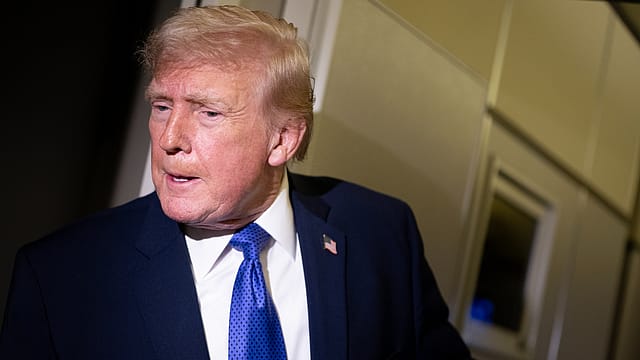
Few leaders command attention like Donald Trump, whose off-script moments often ripple far beyond the White House. From his March 19 Pearl Harbor remark during talks with Japan’s PM to his previous July 2018 Helsinki comments siding with Putin, these episodes have repeatedly dominated headlines and reshaped debates on leadership and diplomacy.
Here’s a more detailed insight.
Why do Donald Trump’s off-script remarks draw such strong reactions?
Donald Trump’s off-script remarks often bypass diplomatic convention, replacing caution with immediacy. This unpredictability amplifies impact, especially in high-stakes settings. As seen in multiple moments in the USA and at the White House, such comments can unsettle allies, dominate headlines, and reshape narratives within seconds.
Pearl Harbor Remark During Meeting With Japanese PM (2026)
On 19th March 2026, during a White House meeting with Japan’s Prime Minister Sanae Takaichi, Donald Trump defended the surprise strikes on Iran by saying, “We didn't tell anybody about it because we wanted a surprise. Who knows better about surprises than Japan? Why didn’t you tell me about Pearl Harbor?” The remark came weeks after U.S. strikes on Iran disrupted global oil routes and raised questions about why Japan had not been informed.
Takaichi’s discomfort reflected the strain, as it appeared to trivialize a defining moment in U.S.-Japan relations.

Bengal Thriller 2026: The Plot Thickens
17 Apr 2026 - Vol 04 | Issue 67
Mamata Banerjee faces her toughest battle
Helsinki Summit and Intelligence Rejection (2018)
At the 2018 Helsinki summit, standing beside Vladimir Putin, Donald Trump questioned U.S. intelligence on Russian election interference, saying he saw no reason to doubt Putin’s denial.
The remark contradicted his own agencies and drew sharp bipartisan criticism, with Senator John McCain calling it “one of the most disgraceful performances” by a U.S. president.
Solar Eclipse Glance (2017)
On August 21, 2017, during the “Great American Eclipse,” Donald Trump looked directly at the sun from the White House balcony without protective glasses, despite repeated warnings. An aide shouted, “Don’t look!” but he glanced anyway before putting them on.
The moment went viral, with experts warning of eye damage and critics calling it a disregard for scientific advice.
West Point Ramp Walk (2020)
In June 2020, after a speech at West Point, Donald Trump was filmed cautiously descending a ramp, prompting questions about his health. He later said the ramp was “very long and steep,” “very slippery,” and lacked a handrail, adding he had “run down” the last part. Others on the same ramp walked normally, sharpening the contrast.
Air Force One ‘Toilet Paper’ Moment (2018)
In October 2018, while boarding Air Force One in Minneapolis, Donald Trump had a strip of white paper stuck to his shoe. It remained visible as he climbed the steps and waved to the crowd. The clip spread rapidly online, with social media users turning it into memes and late-night shows mocking the oversight, raising questions about why no aide intervened.
What patterns emerge from these moments, and what do they reveal about modern political communication?
Across these incidents, a pattern of unpredictability and improvisation emerges. Trump’s public moments often bypass convention, shifting attention from policy to personality. In doing so, they prioritize immediacy and visibility over traditional diplomatic norms, shaping both domestic perception and global reactions.
(With inputs from yMedia)