Explained: Why Greece's Wildfires Are Becoming Harder to Contain Despite Record Firefighting Investments
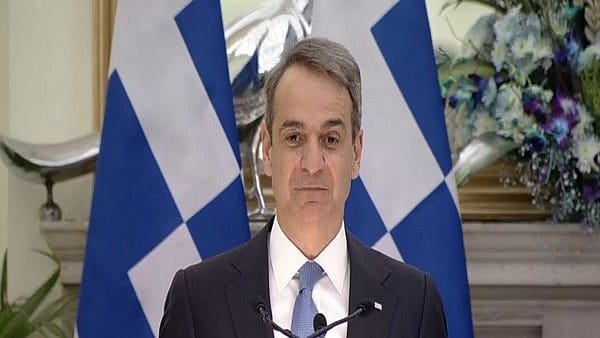
Hundreds of firefighters, aircraft and rescue teams are battling fresh wildfires across Greece, with powerful winds turning already dangerous blazes into fast-moving disasters. Prime Minister Kyriakos Mitsotakis has defended the country's preparedness, saying Greece has invested more than ever in firefighting and civil protection but warning that extreme weather is increasingly overwhelming even the best-equipped emergency services.
Here's what you need to know.
Why are Greece's wildfires making headlines again?
Greece is battling another wave of destructive summer wildfires, with one of the most serious outbreaks threatening the coastal resort town of Porto Germeno, northwest of Athens. Hundreds of firefighters, supported by water-bombing aircraft, have been deployed as strong winds continue to spread the flames.

The Health and Wellness Issue
25 Sep 2026 - Vol 05 | Issue 39
Why are the fires proving so difficult to control?
The biggest challenge is the weather. According to Greek authorities, wind speeds have reached 10 on the Beaufort scale, with gusts reported at up to 130 kmph in some areas. Under such conditions, fires spread rapidly and can change direction within minutes. The winds have also severely limited the use of firefighting aircraft, making it difficult for helicopters and planes to safely collect and drop water.
What did Prime Minister Kyriakos Mitsotakis say?
Mitsotakis described the situation as "extremely difficult", saying Greece is facing weather conditions that are testing the country's firefighting capabilities. He defended the government's preparedness, arguing that Greece has invested heavily in recent years by expanding its firefighting fleet, strengthening Civil Protection, recruiting more personnel, adopting new technologies and improving emergency coordination. At the same time, he acknowledged that there are moments when nature overwhelms even the best-laid plans.
Why can't more aircraft solve the problem?
Firefighting aircraft are only effective if they can operate safely. Mitsotakis said that during the current fires, turbulence caused by the extreme winds made water collection and aerial drops impossible in several areas. As a result, much of the firefighting effort shifted to crews battling the flames on the ground.
Have there been evacuations?
Yes. Authorities ordered evacuations in several affected areas. In one coastal village, around 300 people had to be rescued by sea after some residents initially ignored evacuation warnings.
Are there casualties?
The latest fires come after a devastating week in which wildfires across different parts of Greece, including the island of Crete, claimed the lives of three firefighters, underscoring the risks faced by emergency responders.
Is Greece alone in facing this crisis?
No. Large parts of southern Europe are experiencing intense heatwaves and prolonged dry conditions that have increased wildfire risks. France has also battled one of its largest wildfires in decades, although authorities say the blaze in the Gironde region is now under control.
What happens next?
Emergency crews remain on high alert as strong winds continue to threaten new flare-ups. Greek authorities say firefighting operations will continue around the clock, while officials monitor weather conditions that could determine whether the current fires are brought under control or spread further.
(With inputs from ANI)