Explained: Why crude oil prices could hit $150 and what happens next
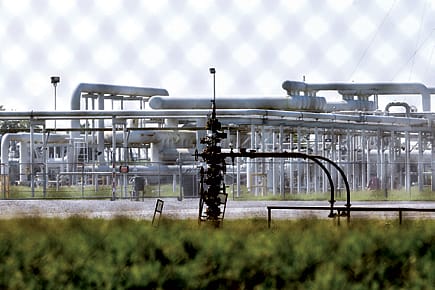
Global crude oil prices are surging amid escalating tensions in the Middle East, with markets reacting to both real supply disruptions and growing geopolitical uncertainty. According to Abhishek Kumar, Senior Oil Analyst at Sparta Commodities, the rally is not just speculative, it reflects actual shortages.
In an interview with news agency ANI, he said, “We are already at upward of USD 100 per barrel. The physical benchmark for crude is 140, which is at what level the real barrel is moving to the refineries. If the situation remain elevated for another weeks to a month, mean, 150, it's very easily market can reach at that level if this lingers on".
The divergence between benchmark prices and physical crude highlights the intensity of the supply squeeze, with refiners already paying significantly higher rates to secure oil.
How big is the global oil supply shortfall?
At the heart of the crisis is a massive supply-demand imbalance that is difficult to bridge. Kumar estimates that the global oil market is currently short of 10 to 12 million barrels per day, a deficit that accounts for roughly 10 to 12 per cent of total supply.
"We are talking somewhere around 10 to 12 million barrels per day loss. No country can fulfil that 10 per cent loss in the market," he said, highlighting the structural nature of the disruption.

Travel Issue 2026
15 May 2026 - Vol 04 | Issue 71
The Cultural Traveller
He further added that the only way to stabilise prices would be a sharp reduction in demand. "the only solution to this is a demand destruction then market has to consume less oil so that I mean if we talk about balancing exactly uh the supply and demand market has to do the demand destruction to the tune of uh supply destruction that is 10 to 12 million barrels per day and then only we will be able to you know compensate and the prices will be a little bit take a breather but at this level if demand continue to remain as it is, 150 will not be or closer to 150 will not be far away".
What role does the Strait of Hormuz play in the crisis?
The Strait of Hormuz has emerged as a critical flashpoint in the current crisis. Before the conflict, around 15 million barrels per day of crude oil passed through this narrow waterway, making it one of the most important energy routes in the world.
Disruptions in this region have sharply reduced flows, while geopolitical tensions—particularly statements by Donald Trump about potential blockades—have further intensified fears of supply constraints.
"If that has to happen, the market will be left with another 1.5 to 1.7 million barrels per day of Iranian crude missing," Kumar said.
Why are physical oil prices higher than benchmarks?
While benchmark crude prices such as Brent have crossed $100 per barrel, the actual prices being paid in the physical market are much higher, reflecting the urgency among buyers.
"The market is pricing the physical tightness. Buyers are scrambling for supplies from wherever they can get the barrel," Kumar explained.
This scramble is being driven by both supply disruptions and logistical challenges, including shipping bottlenecks and restricted access to key export routes.
How are production and logistics being affected?
The crisis is not just about transportation, it is also disrupting production itself. Oil-producing countries such as Iraq and Kuwait are struggling to fully load and export crude due to constraints linked to the Strait of Hormuz.
At the same time, damage to energy infrastructure in the conflict zone has forced some producers to shut in output, worsening the global supply crunch.
Freight costs have surged by nearly 50 per cent, while refined product prices have almost doubled compared to pre-war levels, amplifying the economic impact across countries.
Can alternative suppliers fill the gap?
Despite attempts to source oil from alternative producers, the gap remains difficult to fill. Kumar noted that countries like Russia are unlikely to fully compensate for the lost supply.
Differences in crude quality and refinery configurations mean that not all oil can be easily substituted, particularly for Asian buyers that rely on specific grades of Middle Eastern crude.
What happens next for global oil markets?
Even if geopolitical tensions ease, the outlook for oil prices remains uncertain. Structural issues such as damaged infrastructure, disrupted supply chains, and ongoing logistical challenges are expected to keep prices elevated.
"Buyers are trying to get hold of whatever supplies they can, but that is coming at a cost," Kumar said.
With panic buying and stockpiling already underway, the crisis is likely to have far-reaching implications, especially for import-dependent economies that could face higher inflation and slower economic growth.
(With inputs from ANI)