EXPLAINED | Patriot Missiles for Ukraine: Can Trump Help Kyiv and Keep Putin Talking?
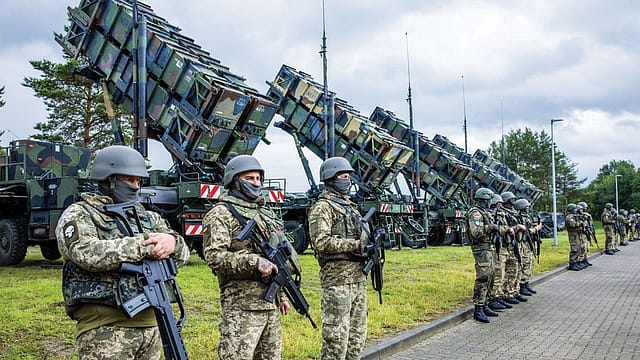
The United States approved a possible sale of 500 Patriot interceptor missiles to Ukraine as Kyiv sought more protection against Russian attacks. The estimated $2.1-billion package would help replenish ammunition for a crucial air-defence system.
The approval comes while US President Donald Trump is also pursuing negotiations with Russian President Vladimir Putin. On October 21, the Kremlin said Putin had agreed to resume US-mediated talks with Ukraine following a meeting with American envoy Steve Witkoff.
Can Washington help Ukraine resist Russian attacks while keeping Moscow at the negotiating table? It can pursue both policies. Whether they produce protection or a settlement depends on decisions that a sale announcement cannot settle.
What has the US actually approved?
A proposed weapons purchase, with further steps before delivery.
The package covers 500 PAC-3 Missile Segment Enhancement interceptors, an advanced type of missile used by the Patriot air-defence system. It also includes spare parts and support. These are ammunition for air defence, rather than 500 complete Patriot systems. Lockheed Martin is the principal contractor.

Look Who's Talking Regime Change
23 Oct 2026 - Vol 05 | Issue 43
Why does Ukraine need Patriot missiles so badly?
They help defend against ballistic missiles, which travel at high speed towards their targets.
A ballistic missile uses rocket power to accelerate, then follows much of its trajectory under gravity, although some types can manoeuvre. Intercepting it as it approaches requires rapid detection, accurate tracking and a defensive missile capable of reaching it.
Patriot combines radar, command equipment, launchers and interceptors. In simple terms, radar tracks the incoming threat, the control system directs an engagement and a launcher fires an interceptor. Tracking information helps guide the defensive missile towards its target.
The PAC-3 MSE is designed to destroy threats through a direct collision, a method called “hit-to-kill”. Its targets can include tactical ballistic missiles, cruise missiles and aircraft.
For people beneath those flight paths, air defence can protect homes and infrastructure. Ukraine’s winter concern is especially urgent: damage to electricity supplies can disrupt heating, water pumping and other essential services. Ukrainian President Volodymyr Zelenskyy has urged faster interceptor deliveries as Russian attacks on energy infrastructure continue.
Who is paying for the package?
Ukraine would finance the purchase with allied contributions and EU-backed funds.
Canada, Germany and Norway would contribute through the US JUMPSTART programme, alongside Ukrainian national funds financed by the European Union’s Ukraine Support Loan. The announced arrangement involves no US funding.
JUMPSTART lets allies donate money to finance American weapons, services and training for Ukraine through the US government’s foreign military sales system.
That gives Washington influence even when other countries provide the money: American approval, suppliers and procurement arrangements remain central to the transaction.
Does this mean Trump has turned against Putin?
The approval alone does not establish such a change.
Washington’s recent dealings with Moscow include an agreement allowing Russian diesel exports. Reuters reported on October 12 that US envoys presented the arrangement to Ukrainian officials as a way to encourage Russia back into negotiations. Ukrainian officials were sceptical of that approach.
Nine days later, the Kremlin announced Putin’s agreement to resume three-way talks. Those were prospective negotiations, rather than an agreed peace settlement.
The missile decision adds support for Ukraine to that diplomatic picture. It does not, by itself, tell us whether sanctions policy, negotiating demands or Washington’s wider relationship with Moscow have changed.
How can helping Ukraine fit with negotiating with Russia?
The strategic argument is that a country better able to withstand attacks may face less pressure to accept unfavourable terms.
If air defences protect power supplies and cities, Ukraine could enter negotiations with greater resilience. Washington could continue communicating with Moscow while enabling that protection.
That is a possible rationale, rather than proof of the administration’s motive or a prediction of Putin’s response. Military assistance may also cause friction with Russia. Its effect on talks depends on how the governments respond and what they are prepared to negotiate.
For readers judging the relationship, concrete developments will be more revealing: weapons reaching Ukraine, changes to sanctions, meetings taking place and proposals either side accepts or rejects.
Will these 500 missiles help Ukraine this winter?
There is no confirmed rapid delivery schedule for this purchase. The missiles still need to be manufactured and are not expected until a couple of years into the 2030s.
Zelenskyy has urged partners to supply missiles from existing stocks and replenish those arsenals later through new production. Such transfers could bridge the gap, but require countries to release ammunition they also retain for their own defence.
This is where timing determines the announcement’s immediate significance. A future order and missiles available for launch this winter provide different levels of protection.
Why can’t the manufacturer simply produce more?
Expanding output requires investment across the production chain.
Lockheed Martin’s January 2026 announcement described a framework to increase annual PAC-3 MSE capacity from approximately 600 to 2,000. It reported delivering 620 in 2025. Those figures describe past deliveries and planned expansion; they do not establish today’s completed output.
The company said the expansion would require investment in facilities, workers and suppliers. Funding a purchase cannot instantly create that extra capacity.
Nor can 500 interceptors be translated into 500 guaranteed successful interceptions. Threats, engagement decisions and outcomes determine how ammunition is used.
What is the useful India connection?
Indian procurement headlines also require readers to distinguish approval from operational equipment.
On July 3, India’s Defence Acquisition Council gave in-principle approval to proposals worth about ₹52,000 crore, including medium-range and very-short-range air-defence systems. The Defence Ministry explicitly described this as administrative approval.
The procedures differ from a US foreign military sale. The common reader question is practical: what has been authorised, what has been contracted, and what can the armed forces actually use?
What happens next?
Diplomatically, the test is whether the proposed negotiations proceed and whether they produce changes in military operations or negotiating positions.
Trump can authorise support for Kyiv while continuing contact with Putin. The harder task is turning those parallel decisions into timely protection for Ukraine and progress towards ending the war.